The Greece-China Connection
Common Origins of Man: A Universal Practice
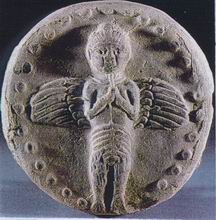
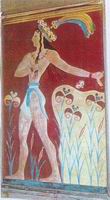
The Decoration of the Head with Feathersby Theresa Mitsopoulou Various exotic birds found in Asia ,South America, Australia and Africa, such as, the pheasant, peacock, mythical phoenix, parrot, egret, ostrich, cascar, eagle, rooster, duck and goose, owl, quetzal (winged snake) fly-catcher, and cockatoo, have had their feathers used as headgear by Mexican emperors, the antefix of Olympia, the Prince of Lilies in Knossos, in Crete, and on traditional Chinese figures within the Shadow Theater. We have also seen the winged snakes with similar feather headgear within museums located in Brazil, Mexico, Egypt, China and within the Acropolis museum in Greece. The feathers have been used in ritual dances during the youth initiation process and in rewarding winners. Feather decoration has also been used by the Ancient Egyptians, the kalash of Pakistan, the Indians of North America, the Chinese, i.e. the Dong minority, for leaders of tribes in Africa and for the Australian aborigines. Man has created imaginary human beings with feathers, like “demons”, Nikes, Angels, Gods with birds’ faces and winged animals, lions, horses and snakes. The feathers symbolized freedom. According to legend, fortune tellers are able to understand the language of the bird and also train eagles to bring food, such as birds and fish. Certain species of birds in Asia, Africa, Australia, and the Americas have beautiful shiny colors and their king is a peacock - the sacred bird of Hera. It is believed that Alexander the Great brought the parrot to Greece and the Argonauts brought the pheasant from Colchis to Greece. Today, a certain species of pheasants, known as “jewel of nature” exists around Mt. Olympus, in Greece, and it is known for its tender meat. The male pheasant has many different colors such as turquoise, green, purple, orange, and yellow. The feathers of their tails are often two meters long and were worn by the sovereigns, priests, and shamans to decorate their heads. Warriors also decorated their weapons, spheres, shields, helmets and their coat of arms with feathers. Ritual dancers, winners of games, and adolescents during initiation, usually engaged in these activities with feathers on their heads. Besides the famous quetzal of Central America, the peacock of India, the pheasant of China, the ostrich of Africa, the exotic birds of Australia, New Guinea and the Carribean, feathers of geese, ducks and eagles, were used for decoration as well. In Greek art, there is rare usage of feather decoration, (with the exception of Crete), because such beautiful birds did not exist in Greece. The big industry for finishing, dying and discoloring bird feathers started during the Middle Ages in England and France. Later, the fashion of wearing bird feathers flourished in Europe and America in the beginning of the nineteenth century. Ultimately, this fashion brought serious threat to birds of rare species. The J.J Audubon Society was founded in California for their protection. |
||||
|
|
|
|||
|
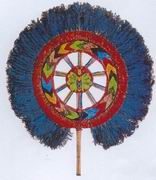
It looks like a fan made of feathers. |
||||
|
||||
|
||||
|
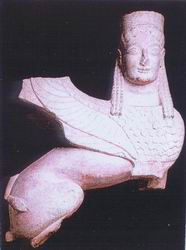
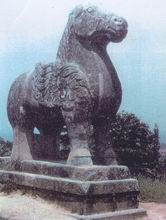
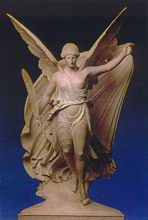
The Aztecs believed that man at the beginning had the shape of a snake that came out of the Earth and that little by little, as he became “humanized” feathers grew on his body which, at one point, would lead him to the skies. Apparently, the feathers symbolized the passion of man to fly and meet immortality. Winged Gods (Hermes, Nike, Eros, Isis etc.) Animals (Sphinx, Horse, Lion, Bull, etc.) |
||||
|
|
|
|||
|
|
|
|||
|
|
|
|||
|
|
||||
|
|
|
|||
|
|
|
|||
|
|
|
|||
|
|
|
|||
|
The feather was the prize of games and exploits, for sovereigns, military men and musicians. The number and position of the feathers was of importance. Feathers were used for ritual dance and the ceremony of the initiation of the youth. |
||||
|
|
|
|||
|
|
|
|||
|
|
|
|||
|
|
|
|||


 Head Gear for Emperors and Priests made
with tail feathers of one hundred quetzals
birds “quetzal” is the Aztec name for “winged
snake”.
Head Gear for Emperors and Priests made
with tail feathers of one hundred quetzals
birds “quetzal” is the Aztec name for “winged
snake”. Large antefix (diameter
of
Large antefix (diameter
of Bronze etruscan fan from a grave (600 b.c.
housed in the archaeological museum of
Florence, Italy.)
Bronze etruscan fan from a grave (600 b.c.
housed in the archaeological museum of
Florence, Italy.)


 The peacock (the bird of Hera), “smiles
when it looks at its feathers” and “cries when
it looks at its ugly
legs”.
The peacock (the bird of Hera), “smiles
when it looks at its feathers” and “cries when
it looks at its ugly
legs”.




 Chinese Emperor with feather on his
head.
Chinese Emperor with feather on his
head.


American Indians, Their Headresses and Shields |
|
|
|
|
|
|
|
|
|
|
|
|
|
|
|
|
|
|
|


Feathers, Shields and Headresses from Other Societies |
|
|
|
|
|
|
|
|
|
|
|
|
|
|
|
|
|
|
|
|
|
|
|
Isolated elements that survived in the most unlikely and distant corners of the Earth helped find the missing rings in the history of mankind. “To bring together again the two halves of Humanity will be the great work of our times” (P.L. Couchoud, French Diplomat and Historian, 1879-1959). |
|
|
|
|
|
|
|
|
|
|
|
|
|
|
|
|
|
|
|
|
|
|
|
|
|
|
|
|
Africa and Shaka ZuluIt was easy for Shaka Zulu and the colored people of Africa to find feathers for their headdresses. |
|
|
|
|
|
|
|
|
|
|



 Queen Elisabeth II of England with ostrich
feathers and the Order of the Garter on the
left shoulder. Prince Charles of Wales also
has three ostrich feathers (called “the Wales
Feathers”) on his coat of arms. The first
prize for the winner of the Aboriginals of
Taiwan also consisted of three feathers.
Ostrich feathers are indispensable in the
official attire of UK sovereigns. The feather
was given as a prize maybe because feathers
were the proof that the hunter had succeeded
in killing birds to feed the people (today we
do not eat, for instance, the eagle or the
seagull but at that time any bird was edible).
To understand that the feather was given as a
prize and reward for a certain achievement
helps the expression in English “you have now
a feather in your cap”.
Queen Elisabeth II of England with ostrich
feathers and the Order of the Garter on the
left shoulder. Prince Charles of Wales also
has three ostrich feathers (called “the Wales
Feathers”) on his coat of arms. The first
prize for the winner of the Aboriginals of
Taiwan also consisted of three feathers.
Ostrich feathers are indispensable in the
official attire of UK sovereigns. The feather
was given as a prize maybe because feathers
were the proof that the hunter had succeeded
in killing birds to feed the people (today we
do not eat, for instance, the eagle or the
seagull but at that time any bird was edible).
To understand that the feather was given as a
prize and reward for a certain achievement
helps the expression in English “you have now
a feather in your cap”.


|
|
Questions? E-mail Matt
|
|
|
|
|
Help Support Matt's Greece Travel Guides |
|
|
|
|