Kastoria
|
Capital of Greece's fur trade, Kastoria is also one of the most beautiful towns in Macedonia, on the shores of beautiful lake Orestiada |
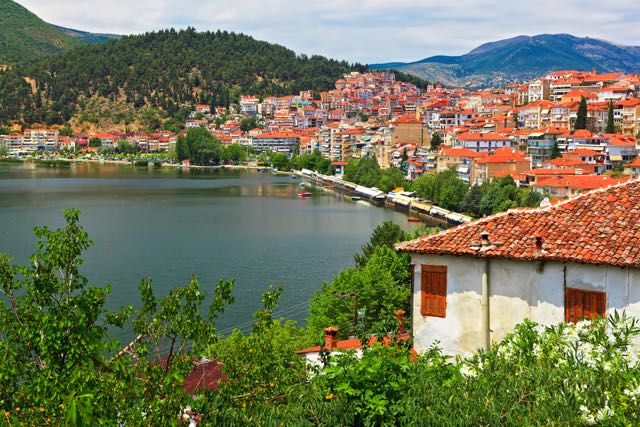 Kastoria, the capital of
the prefecture of the same name, is one of
Macedonia's most picturesque cities and is in fact
regarded by the Greeks as one of the most beautiful
towns in the country. Built on the an isthmus on the
shores of lovely lake Orestiada and surrounded
by mountains, it is a city of old
neighbourhoods, narrow lanes, stately mansions
and Byzantine churches. The city flourished, both
culturally and economically, during the Turkish
occupation, particularly in the 17th century and
afterwards when large numbers of Jewish furriers came
to the area because of the abundance of beavers.
Unfortunately the beaver population was wiped out in
the nineteenth century and the Jews not long after
that during the Nazi occupation. Since that time, the
people of Kastoria have dedicated themselves to
working with furs and embroidery. Even today, the city
boasts a large number of very profitable fur and
textile shops and factories and if you are one of
those people who believes he has a moral obligation to
protest the slaughter of animals for the garment
industry you will find yourself with plenty of targets
for your wrath because just about every street has a
business associated with the industry.
Kastoria, the capital of
the prefecture of the same name, is one of
Macedonia's most picturesque cities and is in fact
regarded by the Greeks as one of the most beautiful
towns in the country. Built on the an isthmus on the
shores of lovely lake Orestiada and surrounded
by mountains, it is a city of old
neighbourhoods, narrow lanes, stately mansions
and Byzantine churches. The city flourished, both
culturally and economically, during the Turkish
occupation, particularly in the 17th century and
afterwards when large numbers of Jewish furriers came
to the area because of the abundance of beavers.
Unfortunately the beaver population was wiped out in
the nineteenth century and the Jews not long after
that during the Nazi occupation. Since that time, the
people of Kastoria have dedicated themselves to
working with furs and embroidery. Even today, the city
boasts a large number of very profitable fur and
textile shops and factories and if you are one of
those people who believes he has a moral obligation to
protest the slaughter of animals for the garment
industry you will find yourself with plenty of targets
for your wrath because just about every street has a
business associated with the industry.
If you are one of
those people who thinks its a shame to kill
animals for coats but there are a lot worse things
to be pissed off about then you will find the area
interesting. If you are a person who regularly
wears fur coats and believes they signify class
and status, well, you are probably not reading
this and you would be happier in a fur shop in
Mykonos or Athens. But for those of us who fall
somewhere in the middle there are plenty of
interesting things to see in Kastoria with or
without the furs which are a fact of
life. |
|
|
Featured Hotels in Kastoria |
|
Loggas Hotel The stone complex buildings of Loggas Hotel, welcome you in the most idyllic location of Kastoria for enjoy the city and the nature of Kastoria and all the four seasons of the year. The name of hotel is coming from a post-Byzantine castle at 1017 AD retreat region which controlled around the plain of Kastoria. The view from Loggas castle is really unique. The luxurious facilities and hight quality services offers you warm hospitality, gazing across panoramic the lake and the town of Kastoria in wherever you are. Hotel Loggas is situated in Sidirochori of Kastoria, at the distance of 10 minutes (8 km) from the city centre. Easy access to the hotel by car or bus. Next to the hotel, there are two international paths, E4 and E6, that you can go for hiking or for a road trip with 4x4 jeeps. The hotel is ideally located, because in addition to the amazing panoramic views, is located on a nodal point, and without needing to get in the city, you can make your excursions from the village Sidirochori through the natural beauty of mountain Vitsi or else named Vernon, where have been occurred some of the most intense battles during the period of the Greek Civil War 1946-1949. Click here to book directly with the hotel |
Andromeda Boutique Hotel 
|
| Diamond River Resort & Spa
|
Chloe Hotel 
|
Anastassiou Hotel 
|
|
You can find more hotels by contacting Dolphin Hellas Travel or Fantasy Travel in Athens |
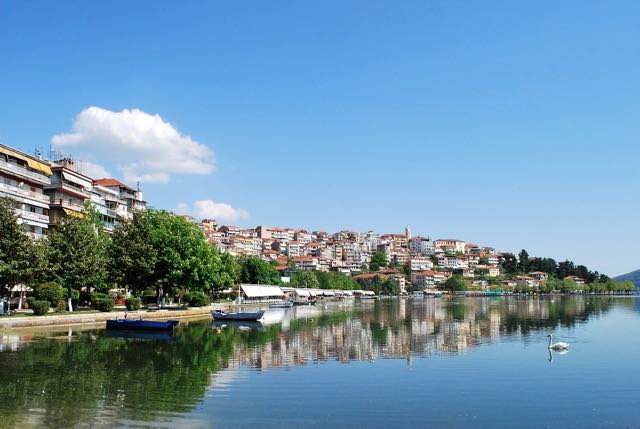 Lake Kastoria is
especially beautiful in autumn and spring, the
best seasons to get to know the town. At various
points round the lake you'll find restaurants,
tavernas, rotisseries, and cafes for gazing at the
lake and reflecting on what you've seen. There is
a 9 km road the follows the promontory and the
lake is home to frogs, turtles and a great many
spieces of birds.The road begins by the hospital
and passes the Moni Mavriotissas, the 11th century
church of Agia Maria and the 16th century Church
of Saint John the Theologian. There is also a free
campsite on the grounds of the Monastery. There
are hotels of every catagory and plenty of
reasonably priced restaurants.
Lake Kastoria is
especially beautiful in autumn and spring, the
best seasons to get to know the town. At various
points round the lake you'll find restaurants,
tavernas, rotisseries, and cafes for gazing at the
lake and reflecting on what you've seen. There is
a 9 km road the follows the promontory and the
lake is home to frogs, turtles and a great many
spieces of birds.The road begins by the hospital
and passes the Moni Mavriotissas, the 11th century
church of Agia Maria and the 16th century Church
of Saint John the Theologian. There is also a free
campsite on the grounds of the Monastery. There
are hotels of every catagory and plenty of
reasonably priced restaurants.
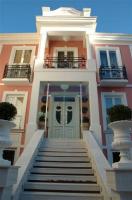 Hotel Andromeda is located in the Kastoria city-centre. Its building has been
classified as an historical monument and it is now completely renovated and
restored to its former glory. The small size, the simple style, the personal
service and a sense of familiarity are the elements that describe this unique
place. When entering Andromeda, you can feel that here your dreams have found
their grounds. The aura of the past accompanies you into a mysterious
atmosphere, where luxury, elegancy and discretion become one. An escape, a
business trip or simply 'an inspiration'. Wireless internet is available in the hotel rooms and is free of charge.
Hotel Andromeda is located in the Kastoria city-centre. Its building has been
classified as an historical monument and it is now completely renovated and
restored to its former glory. The small size, the simple style, the personal
service and a sense of familiarity are the elements that describe this unique
place. When entering Andromeda, you can feel that here your dreams have found
their grounds. The aura of the past accompanies you into a mysterious
atmosphere, where luxury, elegancy and discretion become one. An escape, a
business trip or simply 'an inspiration'. Wireless internet is available in the hotel rooms and is free of charge.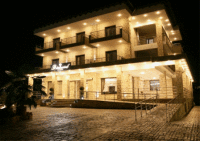 Set in scenic Kastoria, the newly built Diamond River Resort enjoys charming
surroundings full of beauty and cosy interiors paired with warm hospitality.
Built in 2009, Diamond River Resort & Spa offers guests a relaxing
and comfortable setting by the river Aliakmonas. Diamond Resort is just a short
drive from the town of Kastoria. Furnished to provide guests with an
inviting atmosphere, Diamond Resort & Spa offer homely touches, including a
traditional breakfast prepared according to local recipes. Diamond Resort makes
guests feel welcomed from the moment they walk in. Each guestroom is
named after a precious stone and decorated according to its colour. Elegant
furnished, the rooms are decorated according to the colours of emerald, ruby,
coral and amethyst. Wireless internet is available in public areas and is free of charge.
Set in scenic Kastoria, the newly built Diamond River Resort enjoys charming
surroundings full of beauty and cosy interiors paired with warm hospitality.
Built in 2009, Diamond River Resort & Spa offers guests a relaxing
and comfortable setting by the river Aliakmonas. Diamond Resort is just a short
drive from the town of Kastoria. Furnished to provide guests with an
inviting atmosphere, Diamond Resort & Spa offer homely touches, including a
traditional breakfast prepared according to local recipes. Diamond Resort makes
guests feel welcomed from the moment they walk in. Each guestroom is
named after a precious stone and decorated according to its colour. Elegant
furnished, the rooms are decorated according to the colours of emerald, ruby,
coral and amethyst. Wireless internet is available in public areas and is free of charge. 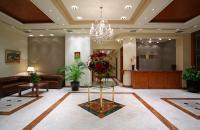 This hotel is actually a modern luxurious lodge, beautifully and centrally
situated in the town of Kastoria with a view of the lake and the magnificent
Mount Vitsi.
This hotel is actually a modern luxurious lodge, beautifully and centrally
situated in the town of Kastoria with a view of the lake and the magnificent
Mount Vitsi. 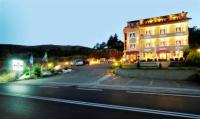 Situated at the entrance to the town and built in a simple neoclassical style,
this hotel has a spectacular view over the beautiful lake. Relax in the
friendly cafe, with a cup of coffee by the fireplace on winter nights, or in a
beautiful garden on summer days, with a magnificent lake view. For your
convenience, car parking spaces are available. Kastoria, the capital of
the prefecture of the same name, is one of Greece's most picturesque cities and
is regarded as one of the most beautiful towns in the country. Built on an
isthmus on the shores of lovely Lake Orestiada and surrounded by mountains, it
is a city of old neighbourhoods, narrow lanes, stately mansions and Byzantine
churches. Internet via modem is available in public areas and is free of charge.
Situated at the entrance to the town and built in a simple neoclassical style,
this hotel has a spectacular view over the beautiful lake. Relax in the
friendly cafe, with a cup of coffee by the fireplace on winter nights, or in a
beautiful garden on summer days, with a magnificent lake view. For your
convenience, car parking spaces are available. Kastoria, the capital of
the prefecture of the same name, is one of Greece's most picturesque cities and
is regarded as one of the most beautiful towns in the country. Built on an
isthmus on the shores of lovely Lake Orestiada and surrounded by mountains, it
is a city of old neighbourhoods, narrow lanes, stately mansions and Byzantine
churches. Internet via modem is available in public areas and is free of charge. Help Support Matt's Greece Guides
Do you enjoy using my site? Have you found it entertaining as well as useful? If so please show your appreciation by booking hotels through the travel agencies and the links found on my Hotels of Greece site. The small commission I make on the bookings enable me to keep working and in most cases you won't find them any cheaper by searching elsewhere.
You can find
hotels in Greece by location, price, whether or not it has a swimming pool, and see photos and reviews by using this link to booking.com which also contributes to my website when you book. If you are appreciative of all the free information you get on my websites you can also send
a donation through Paypal or Venmo
Join Matt Barrett's Greece Travel Guides Group on Facebook for comments, photos and other fun stuff. If you enjoy this website please share it with your friends on Facebook and other social media.
|
|
|
|