|
When I first wrote this
article in the mid-nineties there was little if any
information about Rembetika music on the internet.
Now you can find hundreds of web sites paying
homage to the music, the artists and the songs of
this genre just by Googling 'rembetika'. But this
page still serves its purpose as an introduction to
Rembetika and Laika (Greek Popular Music) for the
uninitiated and even if you are already a fan you
may learn or hear something new.
|
|
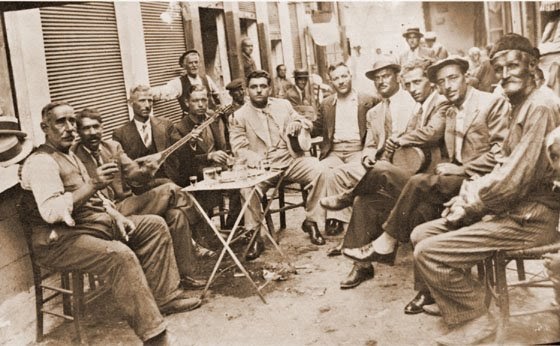 Rembetika
music is the music of the Greek Underground. It
originated in the hashish dens of Pireaus and
Thessaloniki around the turn of the 20th century
and was influenced by oriental elements that came
with the forced immigration of 2 million Greek
refugees from Asia Minor. It gave way to Greek
Popular Music ('Laika' in Greek) which
used the same instruments in similar ways during
the early 1950s. This page will give you a brief
introduction to Rembetika music and hopefully
inspire you to explore more deeply into it. If
you are hearing music as you read this then you
are in luck. This means you can click on the
links to songs and hear them as well. The songs I
have chosen are my favorites, some old rembetika,
some new rembetika and some laika which is what
rembetika metamorphosed into with influences from
all other types of Greek music. I have used
mostly later recordings of the songs because the
sound quality is better and they are more likely
to get you to go out and start your
collection. Rembetika
music is the music of the Greek Underground. It
originated in the hashish dens of Pireaus and
Thessaloniki around the turn of the 20th century
and was influenced by oriental elements that came
with the forced immigration of 2 million Greek
refugees from Asia Minor. It gave way to Greek
Popular Music ('Laika' in Greek) which
used the same instruments in similar ways during
the early 1950s. This page will give you a brief
introduction to Rembetika music and hopefully
inspire you to explore more deeply into it. If
you are hearing music as you read this then you
are in luck. This means you can click on the
links to songs and hear them as well. The songs I
have chosen are my favorites, some old rembetika,
some new rembetika and some laika which is what
rembetika metamorphosed into with influences from
all other types of Greek music. I have used
mostly later recordings of the songs because the
sound quality is better and they are more likely
to get you to go out and start your
collection.
|
From
Socrates to Tsitsanis
|
|
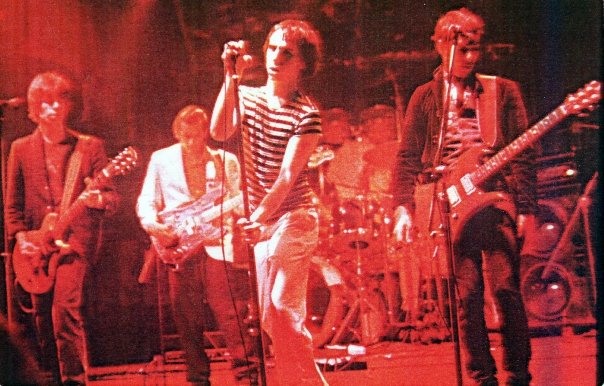 My introduction to Greek
Rembetika music began in 1973 with a visit from
my musical mentor Jimmy Hatzidimitriou who later
became known as Jimi Quidd, lead singer of the NY
punk-pop band the Dots and the man who discovered
and produced the legendary Bad Brains. I was
living with my family in Athens and the fact that
my parents had little interest in monitoring my
comings and goings made our house the best place
for Jimmy to crash at when he would come to visit
his cousin Annetta who he was madly in love with.
His family saw their relationship as a
catastrophe and he had to visit the country
secretly while convincing his mother that he was
in Florida or upstate New York. But Greece is a
small country and she always knew Jimmy was
there.
My introduction to Greek
Rembetika music began in 1973 with a visit from
my musical mentor Jimmy Hatzidimitriou who later
became known as Jimi Quidd, lead singer of the NY
punk-pop band the Dots and the man who discovered
and produced the legendary Bad Brains. I was
living with my family in Athens and the fact that
my parents had little interest in monitoring my
comings and goings made our house the best place
for Jimmy to crash at when he would come to visit
his cousin Annetta who he was madly in love with.
His family saw their relationship as a
catastrophe and he had to visit the country
secretly while convincing his mother that he was
in Florida or upstate New York. But Greece is a
small country and she always knew Jimmy was
there.
|
|
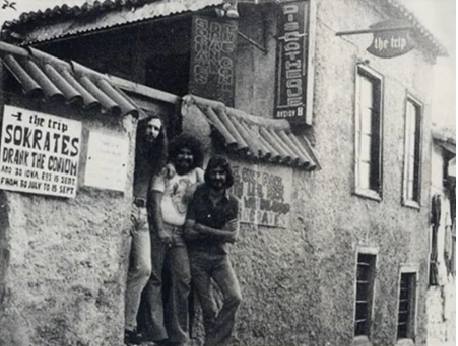 Jimmy and
I would go out most nights where he and Annetta
would introduce me to the Greek rock scene. One
of our favorite places was a club near Platia
Victoria called the Kitarowhere a 3-piece rock band named
Socrates Drank The
Conium, (but
who everyone called SOCRATES) played. Andonis Tourkogiorgis was the
lead-singing bass player and the guitarist was
Yanni Spathas who at the time was rivaled only by
Hendrix. They played a mixture of high-powered
originals and Hendrix covers, mostly in the blues
vein, through stacks of Marshall amplifiers. To
this day I don't think I have seen a better
guitar player then Spathas, who they say was an
even better bouzouki player. There are several
Socrates CD's available though some of them the
band has been augmented by keyboardist and
ex-Aphrodite's Child member Vangelis
Papathanasiou or better known as
Vangellis. But the early blues
influenced guitar-bass-drums 3-piece version of
the band was the best and someday someone should
take the original studio masters of the first two
albums, re-mix and re-master them. (See my
Socrates Drank the Conium
Page) Jimmy and
I would go out most nights where he and Annetta
would introduce me to the Greek rock scene. One
of our favorite places was a club near Platia
Victoria called the Kitarowhere a 3-piece rock band named
Socrates Drank The
Conium, (but
who everyone called SOCRATES) played. Andonis Tourkogiorgis was the
lead-singing bass player and the guitarist was
Yanni Spathas who at the time was rivaled only by
Hendrix. They played a mixture of high-powered
originals and Hendrix covers, mostly in the blues
vein, through stacks of Marshall amplifiers. To
this day I don't think I have seen a better
guitar player then Spathas, who they say was an
even better bouzouki player. There are several
Socrates CD's available though some of them the
band has been augmented by keyboardist and
ex-Aphrodite's Child member Vangelis
Papathanasiou or better known as
Vangellis. But the early blues
influenced guitar-bass-drums 3-piece version of
the band was the best and someday someone should
take the original studio masters of the first two
albums, re-mix and re-master them. (See my
Socrates Drank the Conium
Page)
|
|
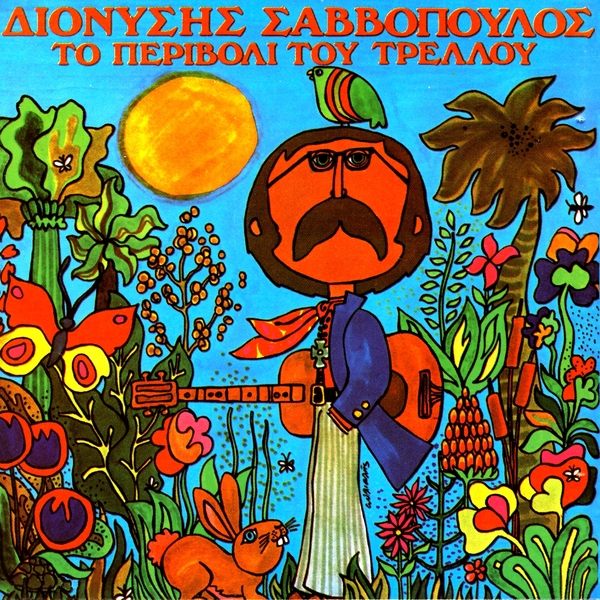 One night
Jimmy saw Dionysios
Savopoulosin
the audience and had a chat with him. At the time
I was vaguely familiar with Savopoulos because my
parents had a couple albums by him
including Perivoli to
Trelo(Garden of the Fool). He had a raspy
voice as distinctive in its own way as Dylan's.
In fact for a time he was known as the Bob Dylan
of Greece. (His first album is totally acoustic).
A year later Socrates had moved on to another
venue and Savopoulos and his band were playing at
the Kitaro. I was resistant to Jimmy's efforts to
come with him to hear Savopoulos. To me it was
like going to see someone my parents liked, whose
taste by most standards might have been
considered cool. But I was beyond cool, I
thought. If my parents liked the Greek Dylan then
I wanted to see the Greek Frank Zappa. Little did
I realize that Savopoulos was both. One night
Jimmy saw Dionysios
Savopoulosin
the audience and had a chat with him. At the time
I was vaguely familiar with Savopoulos because my
parents had a couple albums by him
including Perivoli to
Trelo(Garden of the Fool). He had a raspy
voice as distinctive in its own way as Dylan's.
In fact for a time he was known as the Bob Dylan
of Greece. (His first album is totally acoustic).
A year later Socrates had moved on to another
venue and Savopoulos and his band were playing at
the Kitaro. I was resistant to Jimmy's efforts to
come with him to hear Savopoulos. To me it was
like going to see someone my parents liked, whose
taste by most standards might have been
considered cool. But I was beyond cool, I
thought. If my parents liked the Greek Dylan then
I wanted to see the Greek Frank Zappa. Little did
I realize that Savopoulos was both.
The first time I went to see
Savopoulos I had no idea what to expect. I walked
through the familiar entrance of the Kitaro but
once inside it was different. What was once the
dance floor was now the stage and what was the
stage was where the drums and some of the amps
were. As the lights dimmed our attention was
drawn to the right side of the room where there
was a Karagiozi puppet theatre. This
had been the primary entertainment of Greece
before movies and it was a dying art form, but
Savopoulos was using his show to revive interest
in the treasures of the past. His next
re-introduction was an old woman with a uniquely
strange voice. This was
Sotiria
Bellou,one
of the most famous of the Rembetika singers of
the thirties, forties and fifties but sadly
forgotten by the early seventies. Savopoulos was
reviving her career in the same way that David
Bowie brought back Lou Reed and Iggy Pop from the
dead.
|
|
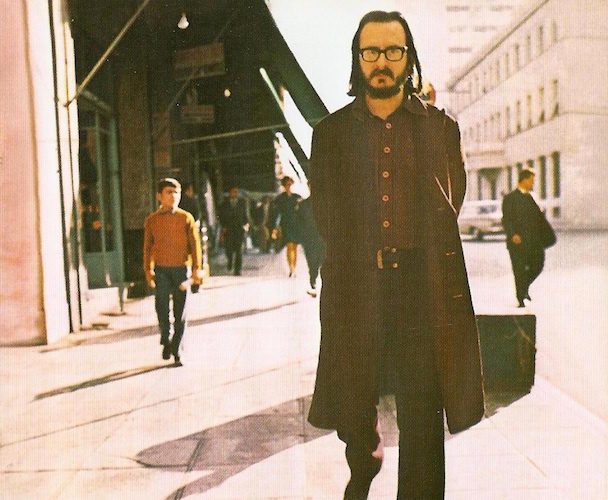 Savopoulos
show was a mixture of rock, Rembetika and Laika
(urban folk or popular), played with a
lineup that included himself on acoustic guitar,
two electric guitarists, (Vangelis Germanos was
one), bass, drums, a woman who played flute and a
guy who played tuba. (The bass player played
trumpet too.) From that night on I was hooked on
Savopoulos. I bought his latest album
called Vromiko
Psomi'(Dirty Bread). Because my Greek was
nowhere near good enough to understand the lyrics
much less the symbolism, Jimmy and Annetta would
tutor me on the meanings and hidden meanings.
This was during the Junta and certain things
could not be said out loud. But you could sing
them in disguised form. For example the first
song was called Elsa Se Fovame(Elsa You Scare Me) which sounds like
he is singing about a really lousy girlfriend.
But Elsa is a covert reference to the
dreaded 'Elliniki Stratiotiki Astynomia'
or ELSA, the military police which tortured
anybody suspected as a dissenter by the Junta. My
favorite song from the album and the show was a
song called Zembekiko that begins with a vocal accompanied
only by a solo bouzouki (or maybe a baglama) and
builds up to rock instrumentation while
maintaining the emotional passion of the
Zembekiko which is the traditional dance of
Rembetika. As I had spent my weekends going to
hear Socrates the previous year, I began going to
hear Savopoulos whenever I could, while trying to
convince my American friends to come along. So my
introduction to Rembetika came through rock
music, Socrates and Jimi Quidd, producer of the
Bad Brains. Jimi died in 1990. (Hear my song Old
friend which I wrote for
Jimi... but not until you have completed the
lesson.) I eventually embraced the music as a
familiar link to Greece and viewed myself as a
modern day Rembetis exiled in Carrboro, North
Carolina. Whereas in the past my time was spent
listening and learning from the music of the
Beatles, the Kinks, the Move and Free, currently
I listen predominantly to old Rembetika. Savopoulos
show was a mixture of rock, Rembetika and Laika
(urban folk or popular), played with a
lineup that included himself on acoustic guitar,
two electric guitarists, (Vangelis Germanos was
one), bass, drums, a woman who played flute and a
guy who played tuba. (The bass player played
trumpet too.) From that night on I was hooked on
Savopoulos. I bought his latest album
called Vromiko
Psomi'(Dirty Bread). Because my Greek was
nowhere near good enough to understand the lyrics
much less the symbolism, Jimmy and Annetta would
tutor me on the meanings and hidden meanings.
This was during the Junta and certain things
could not be said out loud. But you could sing
them in disguised form. For example the first
song was called Elsa Se Fovame(Elsa You Scare Me) which sounds like
he is singing about a really lousy girlfriend.
But Elsa is a covert reference to the
dreaded 'Elliniki Stratiotiki Astynomia'
or ELSA, the military police which tortured
anybody suspected as a dissenter by the Junta. My
favorite song from the album and the show was a
song called Zembekiko that begins with a vocal accompanied
only by a solo bouzouki (or maybe a baglama) and
builds up to rock instrumentation while
maintaining the emotional passion of the
Zembekiko which is the traditional dance of
Rembetika. As I had spent my weekends going to
hear Socrates the previous year, I began going to
hear Savopoulos whenever I could, while trying to
convince my American friends to come along. So my
introduction to Rembetika came through rock
music, Socrates and Jimi Quidd, producer of the
Bad Brains. Jimi died in 1990. (Hear my song Old
friend which I wrote for
Jimi... but not until you have completed the
lesson.) I eventually embraced the music as a
familiar link to Greece and viewed myself as a
modern day Rembetis exiled in Carrboro, North
Carolina. Whereas in the past my time was spent
listening and learning from the music of the
Beatles, the Kinks, the Move and Free, currently
I listen predominantly to old Rembetika.
|
What
Is Rembetika Music?
|
|
As I said earlier, Rembetika
was established in parts of mainland Greece in
the first two years of the 20th century. It made
use of 2-3 derivatives of the Turkish
saz (a.k.a. tampoura and
boulgari): The bouzouki and its
smaller brothers, the tzouras and the
baglamas. The saz itself is a
lute but quite different from the archetypal Arab
lute, 'al oud' - meaning 'wood'. The
latter was very popular in Asia Minor. Rembetika
were urban blues of a quasi-criminal subculture,
despised by the middle classes and suppressed by
the authorities.
 In 1921 the Greek army occupied Turkey
at the instigation of England, France, Italy and
Russia. The Ottoman empire was in a state of
collapse and the Great Powers, eager to carve up
the territory, let Greece know that if they were
to take the coast of Asia Minor where there were
two million Greeks living there from ancient
times, they could expect support. (They were
using Greece to do their dirty work for them
since the Italians had invaded from the south and
were marching North. They wanted to use the
Greeks to stop them from taking the entire coast
of Asia Minor.) All went well and the Greek army
controlled Smyrna and the coast but then two
things happened that sent events rapidly
downhill. The Greek army decided to march inland
and take Ankara while at the same time the French
backed out of the deal. This caused the other
powers to withdraw their support so as not to
start another world war. The Greek army found
itself in retreat from a Turkish army led by
Kemal Attaturk. As they passed through towns and
cities they were joined by the local Greek
population who did not want to be left behind
when the angry Turks swarmed into town. Thousands
died and the city of Smyrna was burned. In 1921 the Greek army occupied Turkey
at the instigation of England, France, Italy and
Russia. The Ottoman empire was in a state of
collapse and the Great Powers, eager to carve up
the territory, let Greece know that if they were
to take the coast of Asia Minor where there were
two million Greeks living there from ancient
times, they could expect support. (They were
using Greece to do their dirty work for them
since the Italians had invaded from the south and
were marching North. They wanted to use the
Greeks to stop them from taking the entire coast
of Asia Minor.) All went well and the Greek army
controlled Smyrna and the coast but then two
things happened that sent events rapidly
downhill. The Greek army decided to march inland
and take Ankara while at the same time the French
backed out of the deal. This caused the other
powers to withdraw their support so as not to
start another world war. The Greek army found
itself in retreat from a Turkish army led by
Kemal Attaturk. As they passed through towns and
cities they were joined by the local Greek
population who did not want to be left behind
when the angry Turks swarmed into town. Thousands
died and the city of Smyrna was burned.
|
|
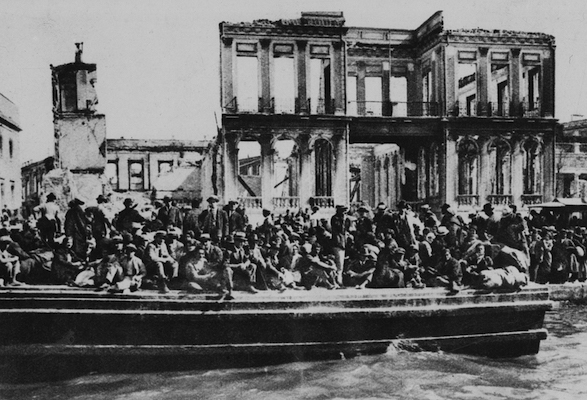 As the army retreated back to
Greece it brought with them the surviving Greek
population of Asia Minor. By 1922 there were two
million refugees in the country. These were
Greeks who had never lived in Greece. They had
come from the fertile lands of Anatolia but were
now forced to live in a small mountainous country
that could not support them, or in refugee
settlements in Pireaus and Thessaloniki. It was
in the cafes and hash dens near these settlements
that what we know as Rembetika was forged from
the early mainland movement with its bouzouki and
the oriental tunes, rhythms and singing
techniques that came from Asia Minor. As the army retreated back to
Greece it brought with them the surviving Greek
population of Asia Minor. By 1922 there were two
million refugees in the country. These were
Greeks who had never lived in Greece. They had
come from the fertile lands of Anatolia but were
now forced to live in a small mountainous country
that could not support them, or in refugee
settlements in Pireaus and Thessaloniki. It was
in the cafes and hash dens near these settlements
that what we know as Rembetika was forged from
the early mainland movement with its bouzouki and
the oriental tunes, rhythms and singing
techniques that came from Asia Minor.
Imagine yourself as a
refugee. In Asia Minor you may have had a
business, a nice home, money, friends, family.
But in the slums of Athens all you had was
whatever you could carry with you out of Turkey,
and your shattered dreams. You went from being in
the middle class to being underground in a
foreign country that did not particularly want
you. Rembetika was the music of these outcasts.
The lyrics reflected their surroundings, poverty,
pain, drug addiction, police oppression, prison,
unrequited love, betrayal and hashish. It was the
Greek urban blues.
Read Smyrna 1922:
The Destruction of a City by Marjorie
Housepian Dobkin, an amazing collection of
eyewitness accounts of the fall of the city, an
event that changed the history of Greece more
than any other. You can find this at
www.greektravel.com/books/history
|
|
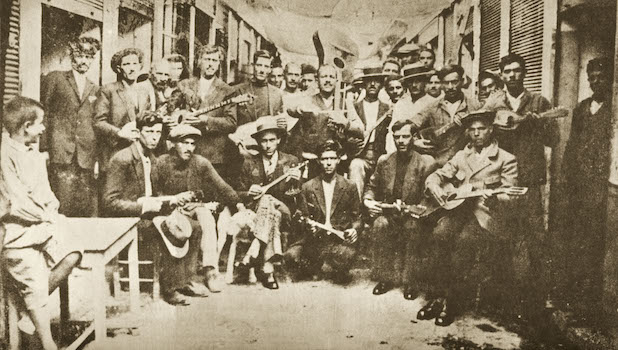 With the change of the mix
of followers from urban underclass to urban lower
middle-class majority, the mature Rembetika music
came out of the hash dens and the
tekedes (Turkish style underground
cafes) and into the taverns and nightclubs of
Athens where it became very popular. Though some
of the original Rembetika musicians had died
before this period due to overdoses, tuberculosis
and the general stress of the lifestyle, many
became stars, recorded records, toured and
generally did not have trouble finding work until
the sixties when it gave way to newer forms of
bouzouki-based music, superficially reminiscent
of the Rembetika. With the change of the mix
of followers from urban underclass to urban lower
middle-class majority, the mature Rembetika music
came out of the hash dens and the
tekedes (Turkish style underground
cafes) and into the taverns and nightclubs of
Athens where it became very popular. Though some
of the original Rembetika musicians had died
before this period due to overdoses, tuberculosis
and the general stress of the lifestyle, many
became stars, recorded records, toured and
generally did not have trouble finding work until
the sixties when it gave way to newer forms of
bouzouki-based music, superficially reminiscent
of the Rembetika.
|
|
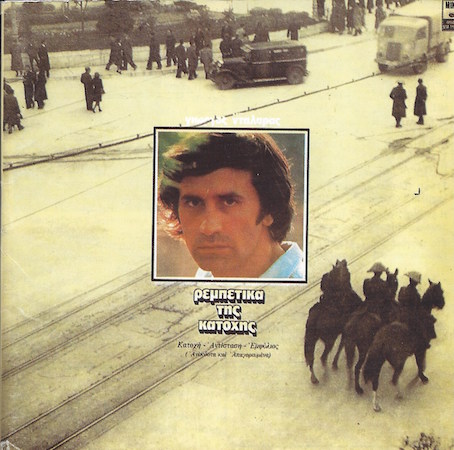 In my opinion
the strongest period of Rembetika was during the
German occupation and the Greek Civil War that
followed. I suppose like the early years in
Pireaus, the oppression was food for songs, much
in the same way that a lousy relationship can be
(When it is not totally debilitating). The album
by George Dalaras called
Rembetika Tis
Katohis(Rembetika of the Occupation), is a
modern recording of the best songs from that
period. My favorite is 'Saltadoros'by Michalis
Genitsaris.The song is about stealing fuel cans
from the back of German military trucks during
the Nazi occupation. Play
Saltadoros from Dalaras
Rembetika Tis Katohis. In my opinion
the strongest period of Rembetika was during the
German occupation and the Greek Civil War that
followed. I suppose like the early years in
Pireaus, the oppression was food for songs, much
in the same way that a lousy relationship can be
(When it is not totally debilitating). The album
by George Dalaras called
Rembetika Tis
Katohis(Rembetika of the Occupation), is a
modern recording of the best songs from that
period. My favorite is 'Saltadoros'by Michalis
Genitsaris.The song is about stealing fuel cans
from the back of German military trucks during
the Nazi occupation. Play
Saltadoros from Dalaras
Rembetika Tis Katohis.
They are jealous,
They don’t want to see me dressed well,
They want to see me down and out,
So that they can be pleased.
I’m going to jump,
I’m going to jump,
and their reserve tanks I will take.
So I always get
by,
Because I never get caught in a German’s
car,
So I’m always a winner.
I’m going to jump,
I’m going to jump,
and their reserve tanks I will take.
We hunt after gas and
oil,
From those who have the money,
And we celebrate.
Go ahead and throw down the supplies and
disappear.
The Germans are chasing
us,
But we don’t give a damn,
So we’ll keep on running,
Until we get killed.
I’m going to jump,
I’m going to jump,
and their reserve tanks I will take.
|
|
 Unfortunately, even though it is one of the most
interesting musical subjects and there is a vast
library of information and anecdotes in Greek,
there is very little in English about Rembetika
music. ROAD
TO REMBETIKAby Gail Holst is a good introduction to
the subject with a history of the music,
biographies of the musicians, some photos,
explanations of the musical structure and some
lyrics and translations. You can find this
at
www.greektravel.com/books/history
(She has also written a book
on Mikis Theodorakis, Greece's most renown
composer). But where do you go from there if you
have a hunger for more information? If you are
Greek or read it well you can buy the massive
Rembetika Tragoudia. Full of
stories, lyrics and thousands of Photos. This is
considered the Bible of Rembetika music, written
by Elias Petropoulos, an outspoken and
controversial character who has been a thorn in
the side of the Greek establishment for decades
due to his free thinking views on sexuality,
criminality, drugs, religion and Greek society
itself. The book was published in 1968 during the
military dictatorship and he served 5 months in
prison because of it. Click here to order or for more
information. If you don't speak Greek there
is good news for you. Elias Petropoulos'
SONGS OF THE GREEK UNDERWORLD: THE
REMBETIKA TRADITION has been translated
and updated by Ed Emery and contains the details
of everyday life of the Rembetes, the Ottoman
roots of the music and the shared culture of
Greece and Turkey. This is a very informative
book and I highly recommend it. There is a rumor
that Mr. Emory is working on a translation of
Rembetika Tragoudia but if you have seen the book
you will know that this could be a life-long
endeavor. So until you see the English version on
your bookshelf get a copy of SONGS OF THE GREEK
UNDERWORLD and that should keep you interested
until then.
www.greektravel.com/books/history
Unfortunately, even though it is one of the most
interesting musical subjects and there is a vast
library of information and anecdotes in Greek,
there is very little in English about Rembetika
music. ROAD
TO REMBETIKAby Gail Holst is a good introduction to
the subject with a history of the music,
biographies of the musicians, some photos,
explanations of the musical structure and some
lyrics and translations. You can find this
at
www.greektravel.com/books/history
(She has also written a book
on Mikis Theodorakis, Greece's most renown
composer). But where do you go from there if you
have a hunger for more information? If you are
Greek or read it well you can buy the massive
Rembetika Tragoudia. Full of
stories, lyrics and thousands of Photos. This is
considered the Bible of Rembetika music, written
by Elias Petropoulos, an outspoken and
controversial character who has been a thorn in
the side of the Greek establishment for decades
due to his free thinking views on sexuality,
criminality, drugs, religion and Greek society
itself. The book was published in 1968 during the
military dictatorship and he served 5 months in
prison because of it. Click here to order or for more
information. If you don't speak Greek there
is good news for you. Elias Petropoulos'
SONGS OF THE GREEK UNDERWORLD: THE
REMBETIKA TRADITION has been translated
and updated by Ed Emery and contains the details
of everyday life of the Rembetes, the Ottoman
roots of the music and the shared culture of
Greece and Turkey. This is a very informative
book and I highly recommend it. There is a rumor
that Mr. Emory is working on a translation of
Rembetika Tragoudia but if you have seen the book
you will know that this could be a life-long
endeavor. So until you see the English version on
your bookshelf get a copy of SONGS OF THE GREEK
UNDERWORLD and that should keep you interested
until then.
www.greektravel.com/books/history
|
|
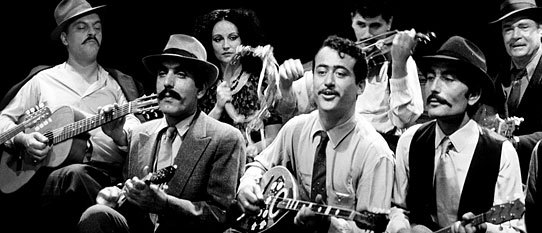 The movie
REMBETIKO by Kosta Ferris is a story based on the
lives of Marika Ninou and Vassilis Tsitsanis with
a fantastic soundtrack by
Stavros
Xarhakos. I
highly recommend buying this. Some versions are
subtitled and other's aren't so if you don't
speak Greek ask. The film documents the rise and
fall (and rise again) of Rembetika music. Even
though only a couple of the songs are actual old
Rembetika songs many of them are what you will
hear in the Rembetika clubs in present-day
Athens. There's a reason for this. They are Great
songs. I recommend the soundtrack too. If I am
not mistaken this is an old song from Smyrna
re-arranged by Xarhakos who is incidentally one
of Greece's greatest modern composers.
Play Ta Paidia
Tis Amynas from the
Soundtrack. The movie
REMBETIKO by Kosta Ferris is a story based on the
lives of Marika Ninou and Vassilis Tsitsanis with
a fantastic soundtrack by
Stavros
Xarhakos. I
highly recommend buying this. Some versions are
subtitled and other's aren't so if you don't
speak Greek ask. The film documents the rise and
fall (and rise again) of Rembetika music. Even
though only a couple of the songs are actual old
Rembetika songs many of them are what you will
hear in the Rembetika clubs in present-day
Athens. There's a reason for this. They are Great
songs. I recommend the soundtrack too. If I am
not mistaken this is an old song from Smyrna
re-arranged by Xarhakos who is incidentally one
of Greece's greatest modern composers.
Play Ta Paidia
Tis Amynas from the
Soundtrack.
|
Laika or
Rembetika?
|
|
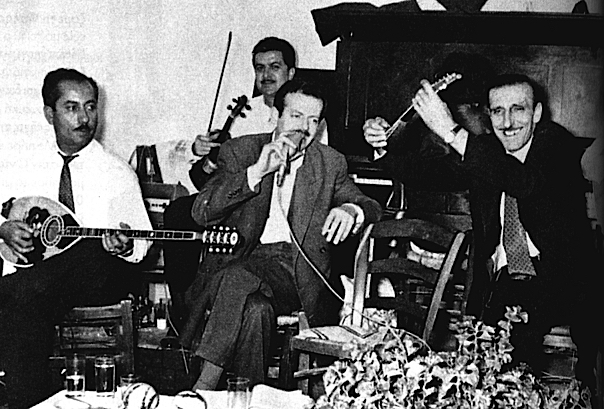 So what
is the difference between Rembetika and
Laika? Where can you draw the line? Well, if you
try to find differences in the instruments or
even the singers, you can't. You need to go much
deeper and study the music itself, the rhythms
(very austerely defined in the Rembetika) and the
subject matter before and after the Greek Civil
War 1946-49. 'Laika' literally means 'popular'
but it commonly means 'urban folk' (as opposed to
'demotika', the country folk) whereas Rembetika
means 'urban blues'. There are late rembetika and
laika musicians who became popular and traded in
their hash pipes for Mercedes and began writing
in a style to maintain their popularity
introducing new elements and gradually muddied
the waters which separated the two forms of
music. Let's make a comparison with western
popular music, in particular rock and roll. In
the beginning you have these old black guys in
the rural and urban areas of the south playing
their blues while at the same time you had these
white guys who were influenced by traditional
American and European folk, bluegrass and
country. These two groups (just to make it
simple) led to Chuck Berry and then Elvis and
eventually to Brittany Spears. To compare
Brittany to some old guy in a hut in Mississippi
is ridiculous but you could draw a line
connecting them and in between you have Little
Richard, The Beatles, James Brown, and every true
talent and manufactured non-talent that has
appeared in the last fifty or more years. There's
been R&B, rockabilly, soul, heavy metal,
folk-rock, latin-pop, surf music, symphonic rock
as different people and groups inserted their
influences. So what
is the difference between Rembetika and
Laika? Where can you draw the line? Well, if you
try to find differences in the instruments or
even the singers, you can't. You need to go much
deeper and study the music itself, the rhythms
(very austerely defined in the Rembetika) and the
subject matter before and after the Greek Civil
War 1946-49. 'Laika' literally means 'popular'
but it commonly means 'urban folk' (as opposed to
'demotika', the country folk) whereas Rembetika
means 'urban blues'. There are late rembetika and
laika musicians who became popular and traded in
their hash pipes for Mercedes and began writing
in a style to maintain their popularity
introducing new elements and gradually muddied
the waters which separated the two forms of
music. Let's make a comparison with western
popular music, in particular rock and roll. In
the beginning you have these old black guys in
the rural and urban areas of the south playing
their blues while at the same time you had these
white guys who were influenced by traditional
American and European folk, bluegrass and
country. These two groups (just to make it
simple) led to Chuck Berry and then Elvis and
eventually to Brittany Spears. To compare
Brittany to some old guy in a hut in Mississippi
is ridiculous but you could draw a line
connecting them and in between you have Little
Richard, The Beatles, James Brown, and every true
talent and manufactured non-talent that has
appeared in the last fifty or more years. There's
been R&B, rockabilly, soul, heavy metal,
folk-rock, latin-pop, surf music, symphonic rock
as different people and groups inserted their
influences.
|
|
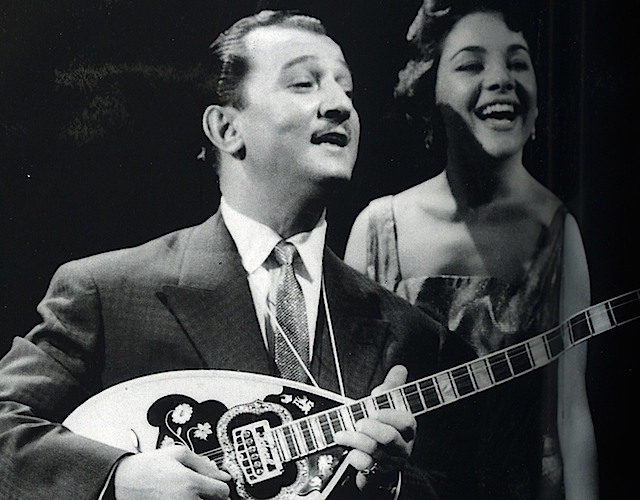 The same with
Rembetika. While the old guys were in the
tekedes smoking hashish and singing to
each other the rest of the country were not
staring at each other waiting for someone to
invent music. Each part of Greece had their
traditional music, much of it distinctive to a
particular island or area. There were influences
brought into Greece from the many men who took to
the ships and sailed around the world, such as
latin, jazz and blues. All these forms and
Rembetika and Laika combined and became the
popular Greek music or Laika and just like Chuck
Berry and Brittany Spears you can draw a line
from Markos Vamvakaris to the most commercial
laika-pop singer of the day. Some say that line
passes through Manolis Hiotis, the man who added
the 4th string to the bouzouki and electrified
it, sending rembetika careening off towards the
world of pop. While you can say that Hiotis
broadened the scope of bouzouki music you can
also say that he made more bad music possible.
But this is a battle for fanatics and purists
which I am not. Nobody forced the rembetis to
turn in their 3-string bouzoukia for the 4-string
and nobody forced them to leave the
tekedes and their hash-smoking buddies
to play nightclubs and make records and make
money too. Remember that the first Beatles fans
who heard the group play live in Liverpool and
Hamburg claim they made their best music before
they had ever made a record. What came later was
the commercial dregs despite these being the
songs we know and love. In rembetika too, even
the most diehard fan has never heard a young
Markos Vamvakaris and his buddies stoned out of
their minds playing in some back room somewhere.
All we have are the recordings which could never
fully capture the true essence of the music, the
time and the place. To be a rembetika purist is
like being a tourist. You can appreciate the
marble columns and broken walls but you will
never know what it was like to walk in the agora
among the ancient Greeks. The same with
Rembetika. While the old guys were in the
tekedes smoking hashish and singing to
each other the rest of the country were not
staring at each other waiting for someone to
invent music. Each part of Greece had their
traditional music, much of it distinctive to a
particular island or area. There were influences
brought into Greece from the many men who took to
the ships and sailed around the world, such as
latin, jazz and blues. All these forms and
Rembetika and Laika combined and became the
popular Greek music or Laika and just like Chuck
Berry and Brittany Spears you can draw a line
from Markos Vamvakaris to the most commercial
laika-pop singer of the day. Some say that line
passes through Manolis Hiotis, the man who added
the 4th string to the bouzouki and electrified
it, sending rembetika careening off towards the
world of pop. While you can say that Hiotis
broadened the scope of bouzouki music you can
also say that he made more bad music possible.
But this is a battle for fanatics and purists
which I am not. Nobody forced the rembetis to
turn in their 3-string bouzoukia for the 4-string
and nobody forced them to leave the
tekedes and their hash-smoking buddies
to play nightclubs and make records and make
money too. Remember that the first Beatles fans
who heard the group play live in Liverpool and
Hamburg claim they made their best music before
they had ever made a record. What came later was
the commercial dregs despite these being the
songs we know and love. In rembetika too, even
the most diehard fan has never heard a young
Markos Vamvakaris and his buddies stoned out of
their minds playing in some back room somewhere.
All we have are the recordings which could never
fully capture the true essence of the music, the
time and the place. To be a rembetika purist is
like being a tourist. You can appreciate the
marble columns and broken walls but you will
never know what it was like to walk in the agora
among the ancient Greeks.
|
|
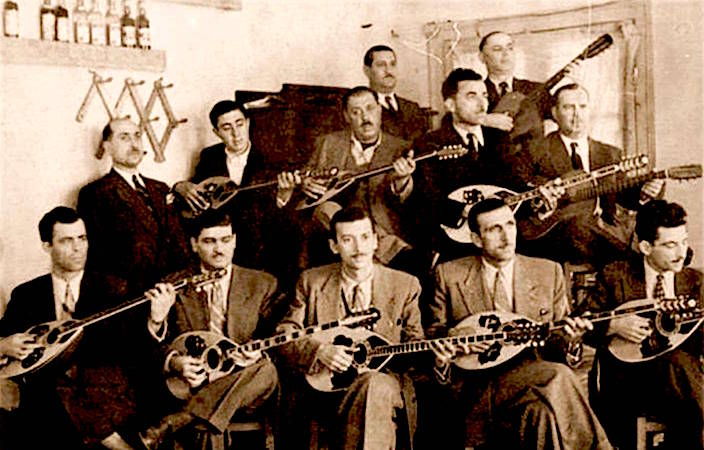 Rembetika's most important gift to
laika and to Greek popular music is the
bouzouki. How important is the
bouzouki to the rest of the world? Since
being introduced into Irish music it has become
one of the most played instruments. But this
pales compared to the effect it has had on
American music. In the nineteen-fifties a young
guitar player named Dick Dale
became popular on the west coast playing a
staccato-style electric guitar that he
learned from his uncle, a bouzouki player. Dick
Dale became the father of what is known as
Surf Music and his style influenced the
Ventures, the Beach Boys and
many generations of musicians. The amplifier
developed for Dick by his friend Leo
Fender to withstand this different style of
guitar playing became the most popular amps in
the world and there are few electric guitar
players who have not owned a Fender for
performing or practicing. Rembetika's most important gift to
laika and to Greek popular music is the
bouzouki. How important is the
bouzouki to the rest of the world? Since
being introduced into Irish music it has become
one of the most played instruments. But this
pales compared to the effect it has had on
American music. In the nineteen-fifties a young
guitar player named Dick Dale
became popular on the west coast playing a
staccato-style electric guitar that he
learned from his uncle, a bouzouki player. Dick
Dale became the father of what is known as
Surf Music and his style influenced the
Ventures, the Beach Boys and
many generations of musicians. The amplifier
developed for Dick by his friend Leo
Fender to withstand this different style of
guitar playing became the most popular amps in
the world and there are few electric guitar
players who have not owned a Fender for
performing or practicing.
|
The
Musicians
|
|
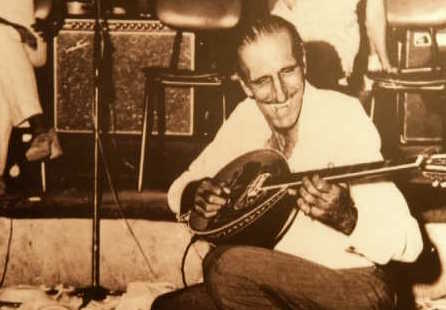 As for the music itself I
will list some of my favorites and anything
interesting I can recall about them. Generally it
is not essential to smoke hashish when you listen
to Rembetika but the two seem to go together
sometimes causing the songs to open up like a
ripe pomegranate. Though at times I long for
Greece, some of my happiest moments have been in
my kitchen in Carrboro, North Carolina with a
glass of ouzo (or retsina), some
mezedes(snacks to soak up the ouzo), and some
Greek friends who don't mind jumping up to dance
when the mood strikes them.....and some well
chosen Rembetika songs. The songs with links can
be played and they should open a new window so
you can continue to read or look at the
photos. As for the music itself I
will list some of my favorites and anything
interesting I can recall about them. Generally it
is not essential to smoke hashish when you listen
to Rembetika but the two seem to go together
sometimes causing the songs to open up like a
ripe pomegranate. Though at times I long for
Greece, some of my happiest moments have been in
my kitchen in Carrboro, North Carolina with a
glass of ouzo (or retsina), some
mezedes(snacks to soak up the ouzo), and some
Greek friends who don't mind jumping up to dance
when the mood strikes them.....and some well
chosen Rembetika songs. The songs with links can
be played and they should open a new window so
you can continue to read or look at the
photos.
|
Markos Vamvakaris
|
|
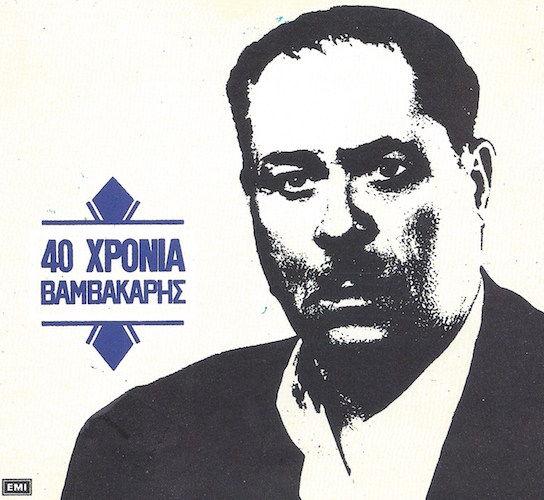 Markos
Vamvakarisin
some ways is considered the father of Rembetika.
It's true that he has written some of its most
memorable songs and his voice is unforgettable
and often imitated. He came from the village of
Ano Syro on the island of Syros which for a time was the
maritime capital of Greece. The island is also
rare in that it is half Greek Orthodox and half
Catholic and his song Frankosyriani(Catholic
Girl from Syros) is one of the most famous. Every
Greek can sing the lyrics to this song. There are
many CDs of his material available, much of it
from old 78's. Besides Frankosyriani some of my
favorite songs of his are:
'Ta Matoklada Sou
Lampoun'and To
Diazigio(The
Divorce). These are on the album called
'40 Years of
Vamvakaris'of which there are two versions. I like
the white version better than the brown. Another
album called 'Afieroma Sto Marko
Vamvakari',
is a collection recorded from old 78's. They are
early versions of his some of his best songs. I
have also included Oli e Rembetis Tou Dounia and
Safton to Kosmo Ton Kako by
Markos Vamvakaris and sung by
Bithikotsis. Markos
Vamvakarisin
some ways is considered the father of Rembetika.
It's true that he has written some of its most
memorable songs and his voice is unforgettable
and often imitated. He came from the village of
Ano Syro on the island of Syros which for a time was the
maritime capital of Greece. The island is also
rare in that it is half Greek Orthodox and half
Catholic and his song Frankosyriani(Catholic
Girl from Syros) is one of the most famous. Every
Greek can sing the lyrics to this song. There are
many CDs of his material available, much of it
from old 78's. Besides Frankosyriani some of my
favorite songs of his are:
'Ta Matoklada Sou
Lampoun'and To
Diazigio(The
Divorce). These are on the album called
'40 Years of
Vamvakaris'of which there are two versions. I like
the white version better than the brown. Another
album called 'Afieroma Sto Marko
Vamvakari',
is a collection recorded from old 78's. They are
early versions of his some of his best songs. I
have also included Oli e Rembetis Tou Dounia and
Safton to Kosmo Ton Kako by
Markos Vamvakaris and sung by
Bithikotsis.
You can visit Markos
Vamvakaris home which is now a museum in Ano
Syros, open in July and August. There is a small
platia and a statue of him. His autobiography,
now available in English, is a very popular book.
|
Vassilis Tsitsanis
|
|
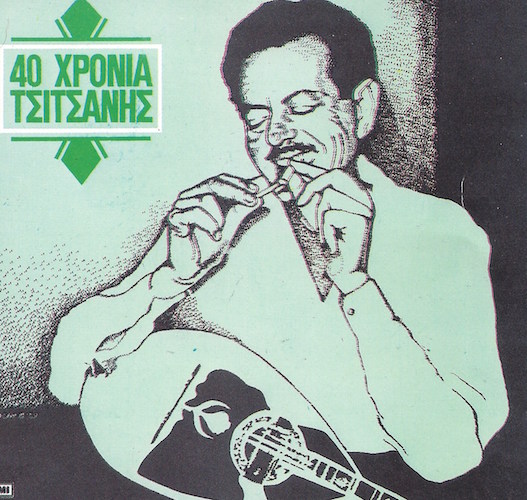 Vassilis Tsitsanisis considered the finest Rembetika
composer having written over two thousand songs.
2000 songs! Though not a Rembetes in the sense of
being an outcast, (he came to Athens to study
law), he has written some of the best rembetika
and laika. He also discovered and recorded with
some of the finest women singers including Marika
Ninou and Sotiria Bellou. The song
'Synefiasmeni
Kyriaki'(Cloudy Sunday) is one of the most
beautifully sad songs in any language. It was
written during the occupation and is a song that
can be sung by any Greek. This version is
Tsitsanis with the great Stelios
Kazantzidis singing. Besides the collection
'40 Years of
Tsitsanis'I
recommend the 'Sotiria Bellou
#6'which is
actually a collection of her singing his songs.
But your best bet is The Elada of Vassilis
Tsitsanis.
From 40 Years comes Ego Plirono ta Matia P' agapo
(I Pay for the Eyes that I Love) which is one of
the most popular laika songs. There are several
biographies of Tsitsanis, all in Greek.
Vassilis Tsitsanisis considered the finest Rembetika
composer having written over two thousand songs.
2000 songs! Though not a Rembetes in the sense of
being an outcast, (he came to Athens to study
law), he has written some of the best rembetika
and laika. He also discovered and recorded with
some of the finest women singers including Marika
Ninou and Sotiria Bellou. The song
'Synefiasmeni
Kyriaki'(Cloudy Sunday) is one of the most
beautifully sad songs in any language. It was
written during the occupation and is a song that
can be sung by any Greek. This version is
Tsitsanis with the great Stelios
Kazantzidis singing. Besides the collection
'40 Years of
Tsitsanis'I
recommend the 'Sotiria Bellou
#6'which is
actually a collection of her singing his songs.
But your best bet is The Elada of Vassilis
Tsitsanis.
From 40 Years comes Ego Plirono ta Matia P' agapo
(I Pay for the Eyes that I Love) which is one of
the most popular laika songs. There are several
biographies of Tsitsanis, all in Greek.
|
Sotiria Bellou and Marika
Ninou
|
|
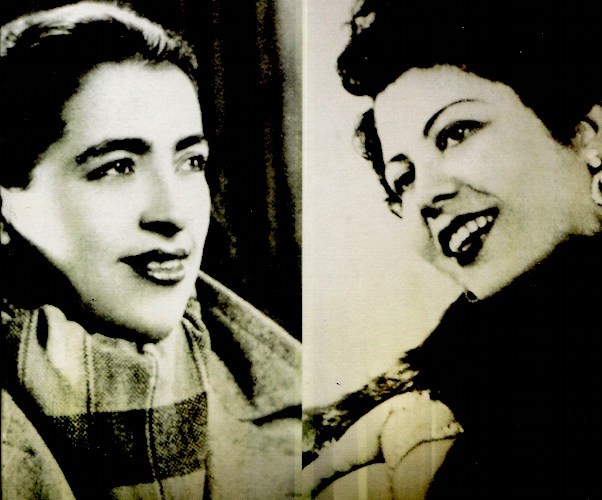 There are
many Sotiria
Belloualbums
and she is perhaps the most famous and recognized
voice of all Rembetika singers male or female,
but I have the opinion that her earliest stuff is
the best when her voice has a much softer quality
then the Bellou most people are familiar with.
Look for CD's made from good quality 78's. She
recently died and was given a state funeral but
the last years of her life were bitter and very
difficult. I have a couple of her songs to listen
to. The first is Ase Me Ase Me (Leave me, Leave
Me) with Papaioannou and Kane Ligaki Epomoni (Have a
Little Patience) which she recorded with
Tsitsanis and was written during the occupation.
Her biography is available but only in Greek.
The Marika
Ninoualbum
called Oi
Megali Tou Rembetika
#19is
one of my favorites but I have only found it on
cassette. She recorded and played with a number
of musicians including Tsitsanis and as mentioned
before, the movie 'Rembetika' is based on her
life. My favorite songs of hers are
'Logia Antalazame
Bareia' and
'Agapi Pou Gines Dikopo Macheri
(Love that becomes a Double-edged
Knife) which is one of Hatzidakis most sad
and beautiful songs. The best collection of her
material that I have found is Marika
Ninou: Ta Megala Portraita put out
by Minos EMI. From this CD I have included
Yenithika Ya Na Pono (I Was
Born to be in Pain). There are
many Sotiria
Belloualbums
and she is perhaps the most famous and recognized
voice of all Rembetika singers male or female,
but I have the opinion that her earliest stuff is
the best when her voice has a much softer quality
then the Bellou most people are familiar with.
Look for CD's made from good quality 78's. She
recently died and was given a state funeral but
the last years of her life were bitter and very
difficult. I have a couple of her songs to listen
to. The first is Ase Me Ase Me (Leave me, Leave
Me) with Papaioannou and Kane Ligaki Epomoni (Have a
Little Patience) which she recorded with
Tsitsanis and was written during the occupation.
Her biography is available but only in Greek.
The Marika
Ninoualbum
called Oi
Megali Tou Rembetika
#19is
one of my favorites but I have only found it on
cassette. She recorded and played with a number
of musicians including Tsitsanis and as mentioned
before, the movie 'Rembetika' is based on her
life. My favorite songs of hers are
'Logia Antalazame
Bareia' and
'Agapi Pou Gines Dikopo Macheri
(Love that becomes a Double-edged
Knife) which is one of Hatzidakis most sad
and beautiful songs. The best collection of her
material that I have found is Marika
Ninou: Ta Megala Portraita put out
by Minos EMI. From this CD I have included
Yenithika Ya Na Pono (I Was
Born to be in Pain).
|
Yiannis Papayoannou
|
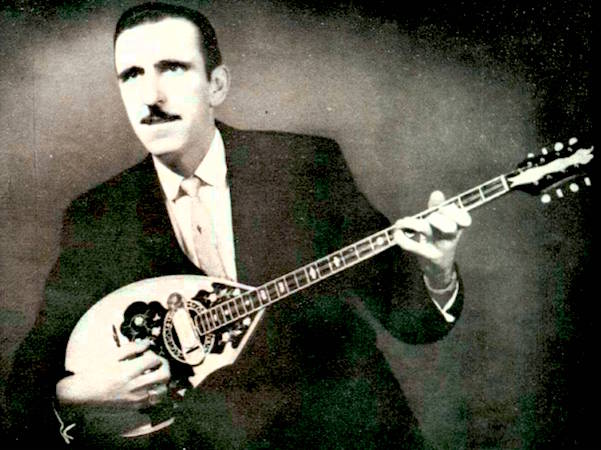 My favorite
songs are by Yiannis
Papayoannouand
my favorite Rembetika collection is
The Elada of Yannis
Papayoannouwhich I carry around with me just in case
I go somewhere that needs an injection of kefi. He
also wrote an autobiography which has yet to be
translated into English. "Capitan Andrea
Zeppo'is
perhaps his most famous song about an actual
character of the time. Another of his many great
songs is 'Vyieke O Haros Na Psarepsi'
(Death Goes Fishing) about a meeting with the angel
of death. An example of his laika is 'Then Se Thelo Pia' (I Don't Want
You Anymore). Papayoannou was one of the most
popular laika and rembetika musicians of the 40's,
50's and 60's and he might still be today had he
not died in a car accident in 1972. This CD was
number 1 in my top CD
picks. My favorite
songs are by Yiannis
Papayoannouand
my favorite Rembetika collection is
The Elada of Yannis
Papayoannouwhich I carry around with me just in case
I go somewhere that needs an injection of kefi. He
also wrote an autobiography which has yet to be
translated into English. "Capitan Andrea
Zeppo'is
perhaps his most famous song about an actual
character of the time. Another of his many great
songs is 'Vyieke O Haros Na Psarepsi'
(Death Goes Fishing) about a meeting with the angel
of death. An example of his laika is 'Then Se Thelo Pia' (I Don't Want
You Anymore). Papayoannou was one of the most
popular laika and rembetika musicians of the 40's,
50's and 60's and he might still be today had he
not died in a car accident in 1972. This CD was
number 1 in my top CD
picks.
|
Loukas Daralas
|
|
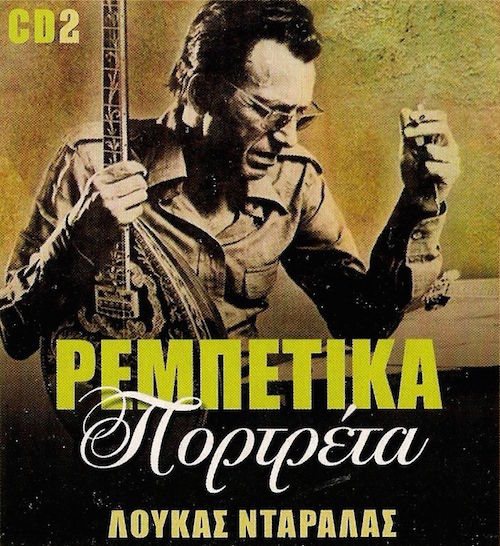 Loukas
Daralasis
one of the forgotten Rembetis of the fifties and
early sixties. His song 'To Vouno' (The Mountain) is
one of the most well known and just about every
cool Greek person starts singing along whenever
they hear it. To Vouno has since become one of
the most recorded songs in Greece. My friend, the
New York City musician Avram Pengas who grew up
in Israel remembers when he would wake up to find
Daralas crashing on his parents living room
couch. I discovered him when I was first
interested in Rembetika music and I went to a
Greek Gift and Record shop on Broadway in
Astoria, New York and asked the owner if I were
to buy one Rembetika album which one should it
be. He gave me a copy of Daralas's
'Enas
Rembetis'and
I have been listening to it for more than twenty
years. Neither he nor any of his records are
listed in the catalogs and for some reason he has
not gotten the respect that many people believe
he deserves but if you can find this album, buy
it. I recently found a re-release of his first
two albums in a CD shop in Kaloni-Lesvos and I
have seen that there is a re-release of Enas
Rembetis. But it is difficult to find information
or even photos of Loukas Daralas. Loukas
Daralasis
one of the forgotten Rembetis of the fifties and
early sixties. His song 'To Vouno' (The Mountain) is
one of the most well known and just about every
cool Greek person starts singing along whenever
they hear it. To Vouno has since become one of
the most recorded songs in Greece. My friend, the
New York City musician Avram Pengas who grew up
in Israel remembers when he would wake up to find
Daralas crashing on his parents living room
couch. I discovered him when I was first
interested in Rembetika music and I went to a
Greek Gift and Record shop on Broadway in
Astoria, New York and asked the owner if I were
to buy one Rembetika album which one should it
be. He gave me a copy of Daralas's
'Enas
Rembetis'and
I have been listening to it for more than twenty
years. Neither he nor any of his records are
listed in the catalogs and for some reason he has
not gotten the respect that many people believe
he deserves but if you can find this album, buy
it. I recently found a re-release of his first
two albums in a CD shop in Kaloni-Lesvos and I
have seen that there is a re-release of Enas
Rembetis. But it is difficult to find information
or even photos of Loukas Daralas.
|
George Dalaras
|
|
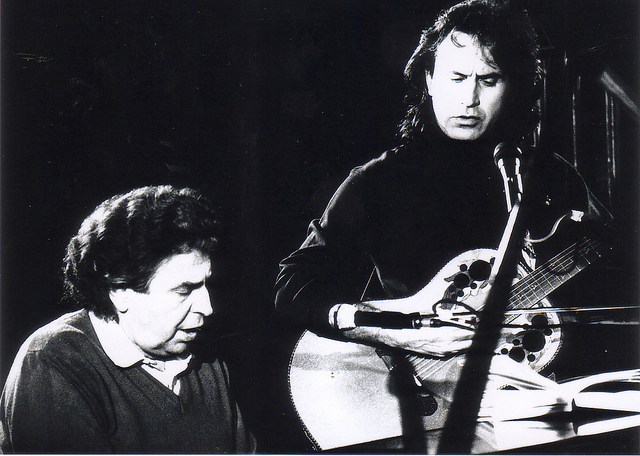 Not so with his son: George
Dalaras,who
is to Greek music as Webster's Dictionary is to
words. With over 75 albums it is difficult to say
where to start. He is a gifted singer with
excellent taste. He sings in many different
styles and has recorded the material of Greece's
greatest composers (Including Mikis Theodorakis
in the photo). If you want a general overview of
Rembetika music, his '50
Years of Rembetika
Songs'is a great place to start. It features
songs by Tsitsanis, Vamvakaris and others. In my
opinion his finest works are the previously
mentioned 'Rembetika Tis
Katohis'(Rembetika from the Occupation) and my
favorite 'Thelo
Na Ta Po'which is a collaboration with
composer Aki
Panou,an
album combining fine production, instrumentation
and Dalaras's amazing voice. In my opinion Aki
Panou's Xarokopou 1942-1953 is the
best Greek song of the modern period. You can
also hear Dalaras recording of
Bagiantera's Nane glyko to boli, a call for
the young men and women of Greece to join the
resistance against the Germans from Rembetika
Tis Katohis and Skarbeltis'
Ti Sou Lei E Mana Sou (What
Did Your Mother Say?)from 50 Years of
Rembetika Songs.
Not so with his son: George
Dalaras,who
is to Greek music as Webster's Dictionary is to
words. With over 75 albums it is difficult to say
where to start. He is a gifted singer with
excellent taste. He sings in many different
styles and has recorded the material of Greece's
greatest composers (Including Mikis Theodorakis
in the photo). If you want a general overview of
Rembetika music, his '50
Years of Rembetika
Songs'is a great place to start. It features
songs by Tsitsanis, Vamvakaris and others. In my
opinion his finest works are the previously
mentioned 'Rembetika Tis
Katohis'(Rembetika from the Occupation) and my
favorite 'Thelo
Na Ta Po'which is a collaboration with
composer Aki
Panou,an
album combining fine production, instrumentation
and Dalaras's amazing voice. In my opinion Aki
Panou's Xarokopou 1942-1953 is the
best Greek song of the modern period. You can
also hear Dalaras recording of
Bagiantera's Nane glyko to boli, a call for
the young men and women of Greece to join the
resistance against the Germans from Rembetika
Tis Katohis and Skarbeltis'
Ti Sou Lei E Mana Sou (What
Did Your Mother Say?)from 50 Years of
Rembetika Songs.
Another note about
George Dalaras: He played at a small club in the
Plaka called Zoom very close to where I was
living. It could probably hold several hundred
people and yet I saw him around the same time
playing at Olympic stadium to ninety thousand
people, most of them singing along. Have you ever
heard ninety thousand people sing together? It's
an amazing experience. One I will never
forget.
|
Apostolis Kaldaras
|
|
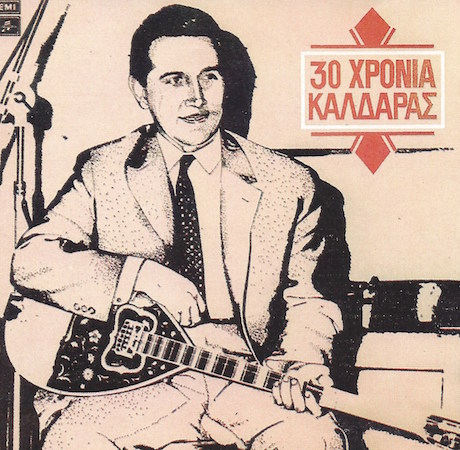 Dalaras
seems to be a great fan of Apostolis
Kaldaras, a Laiki-Rembetika singer of
the 50's and 60's and has recorded several albums
of his material. Kaldaras, like Tsitsanis, came
from Trikala and had a 20 year musical
partnership with the singer Stelios Kazantzides,
generally considered Greece's Sinatra. The best
Kaldaras album in my opinion is 30 Years of
Kaldaras. Though he was accused of lifting
some of his songs from Indian films of the late
fifties and early sixties, the volume and quality
of his songs is enough for me to consider
Kaldaras as one of the top songwriters in Greek
music. I have included a couple of my favorite
songs of his, Mou Spasane To Baglama (They
Broke my Baglama) and Eviva Rembetes (Here's to the
rembetes), both about Rembetika but probably
considered Laika. A classic album is Mikra
Asia, written by Kaldaras and
Pythagora and sung by Dalaras
and Haris Alexiou. These are
songs about the Asia Minor Catastrophe of 1922
and this was one of the best selling laika albums
and certainly one of Dalaras biggest selling
albums. Perhaps his most famous song is
Nichtose Horis Fegari (Moonless Night),
written during the Second World War and recorded
by numerous artists. Dalaras
seems to be a great fan of Apostolis
Kaldaras, a Laiki-Rembetika singer of
the 50's and 60's and has recorded several albums
of his material. Kaldaras, like Tsitsanis, came
from Trikala and had a 20 year musical
partnership with the singer Stelios Kazantzides,
generally considered Greece's Sinatra. The best
Kaldaras album in my opinion is 30 Years of
Kaldaras. Though he was accused of lifting
some of his songs from Indian films of the late
fifties and early sixties, the volume and quality
of his songs is enough for me to consider
Kaldaras as one of the top songwriters in Greek
music. I have included a couple of my favorite
songs of his, Mou Spasane To Baglama (They
Broke my Baglama) and Eviva Rembetes (Here's to the
rembetes), both about Rembetika but probably
considered Laika. A classic album is Mikra
Asia, written by Kaldaras and
Pythagora and sung by Dalaras
and Haris Alexiou. These are
songs about the Asia Minor Catastrophe of 1922
and this was one of the best selling laika albums
and certainly one of Dalaras biggest selling
albums. Perhaps his most famous song is
Nichtose Horis Fegari (Moonless Night),
written during the Second World War and recorded
by numerous artists.
|
Dionysis Savopoulos
|
|
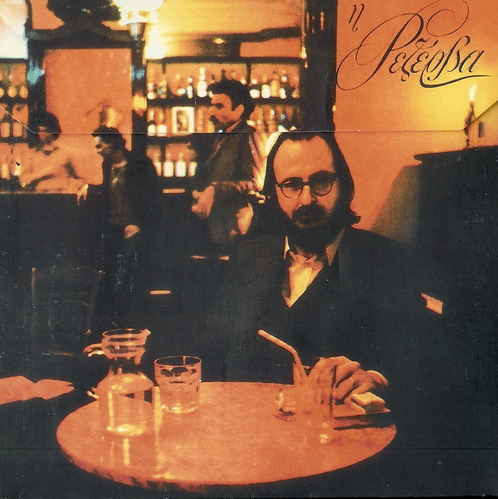 Dionysis
Savopoulosis
also considered Laika but that's like
saying Frank Zappa played 'popular music'. It
goes much deeper then that and some of my
favorite Savopoulos albums are a mixture of
Laika, Rembetika and I don't know what. Some love
him, some hate him (and many loved him and now
could care less about him). I think he has two
masterpieces or near masterpieces, but there are
other opinions. My favorite is
'To
Vromiko Psomi'which is a cross between Rembetika,
Jethro Tull and the Salvation Army Marching Band.
It was written and recorded during the Junta
period and there are some very powerful
anti-government songs, cleverly wrapped in
poetry. My second favorite is his double album
called 'Reserva'.It's
very melodic and offers only glimpses of
rembetika. Most people believe that Savopoulos's
best work is his oldest in the same way that
Kinks purists view the early work of Ray Davies.
For that reason his Lyra Collection is on my top
10 list. It is 9 CD's in a lyric, history and
interview book. At $150 it is not cheap, but I
bought it and am glad I did. From that collection
you can listen to Zembekiko from To Vromiko
Psomi, Yia Tin Kypro (For Cyprus)
from Reserva and Den Eine
Rythmos (This is not Rhythm)
from Trapezakia Exo. There is also a
biography of Savopoulos by Kostas
Mpliaktas available only in Greek. Dionysis
Savopoulosis
also considered Laika but that's like
saying Frank Zappa played 'popular music'. It
goes much deeper then that and some of my
favorite Savopoulos albums are a mixture of
Laika, Rembetika and I don't know what. Some love
him, some hate him (and many loved him and now
could care less about him). I think he has two
masterpieces or near masterpieces, but there are
other opinions. My favorite is
'To
Vromiko Psomi'which is a cross between Rembetika,
Jethro Tull and the Salvation Army Marching Band.
It was written and recorded during the Junta
period and there are some very powerful
anti-government songs, cleverly wrapped in
poetry. My second favorite is his double album
called 'Reserva'.It's
very melodic and offers only glimpses of
rembetika. Most people believe that Savopoulos's
best work is his oldest in the same way that
Kinks purists view the early work of Ray Davies.
For that reason his Lyra Collection is on my top
10 list. It is 9 CD's in a lyric, history and
interview book. At $150 it is not cheap, but I
bought it and am glad I did. From that collection
you can listen to Zembekiko from To Vromiko
Psomi, Yia Tin Kypro (For Cyprus)
from Reserva and Den Eine
Rythmos (This is not Rhythm)
from Trapezakia Exo. There is also a
biography of Savopoulos by Kostas
Mpliaktas available only in Greek.
|
Apostolos Nikolaidis
|
|
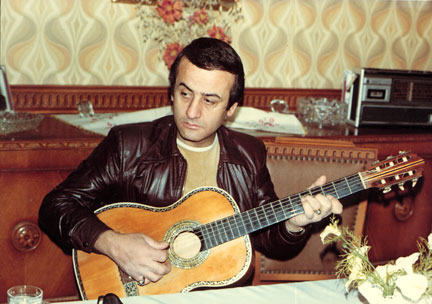 "It it widely
acknowledged in Greece by serious music
journalists and researchers of the rebetiko that
Apostolos Nikolaidis (1938-1999) was the artist
who first brought back to light the forgotten and
outlawed rebetika and sparked new interest in
this genre. Specifically, Nikolaidis was the
first singer to re-interpret the illegal rebetika
songs in their original lyrics and the first
artist to pay homage to the overlooked rebetika
composers of the 20s and 30s. He did this chiefly
through the release of the album "Otan Kapnizi O
Loulas" in early 1973. Nikolaidis recorded and
initially released the album in the United States
because of the dictatorship's ban of the rebetika
and the general ill-feeling towards the genre at
the time. This release has sold over three
million copies to date and is considered a
classic rebetika album in Greece and in
Greek-speaking communities around the world. It
was smuggled illegally into the Greece until the
junta was overthrown in 1974. In fact, George
Dalaras came to the U.S. in 1973, met up with
Nikolaidis, and bought the first copy of that
album from a New York City record shop on the day
of its release. Dalaras was one of the many
artists to release a rebetika record after
Nikolaidis." -
Maria Nichols
"It it widely
acknowledged in Greece by serious music
journalists and researchers of the rebetiko that
Apostolos Nikolaidis (1938-1999) was the artist
who first brought back to light the forgotten and
outlawed rebetika and sparked new interest in
this genre. Specifically, Nikolaidis was the
first singer to re-interpret the illegal rebetika
songs in their original lyrics and the first
artist to pay homage to the overlooked rebetika
composers of the 20s and 30s. He did this chiefly
through the release of the album "Otan Kapnizi O
Loulas" in early 1973. Nikolaidis recorded and
initially released the album in the United States
because of the dictatorship's ban of the rebetika
and the general ill-feeling towards the genre at
the time. This release has sold over three
million copies to date and is considered a
classic rebetika album in Greece and in
Greek-speaking communities around the world. It
was smuggled illegally into the Greece until the
junta was overthrown in 1974. In fact, George
Dalaras came to the U.S. in 1973, met up with
Nikolaidis, and bought the first copy of that
album from a New York City record shop on the day
of its release. Dalaras was one of the many
artists to release a rebetika record after
Nikolaidis." -
Maria Nichols
|
Apagorevmena
Rembetika(Forbidden
Rembetika)
|
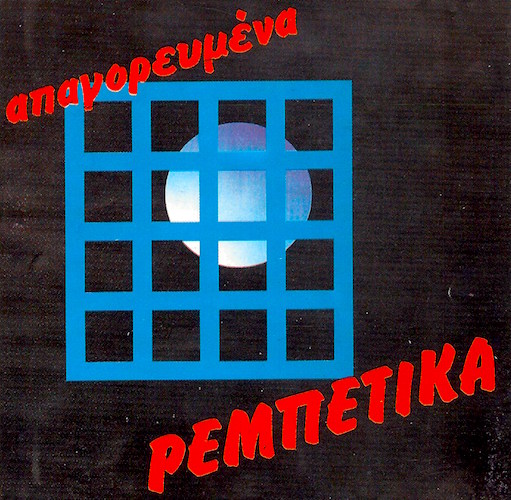 There are
many other songs and performers that I recommend
and even more that I have yet to hear. There are
numerous collections of re-recordings and
originals, some of dubious quality, but those I
have mentioned here are a pretty safe bet. One of
my favorite collections is one called
Apagorevmena
Rembetika(Forbidden Rembetika). These are the
songs that are most obviously about drugs and life
in the underworld as recorded from the original
78's. Many of the artists listed above have songs
on this collection and most, if not all of these
songs were banned at one time or another. From this
great CD I have Ferte Preza Na Prezaro by
Stelakis Perpeniadis. The title means "Give me a
Pinch to Snort" which is slang for doing heroin or
I suppose cocaine as well. A later version of this
song was recorded for the movie
Rembetika.
In fact it was the only song
that was an original rembetika song and not written
for the movie. There are now other versions of
Apagorevmena Rembetika albums available and an
entire 65 Song 4-CD Collection called
65 Apagorevmena
Rembetika Otan Simvi Sta Perix
but many of them are out of
print and you have to find them used on Amazon or
Ebay. There are
many other songs and performers that I recommend
and even more that I have yet to hear. There are
numerous collections of re-recordings and
originals, some of dubious quality, but those I
have mentioned here are a pretty safe bet. One of
my favorite collections is one called
Apagorevmena
Rembetika(Forbidden Rembetika). These are the
songs that are most obviously about drugs and life
in the underworld as recorded from the original
78's. Many of the artists listed above have songs
on this collection and most, if not all of these
songs were banned at one time or another. From this
great CD I have Ferte Preza Na Prezaro by
Stelakis Perpeniadis. The title means "Give me a
Pinch to Snort" which is slang for doing heroin or
I suppose cocaine as well. A later version of this
song was recorded for the movie
Rembetika.
In fact it was the only song
that was an original rembetika song and not written
for the movie. There are now other versions of
Apagorevmena Rembetika albums available and an
entire 65 Song 4-CD Collection called
65 Apagorevmena
Rembetika Otan Simvi Sta Perix
but many of them are out of
print and you have to find them used on Amazon or
Ebay.
|
|
Give Me a Pinch to
Snort
Hey guys, don't ask
me,
Why I'm always brooding
I have a sorrow in my heart,
Because of her and I'm tormented
Give me a pinch to snort
And some hashish to smoke
Irene has made me
crazy
With her yellow heels
I talk to her but she doesn't respond
She cracks up laughing and moves her body
Give me a pinch to snort
And some hashish to smoke
This outgoing guy,
Might be in pain but he doesn't show it
And even though he's singing, "you lying
world,"
Inside, his heart is crying
Give me a pinch to snort
And some hashish to smoke
|
Giorgos
Mitsakis
|
|
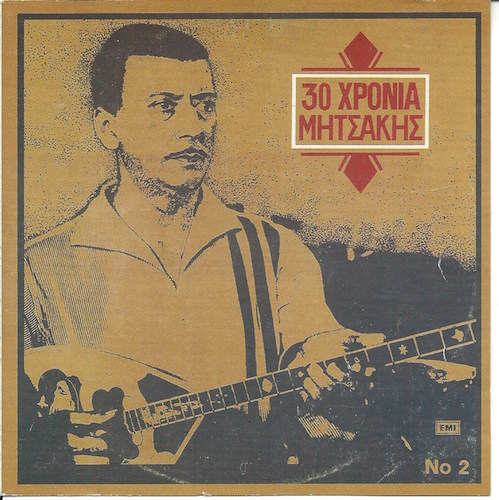 30 Years of
Mitsakisis
also one of my favorites and most often played
CD. Giorgos Mitsakis came from Constantinople but
moved to Greece just in time for the Second World
War. He lived in Kavala and later the fishing
village of Amfissos near Volos before moving to
Thessaloniki where he met up with Tsitsanis. He
later moved to Pireaus where he played with just
about everybody in the forties, fifties and
sixties and he wrote over 700 songs, many of
which are considered rembetika and laika
classics. I have included his song Otan Kapnizi O Loulas which
means when you smoke the loulas. What a
loulas is can be debated. Some say a hookah. My
wife's cousin who makes his own ouzo in Lesvos
says it is a still. I don't think it matters. This song has
been recorded by a number of people. 30 Years of
Mitsakisis
also one of my favorites and most often played
CD. Giorgos Mitsakis came from Constantinople but
moved to Greece just in time for the Second World
War. He lived in Kavala and later the fishing
village of Amfissos near Volos before moving to
Thessaloniki where he met up with Tsitsanis. He
later moved to Pireaus where he played with just
about everybody in the forties, fifties and
sixties and he wrote over 700 songs, many of
which are considered rembetika and laika
classics. I have included his song Otan Kapnizi O Loulas which
means when you smoke the loulas. What a
loulas is can be debated. Some say a hookah. My
wife's cousin who makes his own ouzo in Lesvos
says it is a still. I don't think it matters. This song has
been recorded by a number of people.
When the hookah is
smoking,
You shouldn’t talk.
Look around and see the wise guys,
They’re all minding their own
business.
Listen to the baglama
playing,
And find a joint for us.
And when we get stoned,
We have to be very careful.
In case someone sees
us,
And they catch us,
So they won’t find a reason,
And take us all to prison.
|
Kazantzidis
and the Best of the Rest
|
|
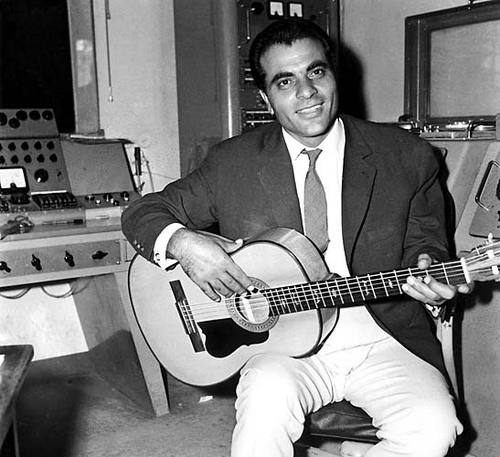 Stelios
Kazantzidis started as a rembetika
singer in the fifties and became perhaps the most
popular laiko singer in Greece. He is to
Greece as Frank Sinatra is to the USA. His
version of Synefiasmeni
Kyriaki'(Cloudy Sunday) is the most popular.
This is him singing Den Thelo To Kako Sou (I
don't want badness for you) with Yannis Papaioannou. There are
dozens of Kazantzidis albums available and an
excellent 4-CD collection Stelios Kazantzidis
Anthologia 1931-2001 which starts with some
of his earliest rembetika and goes all the way to
his contemporary rembetika/laika.
Poly
Panou is an
elegant female vocalist from the fifties and
sixties with the world's sexiest voice who sang
with just about everyone. I have included a
couple songs from her CD Aksehastes
Epithies of which there are two
versions, a white one and a black one. These are
from the black one. The first is the Kaldaras
song Ferte Mia Koupa Me Krasi
(Bring me a glass of wine) and the second is
Esena Then Sou Aksize Agapi
(You don't deserve love) both laika songs. Stelios
Kazantzidis started as a rembetika
singer in the fifties and became perhaps the most
popular laiko singer in Greece. He is to
Greece as Frank Sinatra is to the USA. His
version of Synefiasmeni
Kyriaki'(Cloudy Sunday) is the most popular.
This is him singing Den Thelo To Kako Sou (I
don't want badness for you) with Yannis Papaioannou. There are
dozens of Kazantzidis albums available and an
excellent 4-CD collection Stelios Kazantzidis
Anthologia 1931-2001 which starts with some
of his earliest rembetika and goes all the way to
his contemporary rembetika/laika.
Poly
Panou is an
elegant female vocalist from the fifties and
sixties with the world's sexiest voice who sang
with just about everyone. I have included a
couple songs from her CD Aksehastes
Epithies of which there are two
versions, a white one and a black one. These are
from the black one. The first is the Kaldaras
song Ferte Mia Koupa Me Krasi
(Bring me a glass of wine) and the second is
Esena Then Sou Aksize Agapi
(You don't deserve love) both laika songs.
|
|
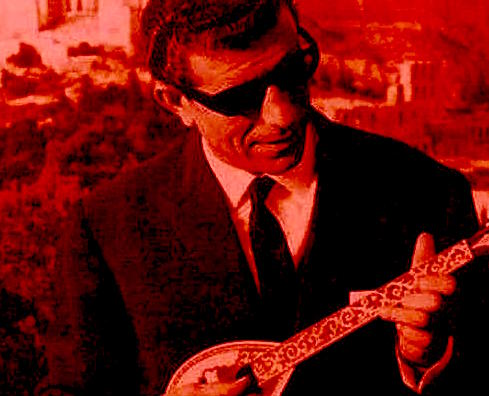 Others worth mentioning
are Grigoris Bithikotsis who
sang with Vamvakaris, Tsitsanis, Papaioanou,
Theordorakis, Kaladaras and just about everybody
else, and wrote some great songs of his own. A
couple of my favorites are O Kyr Thanos (Mister Thanos)
and the well known Tou Votanikou O Mangas (The
Cool Guy from Botanikos) from his 36
Years collection.
Stratos Pagioumitsis was one of
the early rembetes with Vamvakaris and his
version of To Paliospito (The Old House)
is a classic. An example of the Latin influence
in Laika is Melahrini Tsigana Mou (My
Brunette Gypsy) with the bouzouki of
Manolis Hiotis, considered by
many to be the best bouzouki player of his day
perhaps the music's first technical virtuoso on
the instrument though all the old guys could play
with feeling and were quite capable.
Nikos Xilouris was a Cretan lyre
player and singer who is to Cretan music as Hank
Williams is to country. He has dozens of albums
of laika, and Cretan music and has been the voice
of choice for such composers as Stavros Xarxako
and Gianni Markopoulo among others. His son runs
the record shop named for his father in Stoa
Pezmazoglou at 39 Panepistimiou. Others worth mentioning
are Grigoris Bithikotsis who
sang with Vamvakaris, Tsitsanis, Papaioanou,
Theordorakis, Kaladaras and just about everybody
else, and wrote some great songs of his own. A
couple of my favorites are O Kyr Thanos (Mister Thanos)
and the well known Tou Votanikou O Mangas (The
Cool Guy from Botanikos) from his 36
Years collection.
Stratos Pagioumitsis was one of
the early rembetes with Vamvakaris and his
version of To Paliospito (The Old House)
is a classic. An example of the Latin influence
in Laika is Melahrini Tsigana Mou (My
Brunette Gypsy) with the bouzouki of
Manolis Hiotis, considered by
many to be the best bouzouki player of his day
perhaps the music's first technical virtuoso on
the instrument though all the old guys could play
with feeling and were quite capable.
Nikos Xilouris was a Cretan lyre
player and singer who is to Cretan music as Hank
Williams is to country. He has dozens of albums
of laika, and Cretan music and has been the voice
of choice for such composers as Stavros Xarxako
and Gianni Markopoulo among others. His son runs
the record shop named for his father in Stoa
Pezmazoglou at 39 Panepistimiou.
|
|
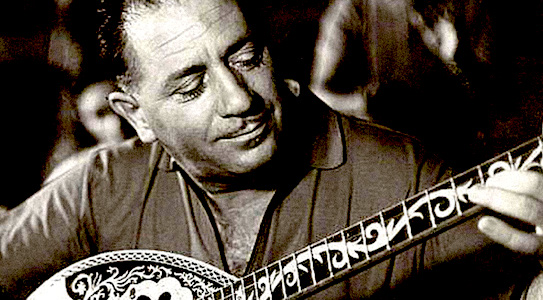 Giorgos Zambetas
was born in Metaxourgeio, Athens and began his
career in the Second World War and kept playing
into the 1990s. He was one of the most beloved of
the rembetika/laika musicians and wrote some of
the most recognizable songs in the sixties. His
EMI Anthology contains most of them, sung by just
about every famous singer and Zambetas himself.
If you were a tourist in Greece in the sixties
you probably saw him play. Takis Benes performed
with Tsitsanis and many of the heroes of the
fifties and also pretty much played himself in
the movie Rembetiko. He played at
Stoa Athanaton in the
Athens Meat Market until he passed away I
think in 2005. You can hear Takis Benis
singing with Tsitsanis Tha kano ntou vre ponori (I am
going to fuck you up, you sneak). How could I
have a website about rembetika and laika without
a song by Stratos Dionysious,
the king of laika. This song is the Tsitsanis
classic Otan Pineis Stin Taverna (When
You Drink in the taverna). And from Greece Is
Gold, a typical tourist type CD that just
happens to have some of the most popular songs
from the 1967-1974 Military Dicatorship,
Stamatis Kokotas (the guy
with the sideburns as we called him in the
sixties) singing Stou Othona Ta
Chronia (The Years of Othonos)
written by Stavros Xarhakos and
one of the best popular songs in any
language. Giorgos Zambetas
was born in Metaxourgeio, Athens and began his
career in the Second World War and kept playing
into the 1990s. He was one of the most beloved of
the rembetika/laika musicians and wrote some of
the most recognizable songs in the sixties. His
EMI Anthology contains most of them, sung by just
about every famous singer and Zambetas himself.
If you were a tourist in Greece in the sixties
you probably saw him play. Takis Benes performed
with Tsitsanis and many of the heroes of the
fifties and also pretty much played himself in
the movie Rembetiko. He played at
Stoa Athanaton in the
Athens Meat Market until he passed away I
think in 2005. You can hear Takis Benis
singing with Tsitsanis Tha kano ntou vre ponori (I am
going to fuck you up, you sneak). How could I
have a website about rembetika and laika without
a song by Stratos Dionysious,
the king of laika. This song is the Tsitsanis
classic Otan Pineis Stin Taverna (When
You Drink in the taverna). And from Greece Is
Gold, a typical tourist type CD that just
happens to have some of the most popular songs
from the 1967-1974 Military Dicatorship,
Stamatis Kokotas (the guy
with the sideburns as we called him in the
sixties) singing Stou Othona Ta
Chronia (The Years of Othonos)
written by Stavros Xarhakos and
one of the best popular songs in any
language.
|
|
 Viki Mosxoliou 40
Years: If
you are looking for a collection of Greece's best
popular music that will give you a taste of the
sixties, seventies, eighties and nineties, this
retrospective of who in my opinion was the best
singer of the period, should keep you pretty
satisfied as well as open the doors to some of
the composers you may not have given the
listening they deserve. During this period Viki
sang with and recorded songs by Xarhakos,
Kaldaras, Theodorakis, Markopoulos,
Giorgos Zampetas, Tsitsanis,
Spanos, Moutsis, Moustaki, Kougioumitsis and
others. This is a well-conceived collection of
what may be the greatest songs of the last 40
years and there are only a handful of singers
with the voice and passion of Viki Mosxoliou. Her
death in 2005 only makes listening to these songs
even more moving and if you are as romantic as I
am you may find yourself falling in love with
her. Unfortunately this 4-CD collection and book
is a limited edition so you may have to search
for it. If you can't find it you can just start
collecting her CDs and albums of which there are
about 50. Ya Hara (With Joy but in this
case 'Good Riddance') by Stavros Xarahakos is one
of my favorite songs from this CD. Viki Mosxoliou 40
Years: If
you are looking for a collection of Greece's best
popular music that will give you a taste of the
sixties, seventies, eighties and nineties, this
retrospective of who in my opinion was the best
singer of the period, should keep you pretty
satisfied as well as open the doors to some of
the composers you may not have given the
listening they deserve. During this period Viki
sang with and recorded songs by Xarhakos,
Kaldaras, Theodorakis, Markopoulos,
Giorgos Zampetas, Tsitsanis,
Spanos, Moutsis, Moustaki, Kougioumitsis and
others. This is a well-conceived collection of
what may be the greatest songs of the last 40
years and there are only a handful of singers
with the voice and passion of Viki Mosxoliou. Her
death in 2005 only makes listening to these songs
even more moving and if you are as romantic as I
am you may find yourself falling in love with
her. Unfortunately this 4-CD collection and book
is a limited edition so you may have to search
for it. If you can't find it you can just start
collecting her CDs and albums of which there are
about 50. Ya Hara (With Joy but in this
case 'Good Riddance') by Stavros Xarahakos is one
of my favorite songs from this CD.
|
The Neo
Rembetes
|
|
 My old friend Dino Nichols
convinced me to walk to the theatre on the top of
Mount Lykavitos to see a young performer
named Nikos
Papazogloufrom Thessaloniki, who at the time I
had never heard of. His music was a hybrid of
Rembetika and Rock, which worked well. He sang
and played the baglama with a band that was your
standard rock group with a bouzouki, and a couple
traditional instruments thrown in from time to
time. In my opinion, Rembetika style played on
rock instruments using modern production is a
very powerful musical combination as Savopoulos
proved in the seventies. In fact it was
Savopoulos who helped make Papazoglou one of the
most popular musicians of the 1980s. He died of
cancer in 2011. You can find many of his songs on
Youtube including a live version of what was
probably his biggest hit Kaneis Edo Then Tragouda
(Nobody Here Sings) with Glykaria recorded in
Melbourne in 1986. My old friend Dino Nichols
convinced me to walk to the theatre on the top of
Mount Lykavitos to see a young performer
named Nikos
Papazogloufrom Thessaloniki, who at the time I
had never heard of. His music was a hybrid of
Rembetika and Rock, which worked well. He sang
and played the baglama with a band that was your
standard rock group with a bouzouki, and a couple
traditional instruments thrown in from time to
time. In my opinion, Rembetika style played on
rock instruments using modern production is a
very powerful musical combination as Savopoulos
proved in the seventies. In fact it was
Savopoulos who helped make Papazoglou one of the
most popular musicians of the 1980s. He died of
cancer in 2011. You can find many of his songs on
Youtube including a live version of what was
probably his biggest hit Kaneis Edo Then Tragouda
(Nobody Here Sings) with Glykaria recorded in
Melbourne in 1986.
|
|
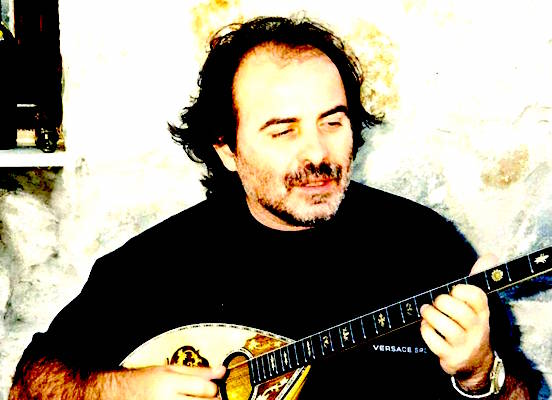 Of the other New
Rembetika/laika artists my favorite is
Babis Tsertos, a former
university physics professor from Tripolis who
began his musical career in my neighborhood of
Kypseli in Athens. Prominently featured on
Pino Ke Metho (I Drink and
Get Drunk), one of the liveliest and most
popular collections of newly recorded old
Rembetika and Laika songs, Tsertos' own albums
are usually in the 'can't miss' category when you
are looking to buy something new.
Erotopoleionis a collection of old Rembetika,
Smyrnika, Traditional and Laika songs from the
1930's through the 50's performed by Babis
Tsertos and some terrific musicians. Another
great album is Atimi
Tihi, probably my favorite album of
newly recorded old songs. Babis Tsertos is a
great singer and has a knack for finding obscure
material and making the most out of it. He also
plays live in Athens quite often. I have included
the title track of Pino Ke Metho sung by Babis
Tsertos. From the same album is Agathonas
Iakovidis singing Pente Manges ston Pirea (5
Cooll Guys from Pireaus),
Glykeria's version of Pame ya tin Boula (Let's Go to
Voula) and Babis Golis version
of Ma Enai o Theos (But it is
God). This is a terrific album of new recordings
of old songs. Of the other New
Rembetika/laika artists my favorite is
Babis Tsertos, a former
university physics professor from Tripolis who
began his musical career in my neighborhood of
Kypseli in Athens. Prominently featured on
Pino Ke Metho (I Drink and
Get Drunk), one of the liveliest and most
popular collections of newly recorded old
Rembetika and Laika songs, Tsertos' own albums
are usually in the 'can't miss' category when you
are looking to buy something new.
Erotopoleionis a collection of old Rembetika,
Smyrnika, Traditional and Laika songs from the
1930's through the 50's performed by Babis
Tsertos and some terrific musicians. Another
great album is Atimi
Tihi, probably my favorite album of
newly recorded old songs. Babis Tsertos is a
great singer and has a knack for finding obscure
material and making the most out of it. He also
plays live in Athens quite often. I have included
the title track of Pino Ke Metho sung by Babis
Tsertos. From the same album is Agathonas
Iakovidis singing Pente Manges ston Pirea (5
Cooll Guys from Pireaus),
Glykeria's version of Pame ya tin Boula (Let's Go to
Voula) and Babis Golis version
of Ma Enai o Theos (But it is
God). This is a terrific album of new recordings
of old songs.
|
Live
Rembetika
|
|
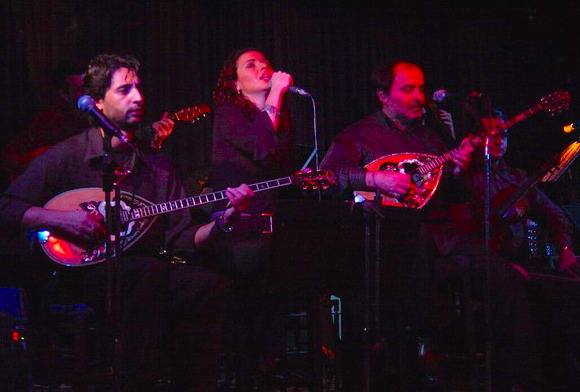 As
for going to see other real authentic Rembetika
music it is not that difficult. There are many
clubs in Athens that have live Rembetika. Some
are in the student area of Exarchia and others in
Psiri. My first real rembetika club (besides
Savopoulos at Kittaro) was in a club
called Douzeniin the area called Makriani near the
Plaka where I saw Poly Panou. The band was a traditional line-up
with 2 bouzoukia, baglama, guitar, accordion,
percussion and piano, and they rocked out (if you
will pardon the expression.) When I left at 4am
the club was still packed and the dance floor was
full. Generally these clubs with name acts are
expensive but if you enjoy the music, well worth
it, especially when you are seeing one of the
well known performers. For the best in Rembetiko
and Laika go to hear Babis
Tsertos and his terrific band wherever
he happens to be playing (check Athinorama
magazine which comes out weekly). If you are shy
about being in a place where you are likely to
find few foreigners don't be. The people who work
at the clubs are very friendly, speak English
happy to answer your questions. A drink at one of
these Rembetika clubs will cost you about 10
euro. But if you are not the type who likes to
throw money around you can buy one drink and sit
quietly somewhere and enjoy the show. And a show
it is as customers pay to literally shower the
musicians and dancers with flowers, sold by the
tray-full. (Plate-smashing is illegal now but
this is much nicer) Every few songs the waiters
have to sweep the dance floor or else it would be
knee deep in rose petals. Also there is a
Rembetika show at Stoa
Athanaton in the Athens Meat
Market. Shows are in the afternoon and
evening. As
for going to see other real authentic Rembetika
music it is not that difficult. There are many
clubs in Athens that have live Rembetika. Some
are in the student area of Exarchia and others in
Psiri. My first real rembetika club (besides
Savopoulos at Kittaro) was in a club
called Douzeniin the area called Makriani near the
Plaka where I saw Poly Panou. The band was a traditional line-up
with 2 bouzoukia, baglama, guitar, accordion,
percussion and piano, and they rocked out (if you
will pardon the expression.) When I left at 4am
the club was still packed and the dance floor was
full. Generally these clubs with name acts are
expensive but if you enjoy the music, well worth
it, especially when you are seeing one of the
well known performers. For the best in Rembetiko
and Laika go to hear Babis
Tsertos and his terrific band wherever
he happens to be playing (check Athinorama
magazine which comes out weekly). If you are shy
about being in a place where you are likely to
find few foreigners don't be. The people who work
at the clubs are very friendly, speak English
happy to answer your questions. A drink at one of
these Rembetika clubs will cost you about 10
euro. But if you are not the type who likes to
throw money around you can buy one drink and sit
quietly somewhere and enjoy the show. And a show
it is as customers pay to literally shower the
musicians and dancers with flowers, sold by the
tray-full. (Plate-smashing is illegal now but
this is much nicer) Every few songs the waiters
have to sweep the dance floor or else it would be
knee deep in rose petals. Also there is a
Rembetika show at Stoa
Athanaton in the Athens Meat
Market. Shows are in the afternoon and
evening.
|
|
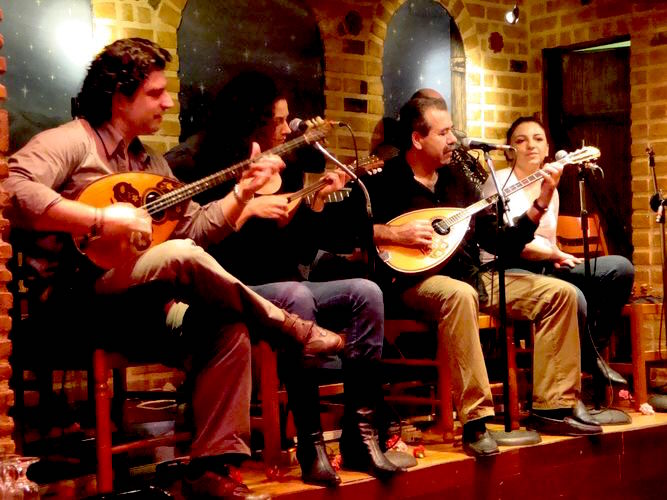 One
gem of a rembetika club-restaurant that few
people knew about was in the neighborhood of
Kypseli, right off Fokionos Negri, a
pedestrianized avenue that is like a long narrow
park that starts down by Patission street about a
half mile beyond the National Museum. The club
was called Karabani. In 2009 it
featured Giannis Lempesis and
his excellent group. Lempesis is an old style
rembetika singer and bouzouki player, of the same
generation as Babis Tsertos, in fact they used to
play together. He has a dozen or so albums to his
credit most on small labels. He has also played
with many of the old stars including Poli Panou
and Ioanna Georgakopoulou. He has moved on to
some other clubs, as musicians do most years. If
you check Athinorama magazine you should find him
somewhere. As for the club, it is still there
waiting for someone to open it under the
Happening Cafe right next to the Dimotiko Agora
on Fokionos Negri on Zakynthou Street. One
gem of a rembetika club-restaurant that few
people knew about was in the neighborhood of
Kypseli, right off Fokionos Negri, a
pedestrianized avenue that is like a long narrow
park that starts down by Patission street about a
half mile beyond the National Museum. The club
was called Karabani. In 2009 it
featured Giannis Lempesis and
his excellent group. Lempesis is an old style
rembetika singer and bouzouki player, of the same
generation as Babis Tsertos, in fact they used to
play together. He has a dozen or so albums to his
credit most on small labels. He has also played
with many of the old stars including Poli Panou
and Ioanna Georgakopoulou. He has moved on to
some other clubs, as musicians do most years. If
you check Athinorama magazine you should find him
somewhere. As for the club, it is still there
waiting for someone to open it under the
Happening Cafe right next to the Dimotiko Agora
on Fokionos Negri on Zakynthou Street.
|
|
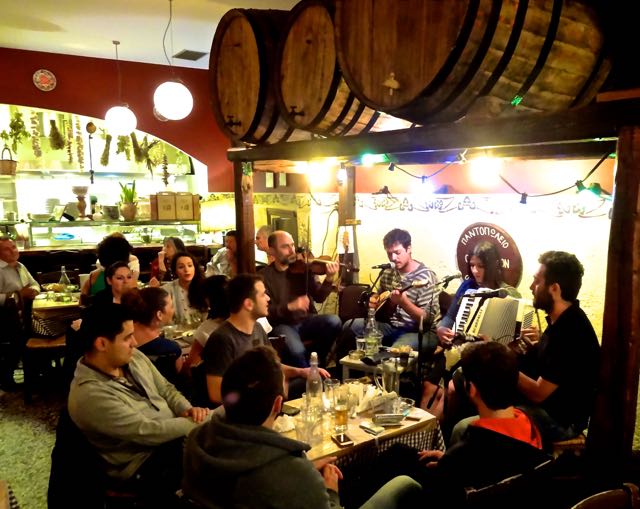 For one
of the best places to hear rembetika music
go any afternoon to a small Cafe called
Kapni Kareas, near the Byzantine
of the same name on Ermou street. If you are
coming from Syntagma and walking down Ermou it is
just past the church in a small street on the
left, an alley actually, and you will probably
hear the music before you get there. It's usually
just two guys, one on guitar and another on
bouzouki, and both singing, but the level of
musicianship is as high as any you will find in
the clubs and is unamplified meaning it sounds
like it would have sounded 50 years ago in some
tekedes in Psiri, Pireaus or Nea Smyrni. The cafe
is something of a mezedopoulion so you
can drink ouzo and have snacks or a whole meal if
you like, or just drink coffee. This is my
favorite place to spend an afternoon in Athens.
Nearby, the neighborhood of Psiri is the area
bordered by Athinas Street, lower Ermou and
Pireaos Streets in Athens and it is full of small
restaurants and ouzeries, almost all of them with
live music, mostly laika and mostly electrified
and amplified. The Oinopoulion
Taverna has live rembetika on weekends
and good food too. For more information see
my
Guide to Psiri.
Rembetiki Historia at 181
Ippokratous Street in Exarchia
is popular with young people and very
down-to-earth. For more about where to see live
Greek music see my Late
Night in Athens Page. For one
of the best places to hear rembetika music
go any afternoon to a small Cafe called
Kapni Kareas, near the Byzantine
of the same name on Ermou street. If you are
coming from Syntagma and walking down Ermou it is
just past the church in a small street on the
left, an alley actually, and you will probably
hear the music before you get there. It's usually
just two guys, one on guitar and another on
bouzouki, and both singing, but the level of
musicianship is as high as any you will find in
the clubs and is unamplified meaning it sounds
like it would have sounded 50 years ago in some
tekedes in Psiri, Pireaus or Nea Smyrni. The cafe
is something of a mezedopoulion so you
can drink ouzo and have snacks or a whole meal if
you like, or just drink coffee. This is my
favorite place to spend an afternoon in Athens.
Nearby, the neighborhood of Psiri is the area
bordered by Athinas Street, lower Ermou and
Pireaos Streets in Athens and it is full of small
restaurants and ouzeries, almost all of them with
live music, mostly laika and mostly electrified
and amplified. The Oinopoulion
Taverna has live rembetika on weekends
and good food too. For more information see
my
Guide to Psiri.
Rembetiki Historia at 181
Ippokratous Street in Exarchia
is popular with young people and very
down-to-earth. For more about where to see live
Greek music see my Late
Night in Athens Page.
|
Where to Buy
Rembetika Music
|
|
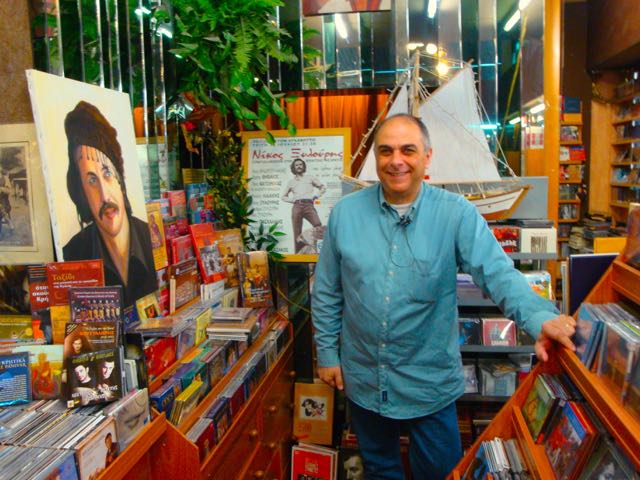 There
are a zillion record shops in Athens, and many
used record and CD shops in Monastiraki.
Between Panapistimiou and
Stadiou streets there are a couple stoas (like
streets but covered so they are indoors) with
different themes. In the Stoa Pezmazoglou at 39
Panepistimiou, right across from the University
there is a very interesting little music shop
called Nikos Xilouris.
Xilouris is to Cretan music as Hank
Williams is to country music and this tiny store
is full of his CDs, DVDs, books and memorabilia
plus music by other Cretan, Rembetika and Laika
musicians. The shop was owned by his son
Giorgos Xilouris (photo) who sadly
passed away in 2016. But the shop is a great
place to buy Greek music or just to stop in and
say hello if you are a Xilouris fan. His widow is
now running it. There
are a zillion record shops in Athens, and many
used record and CD shops in Monastiraki.
Between Panapistimiou and
Stadiou streets there are a couple stoas (like
streets but covered so they are indoors) with
different themes. In the Stoa Pezmazoglou at 39
Panepistimiou, right across from the University
there is a very interesting little music shop
called Nikos Xilouris.
Xilouris is to Cretan music as Hank
Williams is to country music and this tiny store
is full of his CDs, DVDs, books and memorabilia
plus music by other Cretan, Rembetika and Laika
musicians. The shop was owned by his son
Giorgos Xilouris (photo) who sadly
passed away in 2016. But the shop is a great
place to buy Greek music or just to stop in and
say hello if you are a Xilouris fan. His widow is
now running it.
|
Above and
Below and Beyond Rembetika
|
|
 Annabouboula is a Greek expression meaning a mixed-up noise, but for years, Annabouboula the group has been exploring a seductive alternate musical world where Greek, Middle Eastern and Balkan traditions are re-tooled and re-imagined with an anything-goes attitude befitting their Athens-meets-downtown New York origins. Featuring the spellbinding Anna Paidoussi singing provocatively over the rhythms and soundscapes of guitarist George Barba Yiorgi and friends, in the years that followed, the project evolved into a proper band with an international following especially in what would come to be called “World Music” circles. They played to the crowds at festivals such as WOMAD and appeared on U.S., U.K. and Japanese network television; their American releases on Shanachie generated critical praise and college radio airplay– even though almost all of their material was sung in Greek. In Greece, their influence continues to be heard today in numerous Hellenic dance music and would-be “World Beat” productions. Ironically, Annabouboula went into hibernation in 1993 just as the concept it had pioneered– fusing contemporary electro-pop and rock with traditional music from “exotic” sources– was becoming an accepted genre. But in 2008 Anna Paidoussi , George Barba Yiorgi and Chris Lawrence re-united to pick up where they had left off. Check them out in this Youtube Video. Annabouboula is a Greek expression meaning a mixed-up noise, but for years, Annabouboula the group has been exploring a seductive alternate musical world where Greek, Middle Eastern and Balkan traditions are re-tooled and re-imagined with an anything-goes attitude befitting their Athens-meets-downtown New York origins. Featuring the spellbinding Anna Paidoussi singing provocatively over the rhythms and soundscapes of guitarist George Barba Yiorgi and friends, in the years that followed, the project evolved into a proper band with an international following especially in what would come to be called “World Music” circles. They played to the crowds at festivals such as WOMAD and appeared on U.S., U.K. and Japanese network television; their American releases on Shanachie generated critical praise and college radio airplay– even though almost all of their material was sung in Greek. In Greece, their influence continues to be heard today in numerous Hellenic dance music and would-be “World Beat” productions. Ironically, Annabouboula went into hibernation in 1993 just as the concept it had pioneered– fusing contemporary electro-pop and rock with traditional music from “exotic” sources– was becoming an accepted genre. But in 2008 Anna Paidoussi , George Barba Yiorgi and Chris Lawrence re-united to pick up where they had left off. Check them out in this Youtube Video.
|
|
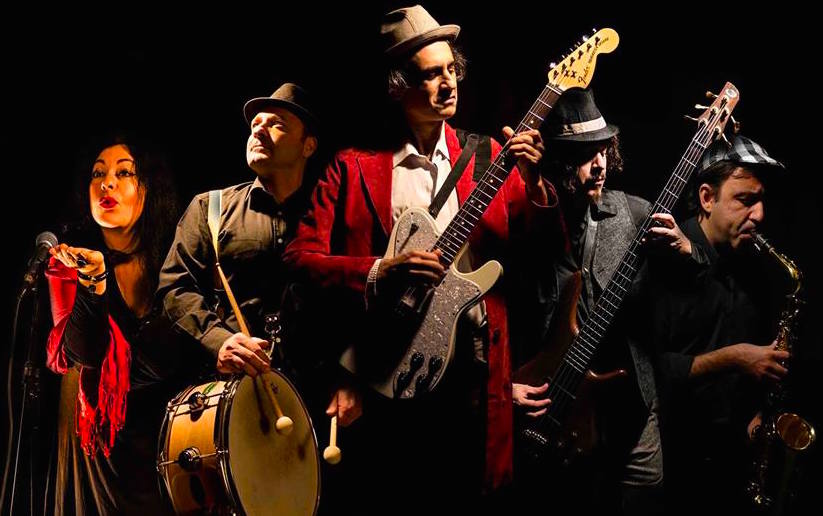 Loui Salvator
studied Music Composition at
Conservatori Superior de Música del Liceu and
spent half his life in the family car-rental
business before deciding that he was wasting away
by not committing himself to the music he loved.
That music is a combination of rembetika, laika,
jazz, swing, latin, klezmer, funk and a
lot of other influences. His band Assoi
tou Salvador plays in Athens and
all over Greece. On their album Chicago
Giname they do a New Orleans
Jazz inspired recording of Otan Boukaro ston
Teke probably has the old remebetes
turning in their graves. You can watch and listen to their excellent video of
To Arzan. Loui Salvator
studied Music Composition at
Conservatori Superior de Música del Liceu and
spent half his life in the family car-rental
business before deciding that he was wasting away
by not committing himself to the music he loved.
That music is a combination of rembetika, laika,
jazz, swing, latin, klezmer, funk and a
lot of other influences. His band Assoi
tou Salvador plays in Athens and
all over Greece. On their album Chicago
Giname they do a New Orleans
Jazz inspired recording of Otan Boukaro ston
Teke probably has the old remebetes
turning in their graves. You can watch and listen to their excellent video of
To Arzan.
Along the same
lines, though from an earlier period is the
album Cafe Aman Amerika by
Gregoris Maninakis and Anna Paidoussi. This CD
was given to me many years ago by the owner of a
small cafe in Lesvos and was relatively
unavailable at the time. It is a collection of
songs of the Greeks in New York, Chicago and San
Francisco and mixes rembetika, popular
music,swing, jazz in a CD of masterful
musicianship and a great choice of material.
If
you are lucky you may find this album on
Ebay.
|
More Greek
Music Info
|
|
 You can hear my music which is
mostly rock with a few hints of rembetika and
laika played by me and several of my
Greek-American friends at
Matt Barrett Music
or you can listen
right now to One
More Time which is probably my most Greek
influenced song. Also listen to the Savopoulos
influenced tuba solo in The
Idiot. You can hear my music which is
mostly rock with a few hints of rembetika and
laika played by me and several of my
Greek-American friends at
Matt Barrett Music
or you can listen
right now to One
More Time which is probably my most Greek
influenced song. Also listen to the Savopoulos
influenced tuba solo in The
Idiot.
For a
listing of Rembetika clubs in Athens
see my Athens Guide Nightlife
page
Read
Rembetika Reflections of
Nikos, a
friend of mine with some first-hand experience
and knowledge of rembetika.
For my top
Greek Records see my top CD
picks
For the
lyrics in English to many of these songs on this
site see Rembetika Lyrics
I don't
know how the Greek record companies are going to
feel about me putting these songs on the web but
my feeling is that I am introducing a new
audience to these artists and it is one thing for
me to write about them and tell you who I like
and another to enable you to actually hear them.
So listen to these great songs and then go out
and support your local Greek music store and buy
some CDs and tell them Matt Barrett sent
you.
If you have
any comments about this page please send them me
to
matt@greecetravel.com
The Annual
Hydra Rembetika Conference
is held
every year on the beautiful island of
Hydra, just a short trip from Athens.
The conference features musicians and experts
though unfortunately for any true rembetes still
around no dope-smoking. But wine and ouzo should
be in abundance. For more information contact
ed.emery@thefreeuniversity.net
|
|
Here is a list of places to hear rembetiko music from Lifo Magazine. It is in Greek. But if you can't read it or take the time to decipher it you probably won't fit in.
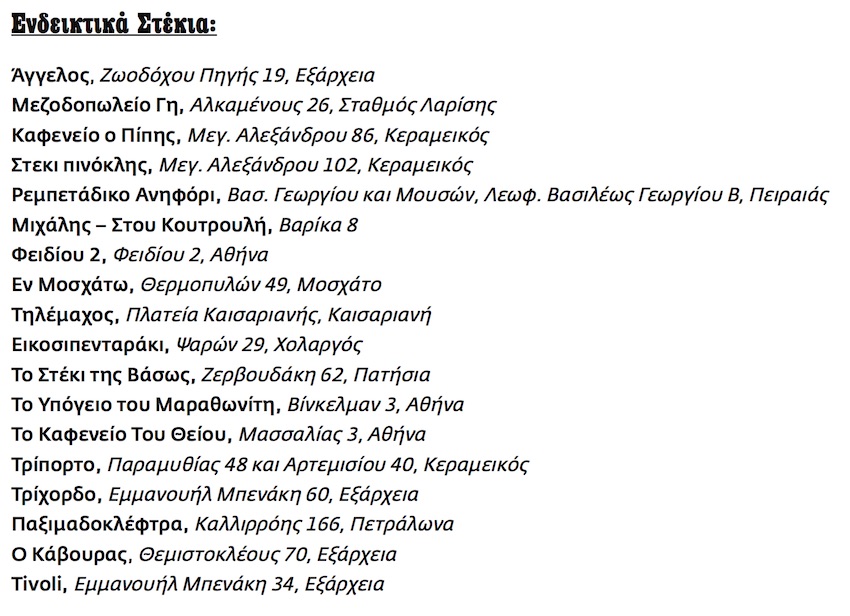
|
|
Join Matt Barrett's Greece Travel Guides Group on Facebook for comments, photos and other fun stuff. If you enjoy this website please share it with your friends on Facebook. If you are appreciative of all the free information you get on my websites you can send a donation through Paypal Or you can use Venmo at venmo.com/Matt-Barrett-Greece
|
|