Mycenae
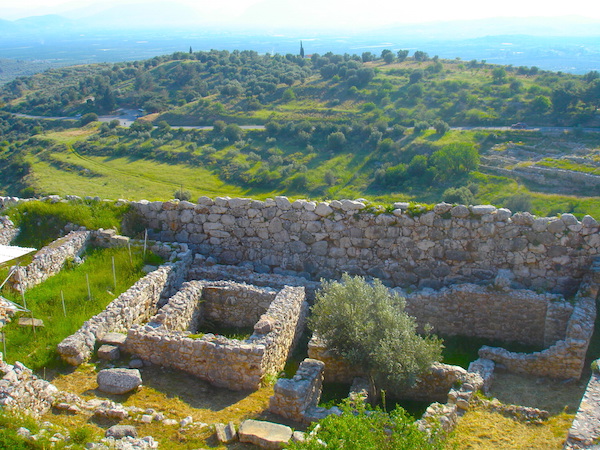 Home of Agememnon, the ancient king who
united and commanded the Greeks during the Trojan war, the ruins of Mycenae
were thought to be a myth until Heinrich Schliemann proved otherwise. At
one time the city overlooked a large bay which is now the plain of Argos.
The site is impressive and features the Palace of Agamemnon, the Treasury
of Atreaus, and the tomb of Clytaemenestra, the wife of the great king
who stabbed him to death in his bath for either being unfaithful, sacrificing
their daughter to get favorable winds for the journey to Troy, or both.
The famous Lion's Gate is the oldest monumental sculpture in Europe and
is said to be the coat of arms of Atreus, mythical king of Mycenae. The ancient site is best visited in the winter and spring when it is covered in green grass and colorful wildflowers. But even in the summer it is an essential stop and the views are spectacular. The newly opened museum on the site is well worth going to. There is a small very touristy town nearby with restaurants and souvenir shops. Myceneae is about a half hour from Nafplion. It is an important stop in any tours of the Argolis and the Peloponessos.
You can visit Epidavros and Myceneae with Fantasy Travel's 1-Day tour or on one of the longer tours featured on the Fantasy Travel Tours page. For more about the history and archaeology of Mycenae see Fascinating Mycenae Home of Agememnon, the ancient king who
united and commanded the Greeks during the Trojan war, the ruins of Mycenae
were thought to be a myth until Heinrich Schliemann proved otherwise. At
one time the city overlooked a large bay which is now the plain of Argos.
The site is impressive and features the Palace of Agamemnon, the Treasury
of Atreaus, and the tomb of Clytaemenestra, the wife of the great king
who stabbed him to death in his bath for either being unfaithful, sacrificing
their daughter to get favorable winds for the journey to Troy, or both.
The famous Lion's Gate is the oldest monumental sculpture in Europe and
is said to be the coat of arms of Atreus, mythical king of Mycenae. The ancient site is best visited in the winter and spring when it is covered in green grass and colorful wildflowers. But even in the summer it is an essential stop and the views are spectacular. The newly opened museum on the site is well worth going to. There is a small very touristy town nearby with restaurants and souvenir shops. Myceneae is about a half hour from Nafplion. It is an important stop in any tours of the Argolis and the Peloponessos.
You can visit Epidavros and Myceneae with Fantasy Travel's 1-Day tour or on one of the longer tours featured on the Fantasy Travel Tours page. For more about the history and archaeology of Mycenae see Fascinating Mycenae
|
Nemea
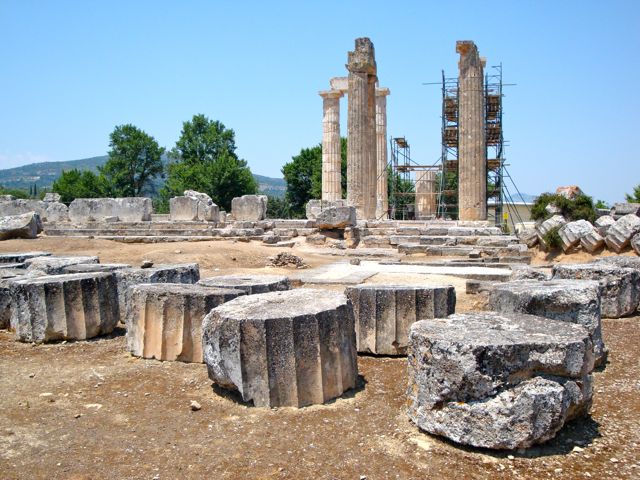 Just beyond Corinth on the E65 which goes to Tripolis is the town of Nemea with the ancient site dedicated to the games that were held in the honor of Zeus whose 4th Century BC temple still has three remaining columns and several more on the way to being reconstructed. The site is being excavated by Stephen Miller of the American
School of Classical Studies along with the University of California
at Berkeley. There is also a stadium and an excellent museum built by the University of California to house the many findings at the site and to use as a study and research center. Nemea was famous in Greek myth as the home of the Nemean Lion which was killed by the hero Heracles. Now the area is famous for its wines and there are a number of wineries that you can visit. Just look for the signs that have hopefully not been defaced by Argos 13 enough to render them unreadable. Just beyond Corinth on the E65 which goes to Tripolis is the town of Nemea with the ancient site dedicated to the games that were held in the honor of Zeus whose 4th Century BC temple still has three remaining columns and several more on the way to being reconstructed. The site is being excavated by Stephen Miller of the American
School of Classical Studies along with the University of California
at Berkeley. There is also a stadium and an excellent museum built by the University of California to house the many findings at the site and to use as a study and research center. Nemea was famous in Greek myth as the home of the Nemean Lion which was killed by the hero Heracles. Now the area is famous for its wines and there are a number of wineries that you can visit. Just look for the signs that have hopefully not been defaced by Argos 13 enough to render them unreadable.
For more see my Nemea Page
|
Argos
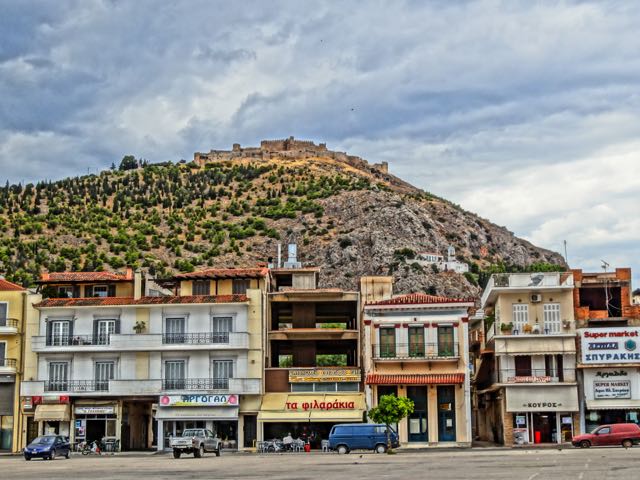 Founded by the Dorians, the city of Argos
is in a fertile plain at the foot of Mount Chaon and is the oldest continuously
inhabited city in Greece. Argos is the agricultural and commercial center
of the prefecture, famous for its citrus orchards. Unfortunately most of
the ancient past is buried under the modern town, but the archaeological
museum on the town's impressive main platia is worth stopping for though it has been temporarily closed for 3 years. Instead visit the Byzantine Museum in
the attractive old army barracks next to the market. Founded by the Dorians, the city of Argos
is in a fertile plain at the foot of Mount Chaon and is the oldest continuously
inhabited city in Greece. Argos is the agricultural and commercial center
of the prefecture, famous for its citrus orchards. Unfortunately most of
the ancient past is buried under the modern town, but the archaeological
museum on the town's impressive main platia is worth stopping for though it has been temporarily closed for 3 years. Instead visit the Byzantine Museum in
the attractive old army barracks next to the market.
The ancient theater
is the most popular tourist attraction in the city and is bigger then the
theater at Epidavros. Nearby are the Roman baths and the remains of a first
century indoor theater. Above the theater is the site of the ancient acropolis,
with fortifications that have been added to by the Byzantines, Franks
and the Turks.
There are buses every half hour to Nafplio, hourly
buses to Athens and six buses a day to Myceneae. Northwest of Argos is the Citadel of Larissa
with it's Frankish and Venetian fortress and spectacular view. South of
Argos are the springs of Kefalari an area of large shady plane trees, running
water and tavernas.
|
|
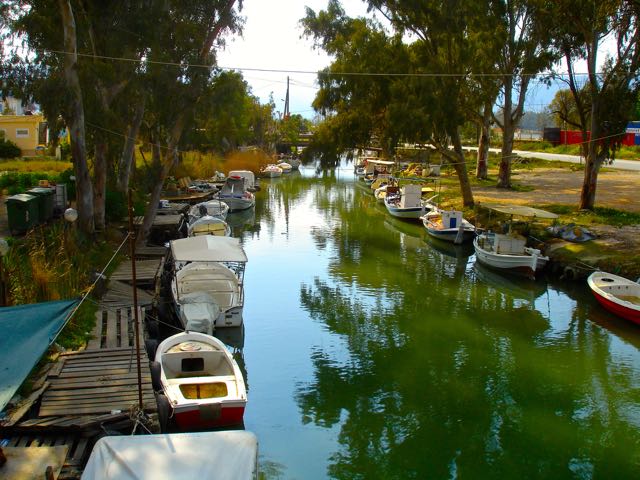 Be sure to visit the town of Nea Kios on the bay near Argos at the delta of a small river where the area fishing boats are based. There is a morning fish market and a great seafood restaurant called Tsakiris just over the rickety metal bridge. If you are in the neighborhood this is a good place to come for lunch
or dinner as it is one of the best fish tavernas in the area and some say one of the best in Greece. It is right on the beach too. Not a particularly nice beach, but a beach. Be sure to visit the town of Nea Kios on the bay near Argos at the delta of a small river where the area fishing boats are based. There is a morning fish market and a great seafood restaurant called Tsakiris just over the rickety metal bridge. If you are in the neighborhood this is a good place to come for lunch
or dinner as it is one of the best fish tavernas in the area and some say one of the best in Greece. It is right on the beach too. Not a particularly nice beach, but a beach.
Also in the area check out the beautiful Church of the Koimisis which is on the road to Nafplion which
has a number of ancient stones, columns and carvings that have been incorporated into its walls. And right in between Neos Keos and Argos is the Zeos Brewery, one of the first micro-breweries in Greece. In fact when you are in the area you should ask for it wherever you go to eat and drink.
|
Epidavros
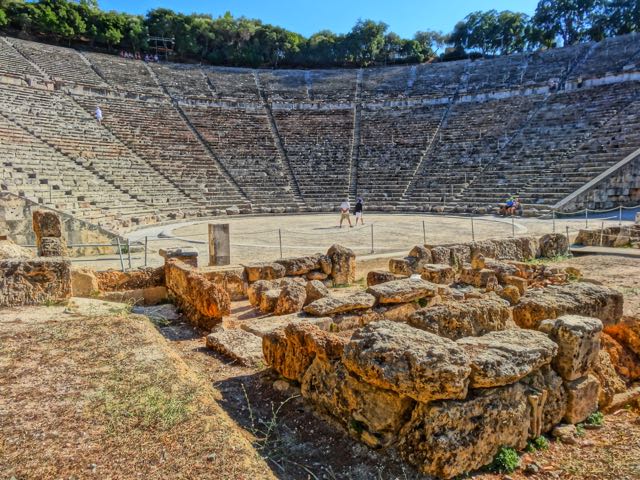 This is one of the most beautiful archaeological sites in all of Greece and should not be missed. Home of the 3rd Century
theater, the tragedies of Aeschylus, Sophocles and Euripides were performed
here until the 4th century BC and then continued in 1955 to the present
during the Epidavros festival that takes place from the beginning of July
to the end of August. The theater is perhaps the most acoustically perfect
in all of Greece, a fact illustrated to us by our history teacher who dropped
a pin which we could hear from the top seats. At least I think we heard
it. The God Asclepius, son of Apollo was worshipped here and Epidavros
is acknowledged as his birthplace. Struck dead by a thunderbolt from Zeus
for bringing back the dead, he was transformed by Apollo into the constellation
of Serpentaria. The symbol of Asclepius is the snake coiled around the
rod which is familiar to anyone who has studied medicine or been to a doctor.
There was at one time a hospital at the sanctuary to Asclepius. In ancient
times athletes competed at the festival of the Asclepia in the stadium
and poets in the odeon whose ruins still exist. For information on Performances at Epidavros
check any of the Athens EntertainmentGuides which should be available in your hotel lobby. Click here for more about Epidavros This is one of the most beautiful archaeological sites in all of Greece and should not be missed. Home of the 3rd Century
theater, the tragedies of Aeschylus, Sophocles and Euripides were performed
here until the 4th century BC and then continued in 1955 to the present
during the Epidavros festival that takes place from the beginning of July
to the end of August. The theater is perhaps the most acoustically perfect
in all of Greece, a fact illustrated to us by our history teacher who dropped
a pin which we could hear from the top seats. At least I think we heard
it. The God Asclepius, son of Apollo was worshipped here and Epidavros
is acknowledged as his birthplace. Struck dead by a thunderbolt from Zeus
for bringing back the dead, he was transformed by Apollo into the constellation
of Serpentaria. The symbol of Asclepius is the snake coiled around the
rod which is familiar to anyone who has studied medicine or been to a doctor.
There was at one time a hospital at the sanctuary to Asclepius. In ancient
times athletes competed at the festival of the Asclepia in the stadium
and poets in the odeon whose ruins still exist. For information on Performances at Epidavros
check any of the Athens EntertainmentGuides which should be available in your hotel lobby. Click here for more about Epidavros
You can visit Epidavros and Myceneae with Fantasy Travel's 1-Day tour or on one of the longer tours featured on the Fantasy Travel Tours page.
|
|
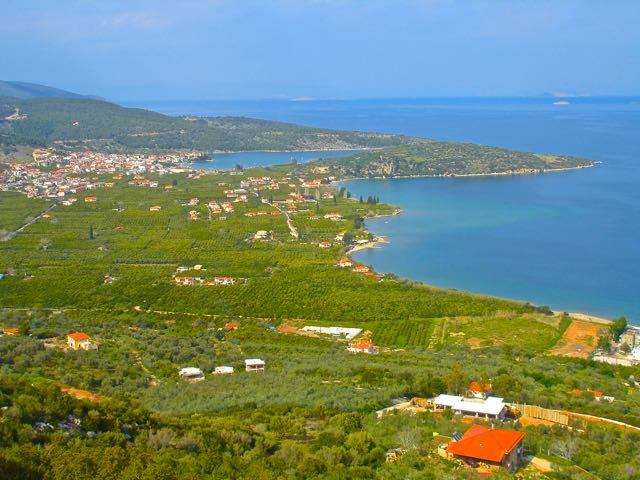 The town of Palea Epidavros is a small port on the sea and is famous for its citrus groves. In fact as you enter the town in the winter and spring the air is filled with the smell of orange blossoms. In the backyard of a small house an ancient theater was discovered and is in the process of being excavated
as well as some other
ancient buildings in the olive grove next door. There is a nice square here with some fish tavernas kept supplied by a fleet of fishing boats. If you are traveling in the area it is a good place to stop for a coffee at one of the many cafes on the waterfront or even worth spending a day or two here and using it as a base to explore the Argolis. The hills around the town offer a spectacular view and the groves are separated by small roads that you can follow on foot or by car if you think you are capable of backing
up the way you came if you happen to run into a dead end. The town of Palea Epidavros is a small port on the sea and is famous for its citrus groves. In fact as you enter the town in the winter and spring the air is filled with the smell of orange blossoms. In the backyard of a small house an ancient theater was discovered and is in the process of being excavated
as well as some other
ancient buildings in the olive grove next door. There is a nice square here with some fish tavernas kept supplied by a fleet of fishing boats. If you are traveling in the area it is a good place to stop for a coffee at one of the many cafes on the waterfront or even worth spending a day or two here and using it as a base to explore the Argolis. The hills around the town offer a spectacular view and the groves are separated by small roads that you can follow on foot or by car if you think you are capable of backing
up the way you came if you happen to run into a dead end.
Read more about Palea and Nea Epidavros
|
Ancient Tiryns
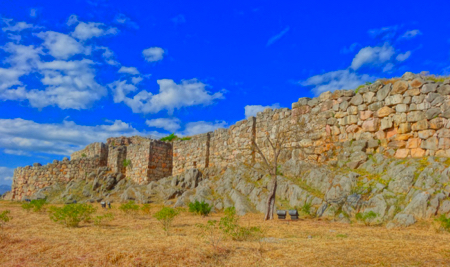 The walls of Tiryns are four kilometers
north-west of Nafplio and are even more impressive than the massive walls
of Mycenae. During the Mycenean era these walls defended a palace as big
as the palace at Mycenae and the site has been inhabited since Neolithic
times. The huge blocks which make up the Cyclopian walls are as impressive
to us today as they were to the ancient people who had to drag them from
the quarries and cut them up. This place always amazes me when I pass by, though not enough for me to stop the car and explore it. Just enough to take a photo from the window but finally in 2017 I stopped and took this photo. The walls of Tiryns are four kilometers
north-west of Nafplio and are even more impressive than the massive walls
of Mycenae. During the Mycenean era these walls defended a palace as big
as the palace at Mycenae and the site has been inhabited since Neolithic
times. The huge blocks which make up the Cyclopian walls are as impressive
to us today as they were to the ancient people who had to drag them from
the quarries and cut them up. This place always amazes me when I pass by, though not enough for me to stop the car and explore it. Just enough to take a photo from the window but finally in 2017 I stopped and took this photo.
|
Tolon and East of Nafplion
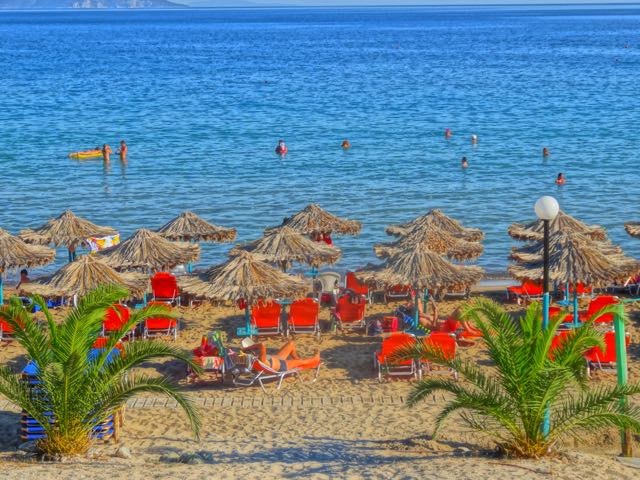 Tolon was at one time a beach paradise but has now been built up to the point where it looks like a part of Athens was plopped down on the sea. But even so, if you need a place to stay where Nafplio and the other sites in the
Argolis are within reasonable driving distance, that has a beach, good
tavernas and some nightlife, Tolon may seem paradise enough despite the lack of architectural taste. There are a number of nice hotels, all right on the sea, though some of then on the hills require some walking, not a problem going to the beach, just coming back. The town fishing port is protected by a
small island. Tolon has a long sandy beach, and watersports are available, including small motorboats and paddle boats which you can take to explore the small islands across the bay. See Robert Bruce's Guide to Tolo Tolon was at one time a beach paradise but has now been built up to the point where it looks like a part of Athens was plopped down on the sea. But even so, if you need a place to stay where Nafplio and the other sites in the
Argolis are within reasonable driving distance, that has a beach, good
tavernas and some nightlife, Tolon may seem paradise enough despite the lack of architectural taste. There are a number of nice hotels, all right on the sea, though some of then on the hills require some walking, not a problem going to the beach, just coming back. The town fishing port is protected by a
small island. Tolon has a long sandy beach, and watersports are available, including small motorboats and paddle boats which you can take to explore the small islands across the bay. See Robert Bruce's Guide to Tolo
Ancient Asine
Near the village of Asini, northwest of Tolon, are the remains of Ancient
Asine, including the massive walls of the acropolis, and remains of other buildings. Those who have read Seferis may remember from his poem King of Asine a description of the citadel and the fact that this King is mentioned only once in the Illiad and otherwise competely forgotten by history. See Matt's Ancient Asine Page
|
|
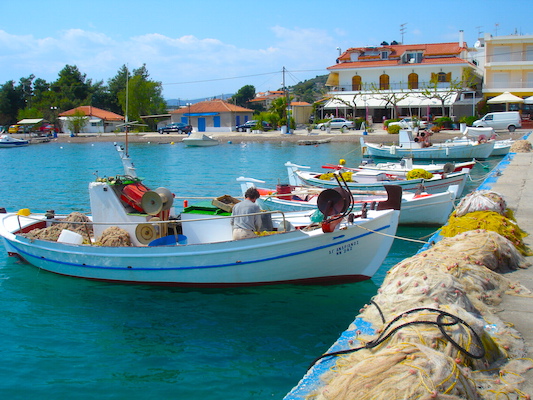 Further down the coast is the fishing village of Vivari. One of the first commercial fish farms was located here in the large lagoon at the edge of the village. There is a new fish farm now located out of site of the village but you can see the boats come in for supplies or to unload fish. There are several nice fish restaurants including
the Taverna
Gorgona which specializes in fresh fish, wild or farmed, and home-cooking by the Diamontopoulos family. This is a sheltered bay and a nice place to stop with a sailboat. Beyond Vivari is the long beach at Candia, a town known for its fields of artichokes. If you cut inland you will eventually wind up in the town of Palea Epidavros on the north side of the
Argolis. Further down the coast is the fishing village of Vivari. One of the first commercial fish farms was located here in the large lagoon at the edge of the village. There is a new fish farm now located out of site of the village but you can see the boats come in for supplies or to unload fish. There are several nice fish restaurants including
the Taverna
Gorgona which specializes in fresh fish, wild or farmed, and home-cooking by the Diamontopoulos family. This is a sheltered bay and a nice place to stop with a sailboat. Beyond Vivari is the long beach at Candia, a town known for its fields of artichokes. If you cut inland you will eventually wind up in the town of Palea Epidavros on the north side of the
Argolis.
|
Porto Heli
 When you leave Nafplion and drive east and get beyond Epidavros, you get the feeling you are in a remote part of the Peloponessos. In a way you are. The eastern part of the Argolis is a long way from Athens and it is an area of traditional villages, farms, and mountains with not much vegetation. The town of Fourni, which means
oven, is known for its breads and paximadia and there are at least a dozen bakeries on the road. Kranidi is the regional capital of Ermionidas, and if you are traveling by bus this is where you will change. It is an agricultural town of about 4500 inhabitants with an interesting town center, a folklore museum and a famous church of Saint John the Baptist built in 1852 by Italian architect James Sevastinos and the home of the icon of the saint painted in 1646. From Kranidi it is another 15 minutes
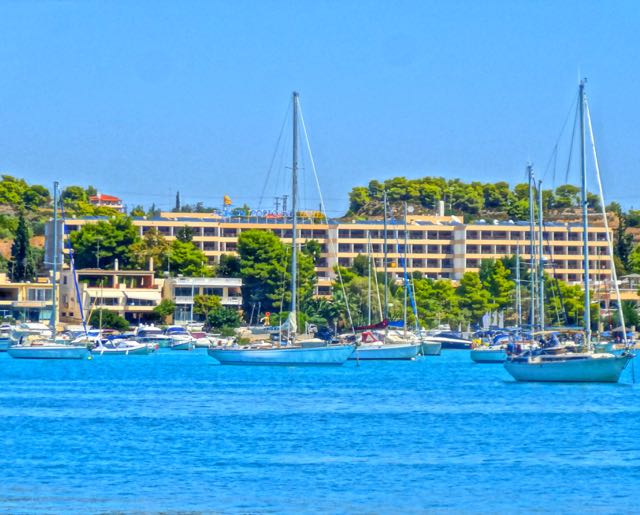
to Porto Heli which is about as different as a place can get. Porto Heli is the southeastern tip of the Argolis and the last stop of the Flying Cat highspeed boats that service the Saronic Gulf Islands. The town surrounds a large lagoon of aqua water where dozens, maybe hundreds of sailboats and yachts come to call or are based here. Historically this was the city of Allieis, founded in the 5th Century BC it was later held by the Venetians who called it Porto Bizato. The ruins of Ancient
Allieis is the
most important archaeological site in the area. The lagoon of Ververoda is known for its healing waters and has a pebble beach with trees that go right down to the sea. Other beaches worth visiting are Korakia, northwest of town and Hrissi Akti in the village of Agios Emilianos. The town of Porto Heli has a number of hotels and plenty of shops, restaurants and cafes. The area is full of Athenian summer homes so it is pretty lively in July and August and worth a stay, though it
is one of the hottest
places in Greece. May-June and September-October are better but you can say that about anywhere in the Argolis. Don't forget to visit the Frachti Cave which is one of the most important pre-historic archaeological sites in the world. It was inhabited from 38000 BC. Maybe earlier. Also visit the beach at Kiveri, one of the best in the Argolis. When you leave Nafplion and drive east and get beyond Epidavros, you get the feeling you are in a remote part of the Peloponessos. In a way you are. The eastern part of the Argolis is a long way from Athens and it is an area of traditional villages, farms, and mountains with not much vegetation. The town of Fourni, which means
oven, is known for its breads and paximadia and there are at least a dozen bakeries on the road. Kranidi is the regional capital of Ermionidas, and if you are traveling by bus this is where you will change. It is an agricultural town of about 4500 inhabitants with an interesting town center, a folklore museum and a famous church of Saint John the Baptist built in 1852 by Italian architect James Sevastinos and the home of the icon of the saint painted in 1646. From Kranidi it is another 15 minutes
to Porto Heli which is about as different as a place can get. Porto Heli is the southeastern tip of the Argolis and the last stop of the Flying Cat highspeed boats that service the Saronic Gulf Islands. The town surrounds a large lagoon of aqua water where dozens, maybe hundreds of sailboats and yachts come to call or are based here. Historically this was the city of Allieis, founded in the 5th Century BC it was later held by the Venetians who called it Porto Bizato. The ruins of Ancient
Allieis is the
most important archaeological site in the area. The lagoon of Ververoda is known for its healing waters and has a pebble beach with trees that go right down to the sea. Other beaches worth visiting are Korakia, northwest of town and Hrissi Akti in the village of Agios Emilianos. The town of Porto Heli has a number of hotels and plenty of shops, restaurants and cafes. The area is full of Athenian summer homes so it is pretty lively in July and August and worth a stay, though it
is one of the hottest
places in Greece. May-June and September-October are better but you can say that about anywhere in the Argolis. Don't forget to visit the Frachti Cave which is one of the most important pre-historic archaeological sites in the world. It was inhabited from 38000 BC. Maybe earlier. Also visit the beach at Kiveri, one of the best in the Argolis.
|
Kosta
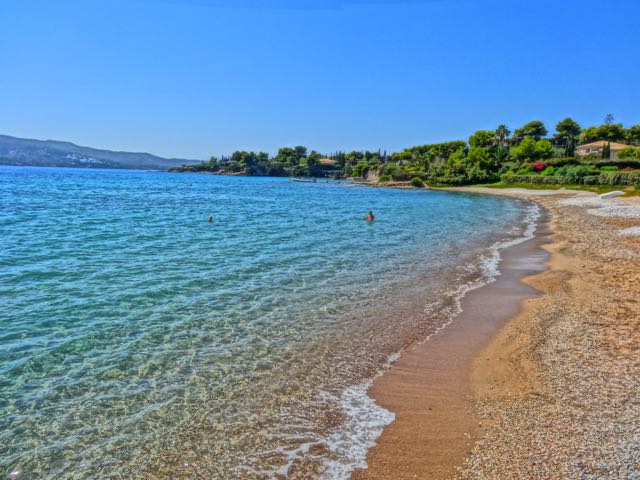 Though this tiny port is not on anyone's list of places to visit in Greece it is actually one of the best places in the Peloponessos to stop for a swim and a nice meal. This is where the small ferry goes back and forth between the Argolis and the island of Spetses, bringing supplies by truck to the village. No, you can't take your car. There are no cars on Spetses. If you get to Kosta between ferries you can take a watertaxi across in about 5 minutes. There is no realy village here, just a small port, some summer homes, a couple very large parking lots to accommodate all the cars of the people going to Spetses in the summer, a lovely beach of crystal clear water, and an excellent fish taverna called Taverna Kosta that has been here since the sixties. In 1970 my friends and I camped on the hill overlooking the beach (now a parking lot) and ate our meals here. In 2015 the boy whose father owned the taverna, was now the owner, with a son about the same age he was during our visit. No, I don't think he remembered us, though he should have. Anyway it is a very
good
taverna. I suggest splurging on the barbounia like we did. A half a kilo for two people is more than enough. Though this tiny port is not on anyone's list of places to visit in Greece it is actually one of the best places in the Peloponessos to stop for a swim and a nice meal. This is where the small ferry goes back and forth between the Argolis and the island of Spetses, bringing supplies by truck to the village. No, you can't take your car. There are no cars on Spetses. If you get to Kosta between ferries you can take a watertaxi across in about 5 minutes. There is no realy village here, just a small port, some summer homes, a couple very large parking lots to accommodate all the cars of the people going to Spetses in the summer, a lovely beach of crystal clear water, and an excellent fish taverna called Taverna Kosta that has been here since the sixties. In 1970 my friends and I camped on the hill overlooking the beach (now a parking lot) and ate our meals here. In 2015 the boy whose father owned the taverna, was now the owner, with a son about the same age he was during our visit. No, I don't think he remembered us, though he should have. Anyway it is a very
good
taverna. I suggest splurging on the barbounia like we did. A half a kilo for two people is more than enough.
|
Hermioni
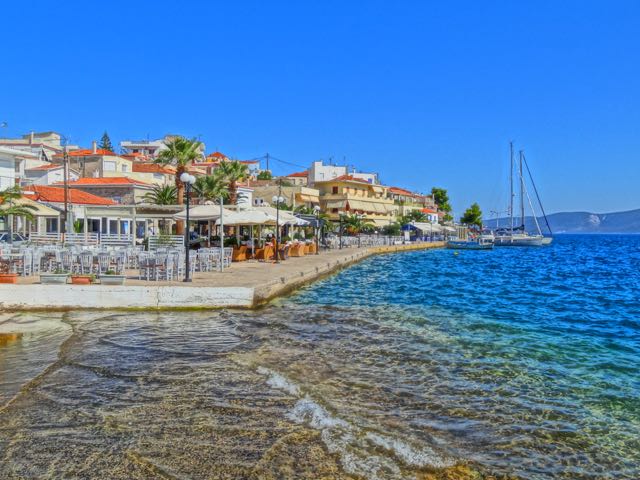 Known for its pomegranate orchards, the town of Hermioni is another stop on the Saronic Islands highspeed ferry route, and is much more picturesque and traditional than Porto Heli. There is a 17th Century Church of Taxiarches and a Folklore museum though the charm of Hermioni is its waterfront and the cafes and fish tavernas. There
is swimming
amongst the pines on the eastern edge of town. The town is dominated by the Church of Saint Hermione and has an island feel to it and the town has been inhabited since the days of Homer and had many temples and ancient buildings of which little remains besides the foundations and the parts of some Cyclopian walls near the rocky coves of Bistri. Nearby are the Thermissia Wetlands and the Castle of Thermisi, built in the 12th Century and destroyed by the Venetians when they blew
it up after being defeated
by the Turks in 1715. If you follow the road going east along the coast past the Porto Hydra resort you will see a sign that says 'To Hydra' near the town of Mochlos. There is actually a small boat that goes back and forth every couple of hours to the island of Hydra. The trip takes about 10 minutes and costs 6 euros. The only problem if finding a place to park in the summer. There
are cars that look like they have been here for decades. Known for its pomegranate orchards, the town of Hermioni is another stop on the Saronic Islands highspeed ferry route, and is much more picturesque and traditional than Porto Heli. There is a 17th Century Church of Taxiarches and a Folklore museum though the charm of Hermioni is its waterfront and the cafes and fish tavernas. There
is swimming
amongst the pines on the eastern edge of town. The town is dominated by the Church of Saint Hermione and has an island feel to it and the town has been inhabited since the days of Homer and had many temples and ancient buildings of which little remains besides the foundations and the parts of some Cyclopian walls near the rocky coves of Bistri. Nearby are the Thermissia Wetlands and the Castle of Thermisi, built in the 12th Century and destroyed by the Venetians when they blew
it up after being defeated
by the Turks in 1715. If you follow the road going east along the coast past the Porto Hydra resort you will see a sign that says 'To Hydra' near the town of Mochlos. There is actually a small boat that goes back and forth every couple of hours to the island of Hydra. The trip takes about 10 minutes and costs 6 euros. The only problem if finding a place to park in the summer. There
are cars that look like they have been here for decades.
|
Galatas
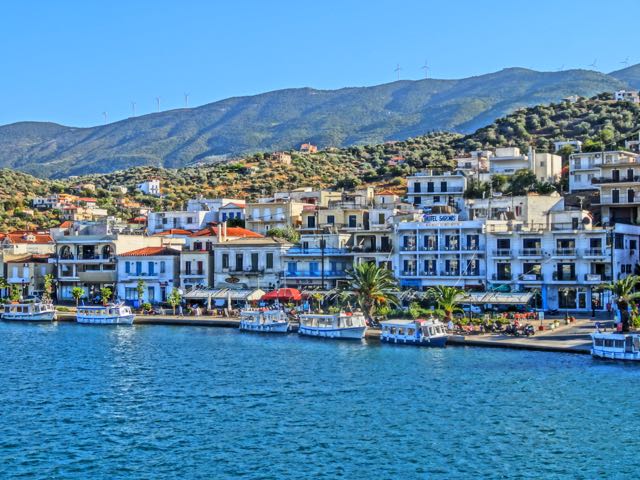 If you keep driving north the road eventually turns north and then west and you will find yourself in the town of Galata, which is the sister town of the town of Poros on the island of the same name. The two towns sort of mirror each other and are separated by a narrow stretch of sea
that looks more like a river. There is a small car ferry that
goes back and forth every 15 minutes and smaller water taxis, that are more like sea-buses, that do the trip continuously 24 hours a day on no set schedule. Galatas is known for its lemon groves and for the Ancient City of Troezon, or Trizina on the way to Methana. The birthplace of Theseus, the people of Troezon took place in the Trojan War and fought against the Persians. Though this is not on the map as far as most tourists are concerned, it is well worth visiting. Though most people end up staying
in
Poros, Galata has several inexpensive hotels on the waterfront and a number of tavernas and cafes and a very different feel from the more touristy Poros. If you keep driving north the road eventually turns north and then west and you will find yourself in the town of Galata, which is the sister town of the town of Poros on the island of the same name. The two towns sort of mirror each other and are separated by a narrow stretch of sea
that looks more like a river. There is a small car ferry that
goes back and forth every 15 minutes and smaller water taxis, that are more like sea-buses, that do the trip continuously 24 hours a day on no set schedule. Galatas is known for its lemon groves and for the Ancient City of Troezon, or Trizina on the way to Methana. The birthplace of Theseus, the people of Troezon took place in the Trojan War and fought against the Persians. Though this is not on the map as far as most tourists are concerned, it is well worth visiting. Though most people end up staying
in
Poros, Galata has several inexpensive hotels on the waterfront and a number of tavernas and cafes and a very different feel from the more touristy Poros.
|
Methana
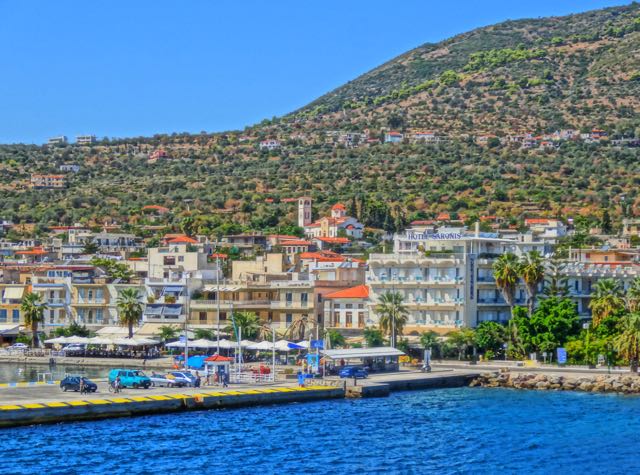 The town of Methana is located on a peninsula that juts out from the Argolis in the Peloponessos and because the easiest way to get here is by boat, the ferries to the Saronic Islands also stop here. It is actually on a volcano that last erupted in 230 BC and it is believed that it will erupt
again in the not to distant future so you may want to visit while you can. The peninsula actually has 32 separate volcanoes and a popular hike is to the largest. Along with volcanoes you also get hot springs and Methana has been a spa, attracting old people who want to soothe their aches and pains since 1870. There are volcanic beaches, ancient archaeological sites, fishing villages and plenty of restaurants and cafes, and hotels if you decide to stay the night. This island that is not an island
is best seen by car or taxi. Read more about Methana The town of Methana is located on a peninsula that juts out from the Argolis in the Peloponessos and because the easiest way to get here is by boat, the ferries to the Saronic Islands also stop here. It is actually on a volcano that last erupted in 230 BC and it is believed that it will erupt
again in the not to distant future so you may want to visit while you can. The peninsula actually has 32 separate volcanoes and a popular hike is to the largest. Along with volcanoes you also get hot springs and Methana has been a spa, attracting old people who want to soothe their aches and pains since 1870. There are volcanic beaches, ancient archaeological sites, fishing villages and plenty of restaurants and cafes, and hotels if you decide to stay the night. This island that is not an island
is best seen by car or taxi. Read more about Methana
|
Astros and South of Nafplion
 Once a quiet seaside village, Parilea
Astros has become a resort for Greek Americans and Athenians. But the sea
is clean and the restaurants are good and if you want to stay at a place
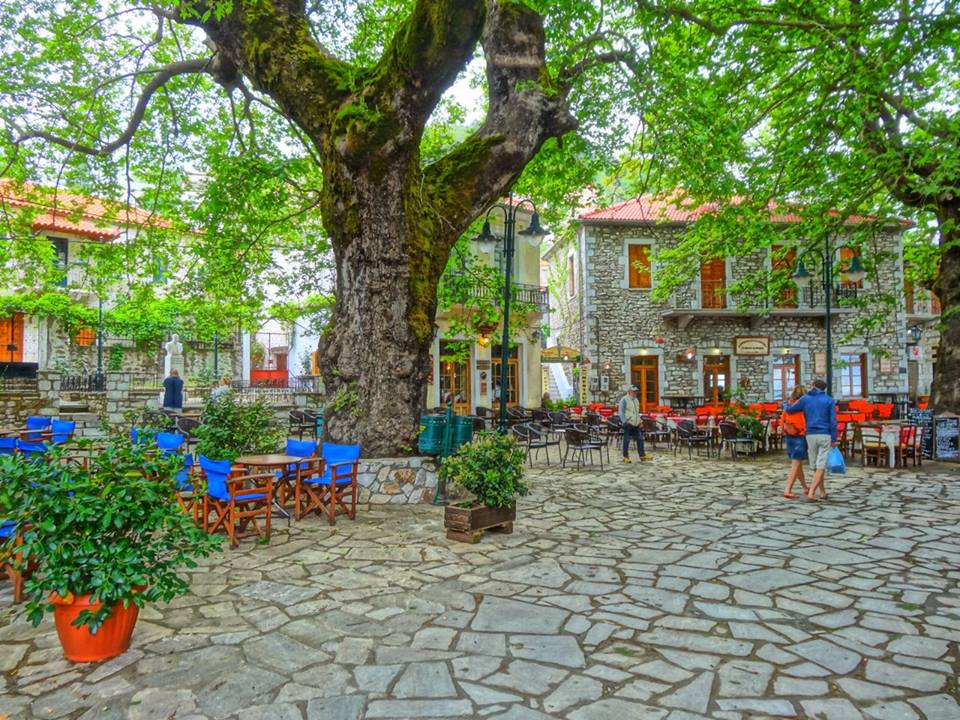
on or near the beach, or just spend the afternoon swimming, it will do. Further on the road continues to Leonidion with its beautiful stone beach at Plaka. Leonideon sits at the edge of a canyon overlooking the sea and is the eggplant capital of Greece. They have a festival every summer. The road continues inland towards the town of Tripolis through the canyon, past the impressive Monastery of Panagia Elona carved into a mountain cliff (they sell wonderful honey here). The
mountain town of Kosmas (photo) is a good place to get away from the heat of the Argolis with its beautiful tree-shaded square and its traditional restaurants and cafeneons. It can be 10 to 20 degrees cooler in Kosmas than on the coast and it is a wonderful place to go for lunch. The specialty of the restaurants is a goat stew, called Yida, and a cheesy pasta called Goges. For more see my Leonidion Page
and my Kosmas Page and my Astros Page and my Tiros Page. Both Astros and Tiros are really nice beach towns. Once a quiet seaside village, Parilea
Astros has become a resort for Greek Americans and Athenians. But the sea
is clean and the restaurants are good and if you want to stay at a place
on or near the beach, or just spend the afternoon swimming, it will do. Further on the road continues to Leonidion with its beautiful stone beach at Plaka. Leonideon sits at the edge of a canyon overlooking the sea and is the eggplant capital of Greece. They have a festival every summer. The road continues inland towards the town of Tripolis through the canyon, past the impressive Monastery of Panagia Elona carved into a mountain cliff (they sell wonderful honey here). The
mountain town of Kosmas (photo) is a good place to get away from the heat of the Argolis with its beautiful tree-shaded square and its traditional restaurants and cafeneons. It can be 10 to 20 degrees cooler in Kosmas than on the coast and it is a wonderful place to go for lunch. The specialty of the restaurants is a goat stew, called Yida, and a cheesy pasta called Goges. For more see my Leonidion Page
and my Kosmas Page and my Astros Page and my Tiros Page. Both Astros and Tiros are really nice beach towns.
|
Corinth
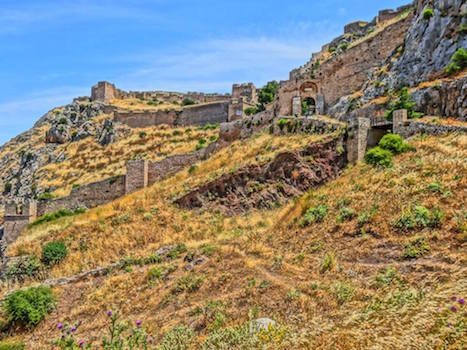 Corinth is a bustling city of apartment buildings. Its the last stop for the Athens Suburban railway from the airport. The ruins at Akrocorinth,
1900 feet above the city is one of the most spectacular sites in all of
Greece and should not be missed. The original fortress was built in ancient
times but has been added to by the Romans, Byzantines, Franks, venetians
and finally the Turks and every occupying power has left it's mark. There
is not much left of the Temple of Aphrodite but it is worth going up there
for the view. Corinth is a bustling city of apartment buildings. Its the last stop for the Athens Suburban railway from the airport. The ruins at Akrocorinth,
1900 feet above the city is one of the most spectacular sites in all of
Greece and should not be missed. The original fortress was built in ancient
times but has been added to by the Romans, Byzantines, Franks, venetians
and finally the Turks and every occupying power has left it's mark. There
is not much left of the Temple of Aphrodite but it is worth going up there
for the view.
Ancient Corinth was one of Greece's richest
cities in it's heyday around the 6th century BC.due to it's position and
control of the narrow isthmus which seperated the Peloponessos and the
mainland and the two seas on each side of it. East of the modern city are
the ruins of ancient Corinth, still being excavated, which feature the
remains of the 5th century BC Temple of Apollo, some Roman ruins and the
Lower Peirene Fountain, a natural spring that has supplied Old Corinth
with water from ancient times. While you are here you should visit the ancient site of Isthmia as well. They have an excellent museum. |
|
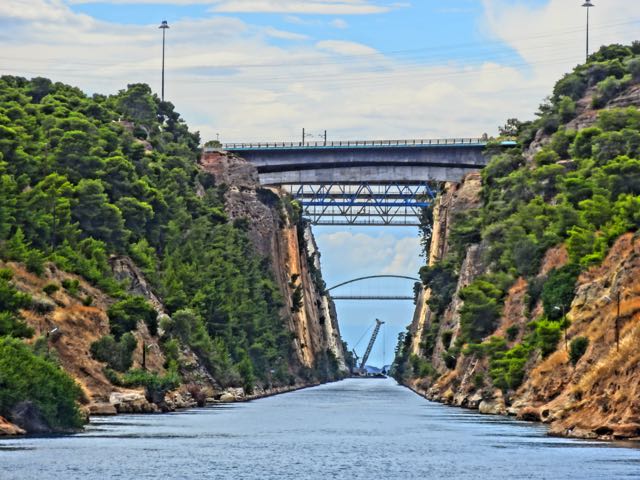 Perhaps the most impressive site, and my
favorite place, is the Corinth Canal which cuts through the rock and connects
the Aegean sea with the Ionian. Begun by Nero in 67 AD using Jewish slaves,
the project had to be postponed until 1883 when a French company began
working on it again. It was completed in 1893. The old bridge has a pedestrian
walkway and shakes when cars cross, but it has not fallen yet and the view
from the center of the canal is one that won't be forgotten. Even more interesting is the bridge across the east entrance to the canal which submerges for boats to cross over it. A nice place to stop for a coffee is the Perama Restaurant-Cafe and if you are lucky a ship will pass and you can watch the bridge go down. Follow the signs to Isthmia and you will cross it. If you are taking the National Road you will barely notice it so once you are on the isthmus get off and follow the signs to Corinth and you should
stumble upon it because it is pretty hard to miss. See also Matt's Guide to Corinth and the Argolis Perhaps the most impressive site, and my
favorite place, is the Corinth Canal which cuts through the rock and connects
the Aegean sea with the Ionian. Begun by Nero in 67 AD using Jewish slaves,
the project had to be postponed until 1883 when a French company began
working on it again. It was completed in 1893. The old bridge has a pedestrian
walkway and shakes when cars cross, but it has not fallen yet and the view
from the center of the canal is one that won't be forgotten. Even more interesting is the bridge across the east entrance to the canal which submerges for boats to cross over it. A nice place to stop for a coffee is the Perama Restaurant-Cafe and if you are lucky a ship will pass and you can watch the bridge go down. Follow the signs to Isthmia and you will cross it. If you are taking the National Road you will barely notice it so once you are on the isthmus get off and follow the signs to Corinth and you should
stumble upon it because it is pretty hard to miss. See also Matt's Guide to Corinth and the Argolis
|
Loutraki
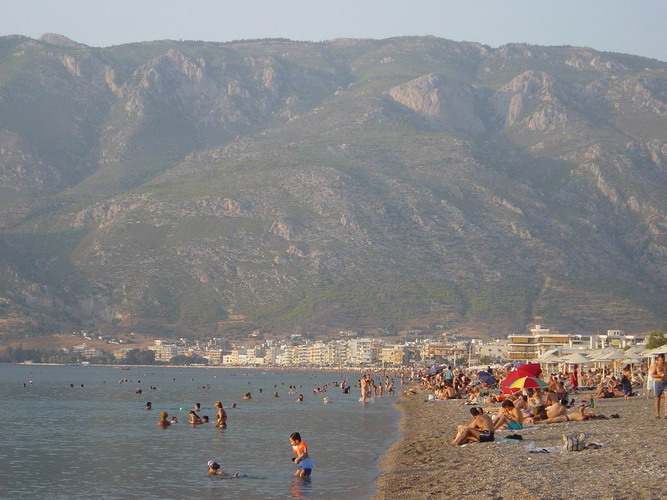 Just a few miles from Corinth is the town of Loutraki which is famous for its bottled spring water which you will undoubtedly come across during one of your meals in Greece. Loutraki is also known for its famous Casino Hotel where you
can win or lose a fortune, or not play and just enjoy the ancient olive grove that has been transplanted on the hotel grounds. The Casino Hotel has an enormous
pool and artificial waterways that snake around the gardens and it is right on the beach. In 2006 my friend George from Fantasy Travel was swimming here with his daughter when what he thought was a shark surfaced right next to him. As his life flashed before his eyes and he readied to sacrifice himself while his daughter swam to shore the creature lifted his head and looked him in the eye. It was the smiling face of a dolphin. Just a few miles from Corinth is the town of Loutraki which is famous for its bottled spring water which you will undoubtedly come across during one of your meals in Greece. Loutraki is also known for its famous Casino Hotel where you
can win or lose a fortune, or not play and just enjoy the ancient olive grove that has been transplanted on the hotel grounds. The Casino Hotel has an enormous
pool and artificial waterways that snake around the gardens and it is right on the beach. In 2006 my friend George from Fantasy Travel was swimming here with his daughter when what he thought was a shark surfaced right next to him. As his life flashed before his eyes and he readied to sacrifice himself while his daughter swam to shore the creature lifted his head and looked him in the eye. It was the smiling face of a dolphin.
For more on Loutraki see my Loutraki page
|
|