Beaches of Halkidiki
|
This is my old Halkidiki Page. Visit my New Halkidiki Page with lots more photos and information.
|
|
POLIGIROS This is the capital of Halkidiki (69 km from Thessaloniki) built amphitheatrically at the foot of Mt. Holomon. There is an archaeological museum containing notable finds from excavations in the surrounding area. Visitors can also see sections of the old quarter of the town. By the village of Petralona the famous cave is worth visiting. It is located along the west foothills of Mt Katsika at an altitude of 250 m. It is one of the most important caves with paleontological interest. The total length of the corridors comes to 1,900 m. and it is adorned with wonderful stalactites and stalagmites of all kinds. It was first explored in 1959 by Mr J. Petrocheilos, then president of the Greek Speleological Society who named it "Kokines Petres" (Red Rocks). In 1960 a 700,000 year old human skull was found here.The cave is open from 9 to 5 daily. |
|
|
|
Click here for activities in Halkidiki |
Hotels in Halkidiki |
|
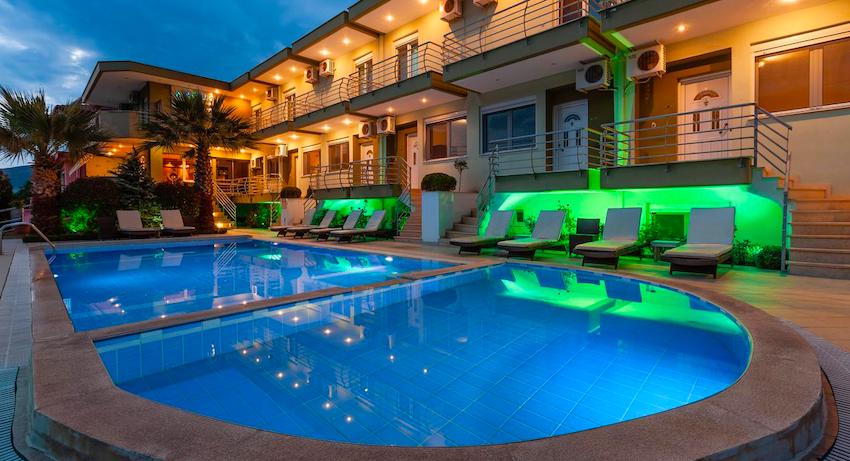
Among olive and pine trees, over the emerald waters of the Kassandra gulf, in Halkidiki, lies Atrium Hotel. It offers free shuttle service to the village and the beach, and has a pool with pool bar, free deck chairs and sun umbrellas. The comfortably furnished rooms feature satellite TV, private bathrooms with shower and hair dryer, as well as a fridge and air conditioning. All rooms have private balconies. The wide array of sports activities at Atrium Hotel includes a tennis court, pool, aerobics, beach volleyball, and pool table. Upon request guests can take diving lessons. Younger guests can play safely at the playground and the mini club. Enjoy the big veranda round our two freshwater pools, one for adults and one for children, with free deck-chairs and parasols. You can relax under their shade and take a dip in the pools’ crystal clear waters at his halkidiki hotel. The restaurant “ATHOS” serves American buffet breakfast. As for dinner you can choose, among the rich and various buffets, the dishes of your preference of the Greek and International cuisine. You can also enjoy the thematic nights that are organized every week (Italian night, fish night, ancient flavours). The bar “Avra” is situated next to the pool, it is open from the morning until late at night and serves drinks, refreshing cocktails, fresh juice and snacks. You can end your night by taking part in the activities organized by the hotel’s animation group or by just enjoying your drink by the lightened pool, under the stars. Book Directly with the Hotel or with Booking.com |
|
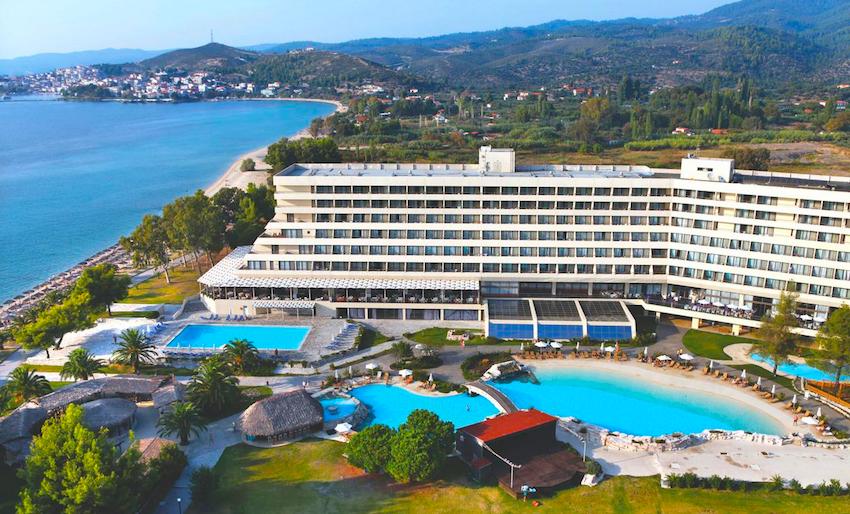
Located on the sandy beach of Chalkidiki, the multi-awarded Porto Carras Sithonia offers 5-star accommodations surrounded by landscaped gardens. It features a private marina, a casino and a spa center. Porto Carras Sithonia rooms are luxuriously decorated with elegant furnishings and marbled bathrooms. Their balconies boast views of Toroneos Bay or the complex’s golf course. They are all equipped with satellite TV, air conditioning and hairdryer. The hotel’s state-of-the-art spa offers exclusive thalassotherapy treatments and includes a hamam, sauna, indoor pool, hair salon and fitness room. Other leisure facilities include a football field and basketball court, as well as an 18-hole golf course. Porto Carras Sithonia features 4 restaurants serving Mediterranean and ethnic cuisine. 5 bars, at the pool, the beach, the lagoons and the casino of Sithonia, serve refreshing cocktails and wine from the hotel’s own vineyards. Special children’s activities are organized by an animation team, while there is also an on-site riding school offering horse riding lessons and 2 playgrounds. A bowling center is also available on site. Click here for Photos, Reviews and Booking Information |
|
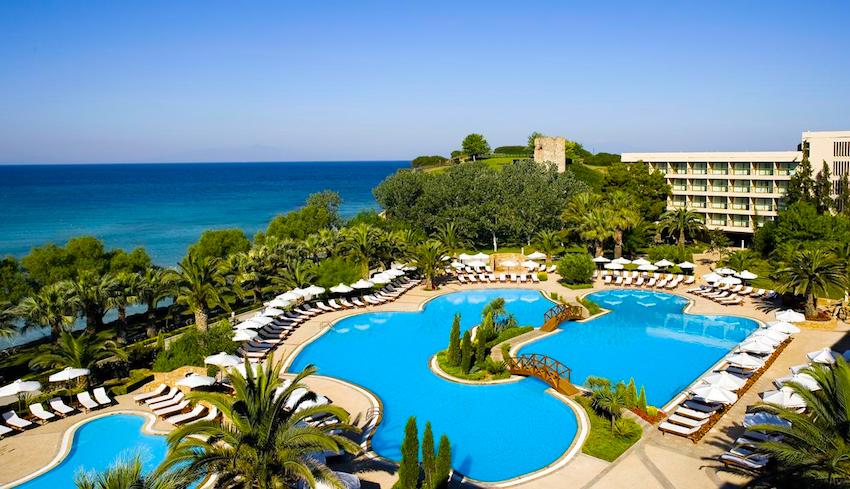
Overlooking the azure waters of Cape Sani, the Sani Beach offers a lagoon-style swimming pool, a spa center and restaurants with international flavors and Greek cuisine. Each of the light and airy rooms offers views across the Aegean or the beautifully landscaped gardens. They all come with a private terrace or balcony and bathroom with rain shower. In-room amenities include a flat-screen TV, mini-bar and air conditioning. Poseidon Restaurant proposes a culinary experience for all the family with themed buffets each evening. The Veranda Restaurant offers an open-kitchen experience which serves a selection of Greek and Mediterranean dishes with views over the Aegean Sea. Guests have easy access to Bousoulas beach with its 4.3 miles of pine-fringed sands with clear water, ideal for snorkeling. The beach has been awarded an EU Blue Flag and the shallow water is ideal for children. Several fun activities for younger guests are also organized, along with dancing, football and sailing lessons. The Sani Beach occupies a prime position on the Cape. Guests can seize the opportunity to enjoy water sports, play tennis or take off into the Mediterranean scenery on a mountain bike. Click here for Photos, Reviews and Booking Information |
|
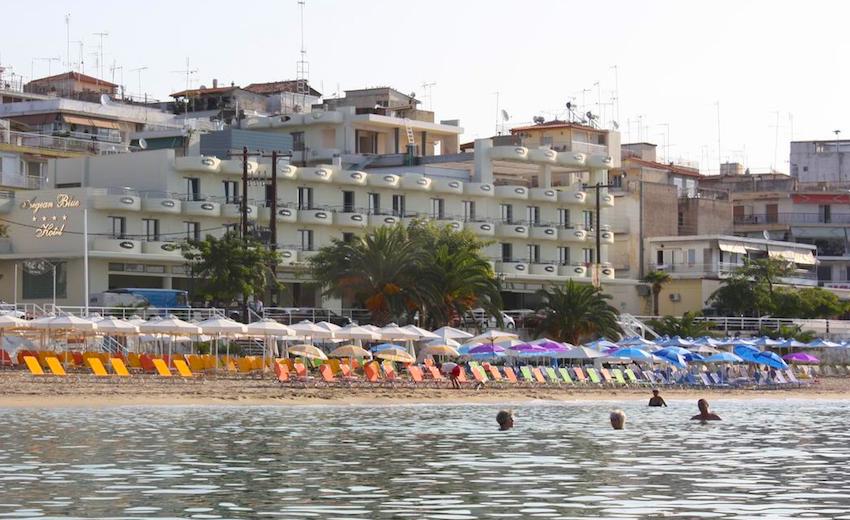
Set ideally on the beachfront, this 4-star hotel offers ergonomically designed rooms with free WiFi and private parking. Aegean Blue soundproof rooms are fitted with a satellite TV. Each has a furnished balcony. The modern bathrooms include a hairdryer and bathroom amenities. The sandy beach in front of the hotel offers sun beds and umbrellas, while the on-site lifeguard ensures carefree holidays. The Aegean Blue attentive staff are on hand 24/7 and offer room service. This property also has one of the top-rated locations in Nea Kallikrateia! Guests are happier about it compared to other properties in the area. Click here for Photos, Reviews and Booking Information |
|
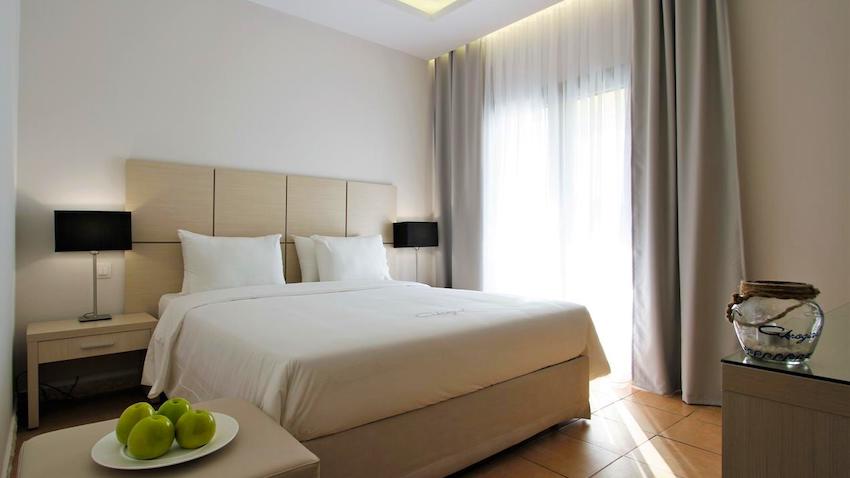
Akrogiali Boutique Hotel (Adults Only) Located just 200 feet from a long sandy beach in Polichrono, Akrogiali Boutique Hotel offers stylish accommodations and relaxing ambiance in the bar-restaurant. Free Wi-Fi is available throughout. Modernly decorated with LED lighting, the rooms of Akrogiali Boutique are air conditioned and include a bathroom with shower and fine porcelain.They are equipped with double-glazed windows, pocket spring mattresses, flat- screen satellite TV, mini fridge, personal safe, hairdryer, tea making facilities and electronic door lock. All rooms have a balcony with views over the garden or the inner courtyard. A Greek buffet breakfast including local products, Greek yogurt, spinach or cheese pie, local honey and homemade omelet, is daily available. The hotel’s restaurant serves Greek and Mediterranean cuisine using the finest local products. Guests can enjoy fresh fish and traditional dishes at the elegant dining room or at the lovely terrace by the garden. Various shops lie within proximity. The traditional Kriopigi and Hanioti villages are within 2.5 mi from Akrogiali.The hotel offers services for organized cruises and excursions. The crystal clear waters are ideal for snorkeling and the beautiful forest for walking. Transfer from the airport of Thessaloniki is provided on special request. Click here for Photos, Reviews and Booking Information |
|
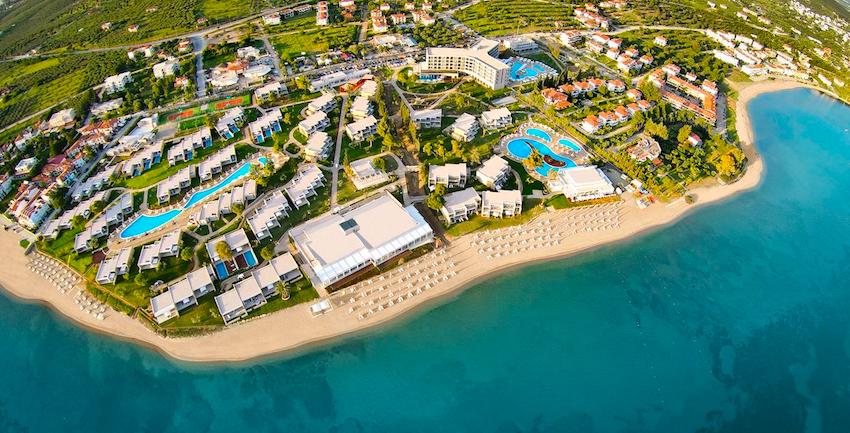
Right on its private beach area in Gerakini, Ikos Olivia features 3 outdoor pools, 1 indoor pool and spa facilities. Set in extensive grounds with a tennis court, shops and 5 restaurants, it offers elegant accommodations with free WiFi. Decorated in light tones, all units at Ikos Olivia offer views of the pool, garden or Toroneos Gulf. Each has a flat-screen, satellite TV and DVD player. A coffee machine and mini-bar are also included. The modern bathroom comes with a shower or/and bathtub. Some accommodations types have a private garden with sun loungers. Dining options include a buffet restaurant with Mediterranean dishes, as well as 4 a la carte restaurants serving Asian, Italian, Greek and French cuisine. Breakfast in the room and special diet menus can be served on request. Guests can also choose to have a drink from 5 indoor and outdoor bars. The wellness center comes with an indoor pool, steam bath, sauna and massage room. Other facilities include a gym, table tennis and watersport facilities. Special children entertainment and a playground are provided for the younger visitors. A mini market, jewelry and clothes shops can be found on site. Thessaloniki International Airport can be reached within a 35-minute drive. Free parking is possible within the premises. Click here for Photos, Reviews and Booking Information |
|
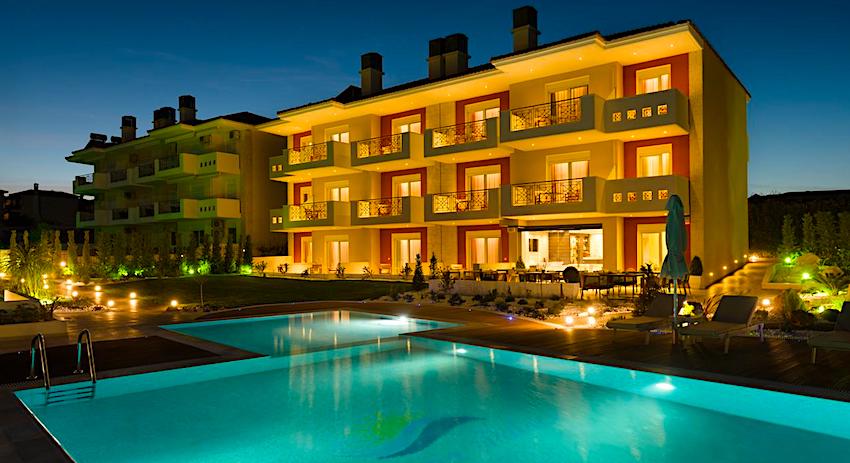
Offering free WiFi and a shared outdoor pool, Lagaria Palace is located in Áfitos. This property features a bar, a garden, and air-conditioned accommodations with a furnished balcony. Overlooking the garden, the modern rooms at Lagaria Palace come with satellite flat-screen TV and a private bathroom. Free WiFi is provided throughout. At Lagaria Palace you will find a 24-hour front desk, a children's playground and a sun terrace. The property offers free parking. Thessaloniki Airport is a 50-minute drive away. Click here for Photos, Reviews and Booking Information |
|
Offering pool views, Anthodi Hotel in Stavros has accommodations, a seasonal outdoor swimming pool, a fitness center, a garden and a bar. Complimentary WiFi is provided. The accommodations come with a fully equipped kitchenette with a fridge, a flat-screen TV and a private bathroom with a shower. Some units include a terrace and/or balcony. A continental breakfast is served each morning at the property. A bicycle rental service is available at the condo hotel. Click here for Photos, Reviews and Booking Information |
|
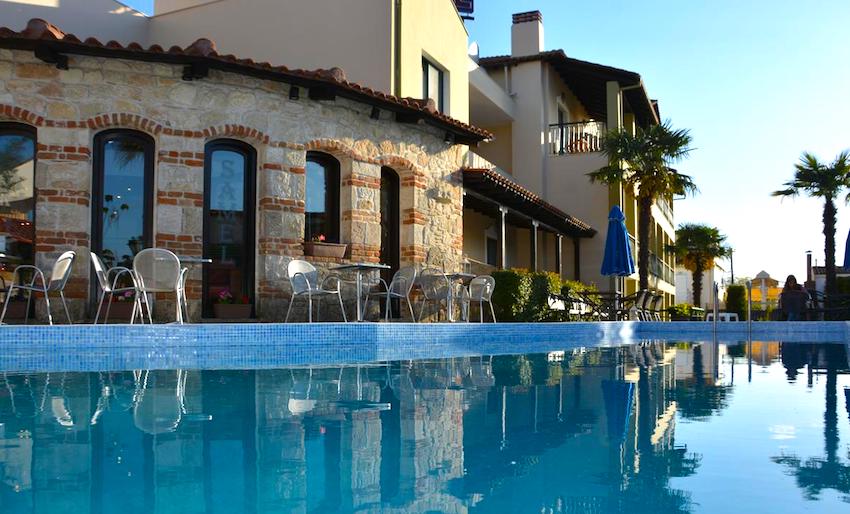
Set just 350 feet from the sea in Siviri, 4.3 mi from Sani Beach, Samel Hotel features an outdoor pool and views of the sea. Guests can enjoy the on-site bar. Every room at this hotel is air conditioned and has a TV. A terrace or balcony are featured in certain rooms. Every room is fitted with a private bathroom. There is a shared lounge at the property. The hotel also offers car hire. The lively Kallithea, boasting an array of nightclubs and bars, is 6.2 mi away. Click here for Photos, Reviews and Booking Information |
|
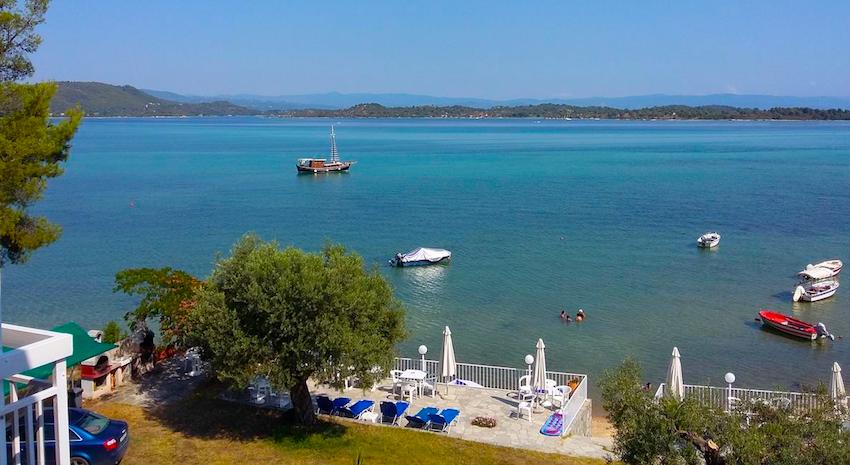
Right on the beach of Vourvourou and featuring a seafront deck, this family-run hotel is surrounded by a garden. It offers air-conditioned rooms with free Wi-Fi. Free sun loungers and umbrellas are available on the terrace facing the seafront. Featuring a lot of natural light, all rooms at the Vourvourou Hotel have a terrace overlooking the Gulf of Vourvourou, the mountains of Sithonia or the forest. Each comes with a flat-screen TV, a safe, a fridge and private bathroom with shower. Refreshments, coffee and sandwiches are served at the bar where there is also a satellite TV. BBQ facilities with a seating area are provided in the garden of the Hotel Vourvourou. A Greek restaurant, a fast food restaurant, a coffee-food bar and a supermarket for everyday essentials are next to the hotel. More restaurants, coffee bars and pizzerias are whithin 1,650 feet. Boats to visit secluded beaches such as the tropical Galazia Nera, are rented at a distance of 350 feet. Kayak rental can be found right across the hotel. Free, private parking is provided on site. Click here for Photos, Reviews and Booking Information |
|
For House and Villa Rentals in Halkidiki See www.greecetravel.com/villas and Matt's Hotels of Greece Halkidiki Page There are lots more Halkidiki Hotels that you can book directly at www.booking.com Thank you to Fantasy Travel, the best travel agency in Greece, for their photos. |
|
|
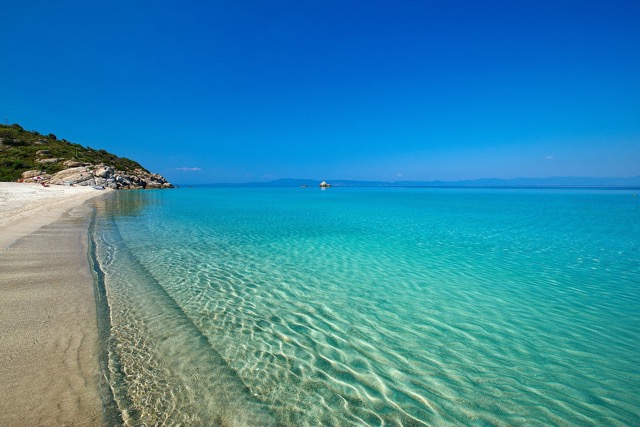 Southeast of Thessaloniki is
the peninsula of Halkidiki which boasts some of the finest
beaches in all of Greece. At one time
the prime destination for Germans and other Europeans who wanted to drive to Greece, its popularity dropped during the war in Bosnia and then picked right back up again with loads of tourists from the Balkans, Eastern Europe and of course Northern Greece.
Unless
you book in advance you may not find a hotel, especially in August, proving the point that just because you have never heard of a place does not mean other people haven't. Yes, there are loads of
tourists, especially in July and August when most of Thessaloniki comes here,
but the beaches can be long, the hotels large and
beautiful and there is enough authentic Greek
life in the more remote inland villages to make a
traveler here not feel like he is missing
something somewhere else. The area is not only
known for its amazing beaches but also for the
mountains, valleys and the splended selection
of wildflowers in the spring, which may be the
best time to be here to beat the
crowds.
Southeast of Thessaloniki is
the peninsula of Halkidiki which boasts some of the finest
beaches in all of Greece. At one time
the prime destination for Germans and other Europeans who wanted to drive to Greece, its popularity dropped during the war in Bosnia and then picked right back up again with loads of tourists from the Balkans, Eastern Europe and of course Northern Greece.
Unless
you book in advance you may not find a hotel, especially in August, proving the point that just because you have never heard of a place does not mean other people haven't. Yes, there are loads of
tourists, especially in July and August when most of Thessaloniki comes here,
but the beaches can be long, the hotels large and
beautiful and there is enough authentic Greek
life in the more remote inland villages to make a
traveler here not feel like he is missing
something somewhere else. The area is not only
known for its amazing beaches but also for the
mountains, valleys and the splended selection
of wildflowers in the spring, which may be the
best time to be here to beat the
crowds.
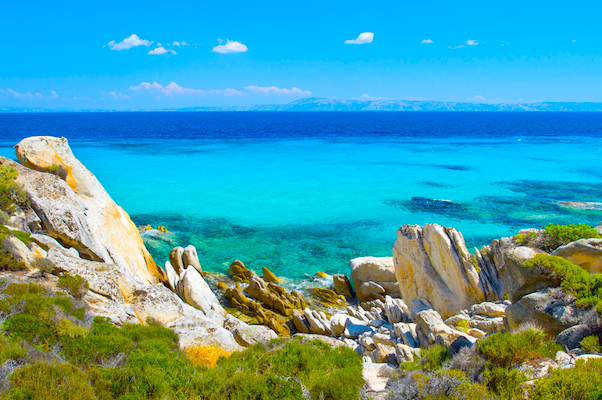 KASSANDRA
is the most westerly of the three prongs of
Halkidiki. It is remarkable for its extensive
beaches, pine forests and small villages as
well as for the impact tourism has had upon
it. It is difficult to get away from it all
but if you like discos, fast food, motorbikes
you may be quite happy here, provided you can
find a place to stay. The entire
Kassandra peninsula has several major hotels
and organized camping grounds, many surrounded
by woods and close to the beaches.There are
also many smaller hotels and rooms available
though difficult to find without booking in
advance.
KASSANDRA
is the most westerly of the three prongs of
Halkidiki. It is remarkable for its extensive
beaches, pine forests and small villages as
well as for the impact tourism has had upon
it. It is difficult to get away from it all
but if you like discos, fast food, motorbikes
you may be quite happy here, provided you can
find a place to stay. The entire
Kassandra peninsula has several major hotels
and organized camping grounds, many surrounded
by woods and close to the beaches.There are
also many smaller hotels and rooms available
though difficult to find without booking in
advance.
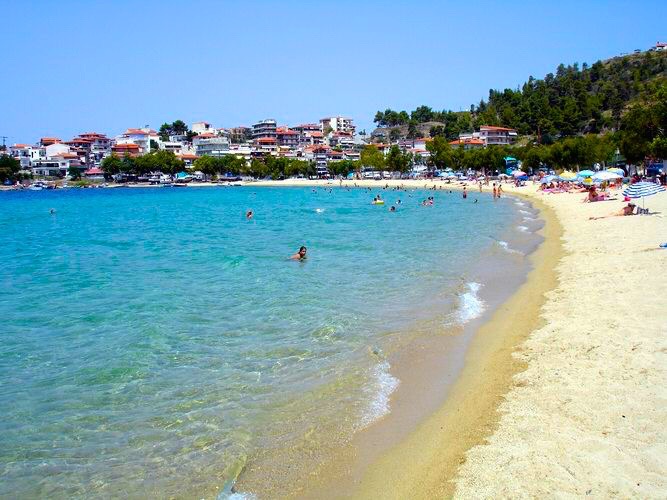 SITHONIA is
less tourist-infested than Cassandra though it
still boasts some of the areas most popular
and attractive resorts including the
SITHONIA is
less tourist-infested than Cassandra though it
still boasts some of the areas most popular
and attractive resorts including the 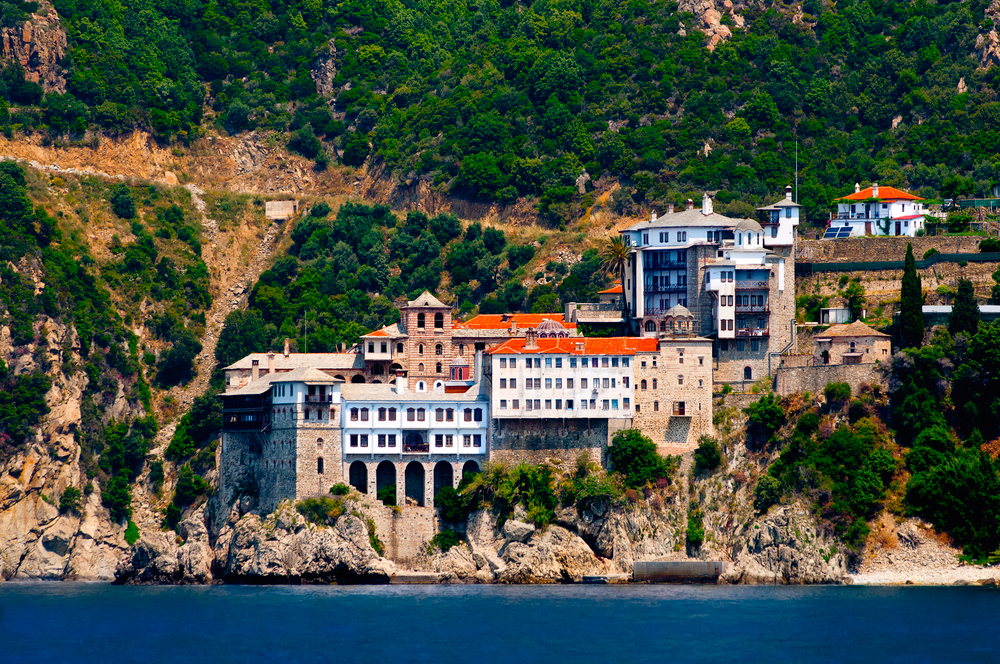 MOUNT ATHOS or in Greek Agio Oros is to Greece as the Vatican is to Rome, a religious state within a state. To get a clear idea just imagine the Byzantine empire getting smaller and smaller until it only covered the easternmost peninsula of Halkidiki, a wooded, mountainous, and rugged land with few roads, a few dozen monasteries and smaller
spiritual
settlements.
Its a
beautiful place, maybe the most magical place in Greece. The catch is you can't go there if you are a woman and you can only go for 4 days if you are a man and you need special permission to stay there. But you can get as far as Ouranopoulos which has beaches, hotels, seafood tavernas and is the last town before the no-mans-land between the Holy mountain and the un-holy rest of the world. For those who do have permission there is a daily boat from here to the port of Daphne, the entry point for pilgrims and monks.
For women, or men who are satisfied seeing the monasteries from a distance there are excursion boats that sail around Mount Athos.
MOUNT ATHOS or in Greek Agio Oros is to Greece as the Vatican is to Rome, a religious state within a state. To get a clear idea just imagine the Byzantine empire getting smaller and smaller until it only covered the easternmost peninsula of Halkidiki, a wooded, mountainous, and rugged land with few roads, a few dozen monasteries and smaller
spiritual
settlements.
Its a
beautiful place, maybe the most magical place in Greece. The catch is you can't go there if you are a woman and you can only go for 4 days if you are a man and you need special permission to stay there. But you can get as far as Ouranopoulos which has beaches, hotels, seafood tavernas and is the last town before the no-mans-land between the Holy mountain and the un-holy rest of the world. For those who do have permission there is a daily boat from here to the port of Daphne, the entry point for pilgrims and monks.
For women, or men who are satisfied seeing the monasteries from a distance there are excursion boats that sail around Mount Athos. 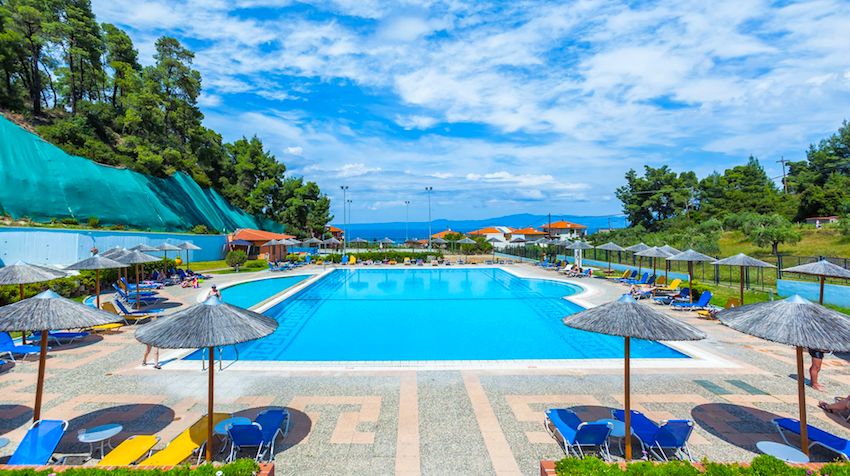
|
|
|
|
 Thessaloniki Taxi
Help Support Matt's Greece Guides
Do you enjoy using my site? Have you found it entertaining as well as useful? If so please show your appreciation by booking hotels through the travel agencies and the links found on my Hotels of Greece site. The small commission I make on the bookings enable me to keep working and in most cases you won't find them any cheaper by searching elsewhere.
You can find
hotels in Greece by location, price, whether or not it has a swimming pool, and see photos and reviews by using this link to booking.com which also contributes to my website when you book. If you are appreciative of all the free information you get on my websites you can also send
a donation through Paypal or Venmo
Join Matt Barrett's Greece Travel Guides Group on Facebook for comments, photos and other fun stuff. If you enjoy this website please share it with your friends on Facebook and other social media.
