Turkey Guide
Kapikiri
|
|
|
|
|
Kapikiri
|
|||
|
The south shore of Lake Bafa hugs a busy highway which might lead you to think that it is peppered with roadside cafes and tavernas along the beautiful water front. Wrong. You won’t see a single commercial establishment there. The lake’s north shore, rimmed by steep rocky slopes, is also devoid of structures. Lake Bafa is immune from the Turkish real estate market because it is a huge protected wetlands reserve. In Homer’s lifetime it used to be a gulf on the Aegean Sea but sediment from the Meander River transformed it into a lake that still retains a degree of salt water. |
|||
|
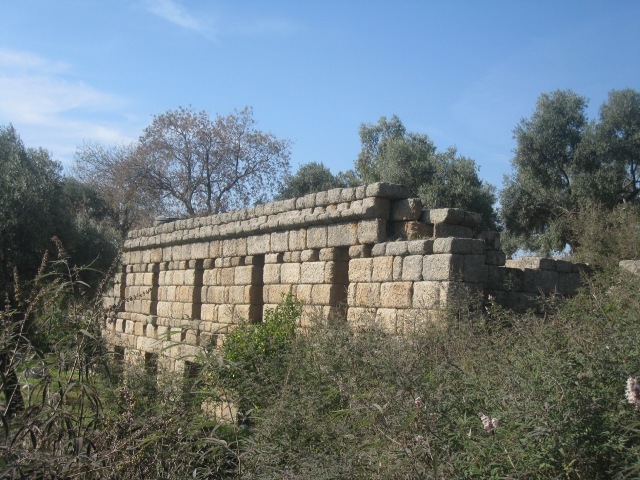
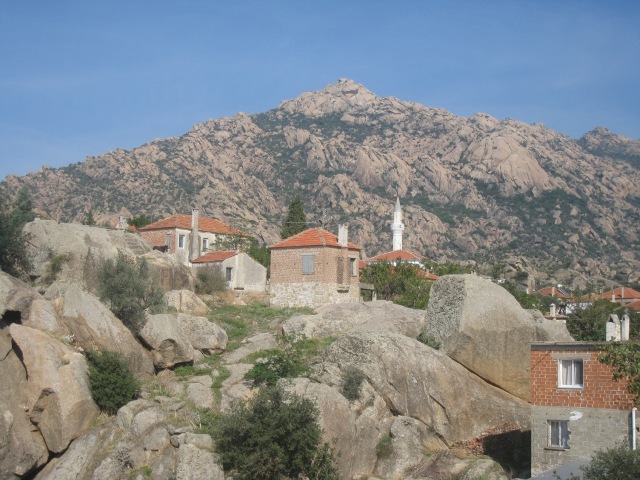
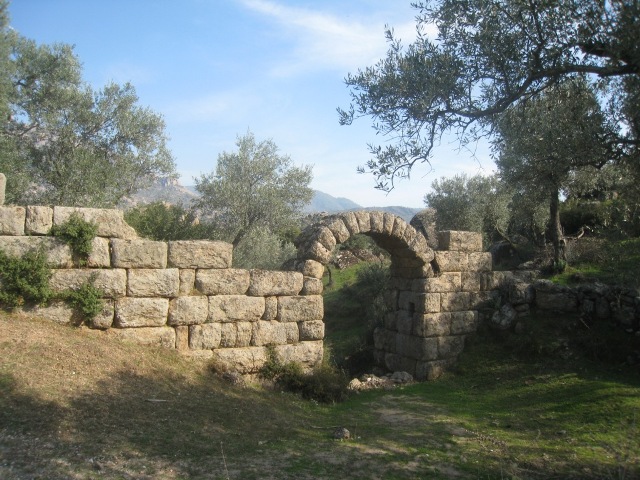
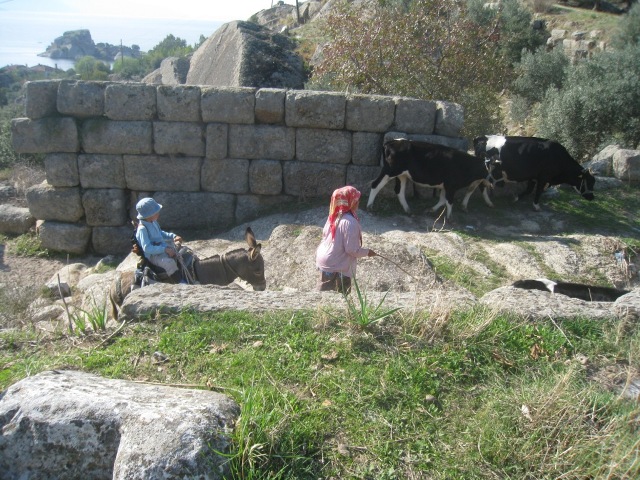
Surrounded by the “five fingered” Latmos Mountain range rising up 4500 feet, the Bafa Lake region is western Turkey’s best kept secret for outdoor travelers. Day hikers and multi-day trekkers trod the same paths as 8th century hermits and Byzantine monks. Still visible are the remains of the monasteries and cave homes they built in the remote mountain slopes. Rock climbers challenge themselves on an abundance of Herculean boulders that enliven the Kapikeri landscape. Ornithologists come to observe over 255 different bird species native to the lake, including pelicans, storks, flamingos, hawks and partridges. With so much going on around the area, you might think Lake Bafa has ample accommodations for foreign guests. Wrong again. Kapikiri is the only populated settlement on the lake with probably no more than a couple hundred residents. Just as the lake’s ecology is safeguarded, so, too, the village is officially protected as a cultural and historical heritage site with laws regulating the construction of new buildings or changes to the old houses. Kapikeri is a traditional Turkish village nestled into an Hellenic city, Herakleia. After one hundred years of self-rule Herakleia was conquered by King Mausolus of mausoleum fame in the 4th century AD and put under the jurisdiction of Halicarnassus (modern Bodrum). Another layer of history stems from Herakleia’s role as a refuge for Christian monks and hermits. A protective fort was built in the 7th century AD with 65 watch towers and defense walls stretching six kilometers long. Vast sections of the wall, fort and towers still surround and envelope the town creating an uncanny overlap of eras. As you peruse an archaeological spot , for example, you suddenly realize you’re also standing in a home owner’s back yard. It’s charming and disconcerting at the same time. Kapikeri-Herakleia is, for all purposes, an open air museum and indeed at the town entry is a manned booth where you are encouraged, but not obliged, to make a payment akin to an admission fee. Driving from Izmir we had to turn off the main highway to get to Kapikiri which is located on the east side of the lake. As we got closer, the terrain changed to colossal boulders as if we were now in a land of fairy tale giants. The asphalt started to give way to some gravel forcing us to drive slower. Farmer women in ballooned pants and head scarves were letting their donkeys drink at a roadside tap. A segment of an ancient defense wall majestically cuts through an olive orchard. Arriving near dusk, it all had an exhilarating affect on us. I feel sheepish saying that in such a tiny village with only one road running through it, we got lost. Drunk with glee over just the first peek of our exciting new destination, we missed the left turn sign for Selene Pension. From the car our introductory look at the village was fleeting because we were intent on spotting a Selene Pension sign. Yet, even a cursory view revealed the beguiling entanglement of peasant houses and ancient infrastructure.
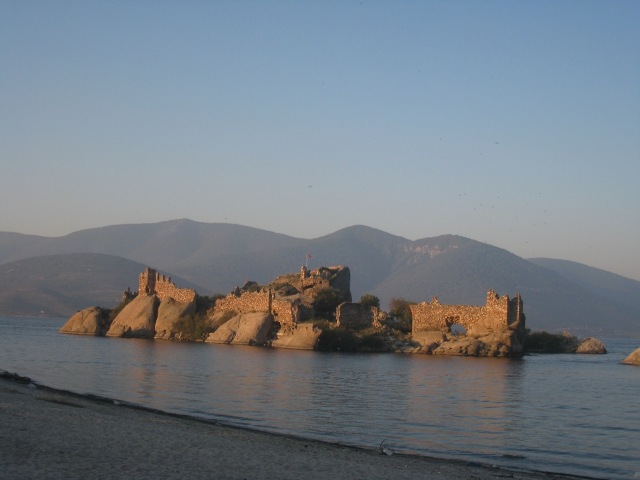
A dozen or so years ago, we’re told, the only place for a visitor to stay was in the mayor’s house. Nowadays two or three pensions unobtrusively lie near the lake front and a half dozen or so others are sprinkled in the upper village. Cat and I opted to stay at Selene Pension at the lake because (a) it is run by two brothers and we are two sisters and (b) they spoke English when we called them. Little did we know how serendipitous was our choice. We arrived at Selene Pension with just enough time to head to the lake, 150 feet away, before darkness set in. One of Lake Bafa’s four islands lies within swimming distance of Selene’s shore and holds an abandoned castle that looked postcard picturesque in the pink sunset. A dirt road separates the lake from mighty boulders which glowed in the setting sun like mammoth gold nuggets. The next morning we had an invigorating run on the dirt road for several miles before it petered out into a reedy, swamp-like area of the lake. Besides Cat and I who stayed a single night, a group of German hikers had booked Selene Pension’s dozen or so rooms for several days. It was a full house. At the pension’s outdoors dining area we met the owners Kubulay Karabulut and his brother Tamer. They are astute, sensitive young men who are quite happy in the rural environment in which they grew up and where they now run a modestly profitable enterprise. Our first order of business was to inquire for a hiking guide the next morning to inspect these painted rocks. I had had the impression that the rock paintings came from an era just preceding Herakleia’s 5th century BC origins. Well, I was off by several millennia. Tamer showed us a coffee table size book illuminating the region’s rock art whereupon I gasped digesting the fact that the rock paintings were prehistoric petroglyphs. My sister and I have a passion for these inscrutable images that our ancient ancestors put to rock surfaces in remote places all over the globe. We have sought them out in Utah, New Mexico, Namibia, Jordan. And now in Turkey’s Latmos Mountains. |
|||
|
We were salivating for more but the sites in Latmos are widely scattered and we hadn’t reserved enough time in our schedule for extended hikes. Instead we returned to the big coffee table book written by Anneliese Peschlow-Bindokat, a German archaeologist. In 1994, she discovered two petroglyphs and since then she and her team have located 170 more drawings. These images constitute the first evidence of prehistoric rock art in Western Asia Minor. Since we can’t read German, we looked at the photos, recognizing the sites we visited and marveling at the other drawings. We soon became interested in Anneliese Peschlow-Bindokat and flung a handful of queries at Tamer. We wondered if she had come to the Latmos Mountains on a hunch there would be petroglyphs here. Tamer told us a farmer directed her to the first two rock drawings but he didn’t know if it was a chance encounter with him or her professional instincts guided her to a rock art region. Was she coming back? No, he replied, she is too elderly and 2011 was her last visit to the region. Did he know her? He chuckled at this question and explained that in the beginning she stayed in a local’s house but when Selene Pension was completed she stayed in their accommodations ever since and for months at time, so, yes, he knows her. We felt it was more than serendipity that drew us to Selene Pension. As if orchestrated by a behind-the-scenes prehistoric shaman, our love of rock art drew us into Anneliese’s orbit and the magical cosmos of Kapikiri-Herakleia. For hotels in Kapikiri see Booking.com's Turkey Hotels |
|||
 It all started when we were plotting our driving route from Izmir to Bodrum. There are a number of well known archaeology sites interspersed between these two cities but we couldn’t decide which one to focus on and we also wanted to venture to some place a little
more obscure.
Roaming the internet, I came across Laka Bafa and read
about a village on its banks known by both its ancient Greek name Herakleia and its modern name Kapikiri where the tradition-bound
residents live amongst original ruins. This sounded unique and terrific.
It all started when we were plotting our driving route from Izmir to Bodrum. There are a number of well known archaeology sites interspersed between these two cities but we couldn’t decide which one to focus on and we also wanted to venture to some place a little
more obscure.
Roaming the internet, I came across Laka Bafa and read
about a village on its banks known by both its ancient Greek name Herakleia and its modern name Kapikiri where the tradition-bound
residents live amongst original ruins. This sounded unique and terrific. 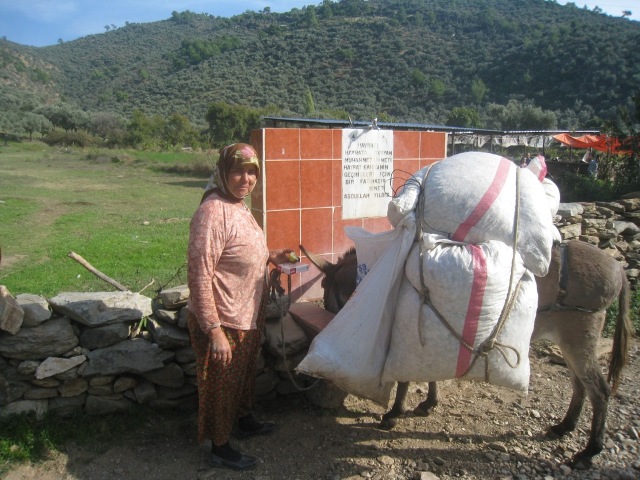 We drove the entire three minute length of road through town only to reach a circular dead end. Cat was doing her best to make a three-point turn in the tight spot but a woman and her daughter waving handspun crafts had spied the tourists and were blocking our
way, presumably until
we bought one of their wares. I hate to admit that
neither of us had yet learned the Turkish words for “no thank you,” but they got the message by hand gestures, and smelling defeat,
let us pass. Kapikiri has no souvenir shops to speak of so local women fill that vacuum with their artisanry which -- very aggressively it is claimed -- they hawk to newcomers.
We drove the entire three minute length of road through town only to reach a circular dead end. Cat was doing her best to make a three-point turn in the tight spot but a woman and her daughter waving handspun crafts had spied the tourists and were blocking our
way, presumably until
we bought one of their wares. I hate to admit that
neither of us had yet learned the Turkish words for “no thank you,” but they got the message by hand gestures, and smelling defeat,
let us pass. Kapikiri has no souvenir shops to speak of so local women fill that vacuum with their artisanry which -- very aggressively it is claimed -- they hawk to newcomers. 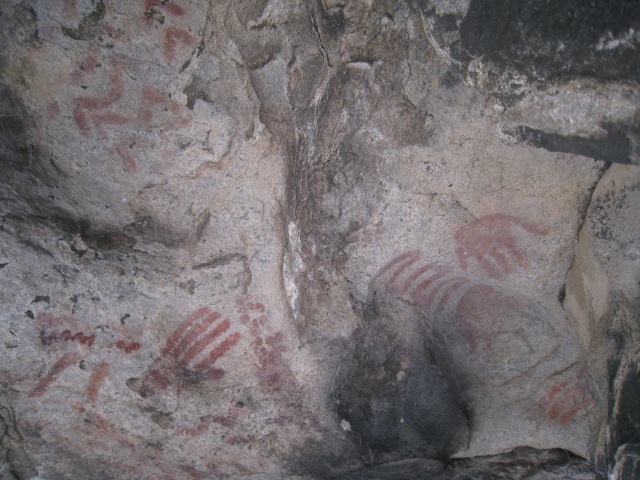 To see the Latmos rock paintings you must have a guide because it is impossible for a foreigner to find them on her own. There are no signs to direct you to the specific areas nor any cairns on the dirt paths. Tamer and
his adventurous
dog were our guides. The petroglyphs Tamer showed us were utterly marvelous
– exaggerated fingers, snake lines and stick women with enormous buttocks that didn’t resemble anything we had seen before. They were all drawn
in red ochre, some dark and distinct, but most were light and ephemeral, making them difficult to photograph with a standard point-and-shoot camera. The drawings were located in places you wouldn’t likely come upon, such as in big crevices which we had to crawl inside. The Latmos petroglyphs are not as elaborate as some others we have seen but it’s folly to make comparisons -- rock art is always sublime where ever it is.
To see the Latmos rock paintings you must have a guide because it is impossible for a foreigner to find them on her own. There are no signs to direct you to the specific areas nor any cairns on the dirt paths. Tamer and
his adventurous
dog were our guides. The petroglyphs Tamer showed us were utterly marvelous
– exaggerated fingers, snake lines and stick women with enormous buttocks that didn’t resemble anything we had seen before. They were all drawn
in red ochre, some dark and distinct, but most were light and ephemeral, making them difficult to photograph with a standard point-and-shoot camera. The drawings were located in places you wouldn’t likely come upon, such as in big crevices which we had to crawl inside. The Latmos petroglyphs are not as elaborate as some others we have seen but it’s folly to make comparisons -- rock art is always sublime where ever it is. |
|
|