About Macedonia
|
4000 years of history is a very conservative estimate for Macedonia because in the Petrolona Cave in Halkidiki they found the 700,000 year old remains of one of the earliest inhabitants of the country we now know of as Greece. In the Neolithic period which followed, people lived in mudbrick houses, cultivated the land and made utensils and art from clay. The small clay idols from Nea Nikomidia (6.000 B.C.) and the clay heads from Drama (4.000 B.C.) reveal their sensitivity and their attempts at self-expression. By 2300 BC the people who appeared upon the scene began making weapons with iron, and jewlery of bronze, reaching new heights in civilization and showing signs of the culture we now know of as Greek. Many of these artifacts have been found in the funeral mounds of Vergina . During the Archiac period the area began to be colonized by Greeks from the south, bringing Macedonia into contact with the rest of the Greek world and introducing art and architecture from Athens, Corinth and Ionian Greece, the coast of what is now Turkey. |
|
Saint Paul brought Christianity to Greece, traveling around Macedonia preaching and teaching the word of God and later in the Byzantine era, Thessaloniki became the second most important city in the empire. The churches and monasteries of this period contain some of the finest examples of Byzantine art and architecture found on the planet and the monastic state of Mount Athos has existed in its present state for over 1000 years. Even during the Turkish occupation after the fall of Constantinople the holy mountain was left alone and became the center of Hellenic culture during this dark period of Greek history. The rest of Macedonia was not so lucky as the conquerors swept through , pillaging as they went, until the day came when they were subdued by the effect of the civilization they encountered, which always had something new to show them. It can be said that Turkish culture was changed as much as the Hellenic culture was changed, by the centuries of occupation. |
|
If you are looking for an area
to explore, either by car or local bus, or just a place to
settle in and get to know the region and its people, then
Macedonia will not disappoint you. |
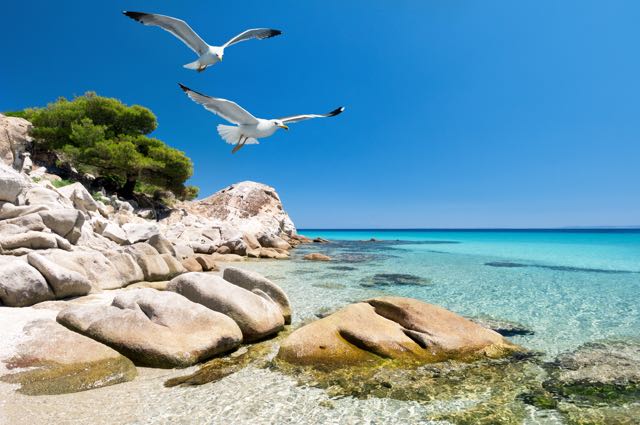 Macedonia is one of the most beautiful regions of Greece, and an
area which will grow in importance as the commercial and
cultural center of the Balkans in the years to come.
Macedonia is one of the most beautiful regions of Greece, and an
area which will grow in importance as the commercial and
cultural center of the Balkans in the years to come.
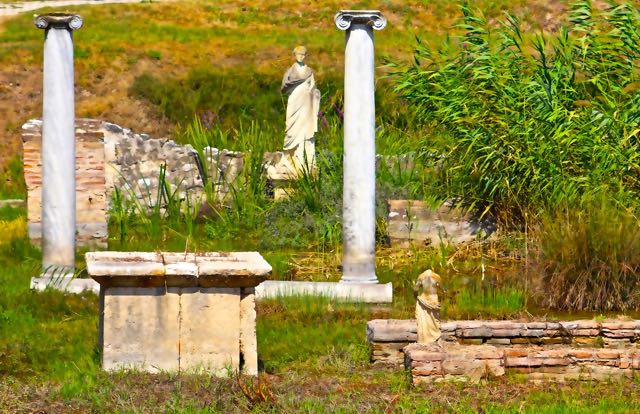 In the classical period the
Greek influence became even more pronounced and with the
reigns of Phillip and his son Alexander the Great. The palace
became home to painters, poets, philosophers (including
Aristotle) and musicians from all over the world. It was
during this period that Macedonia became what the USA is
today, the dominant world power, due to the exploits of
Alexander. This introduced Greek culture to the east and
eastern culture to Macedonia and the rest of Greece and
influenced these cultures in a way never seen before in
history. Alexander was arguably the greatest influence on the
course of mankind up to that time and in the centuries to
follow.
In the classical period the
Greek influence became even more pronounced and with the
reigns of Phillip and his son Alexander the Great. The palace
became home to painters, poets, philosophers (including
Aristotle) and musicians from all over the world. It was
during this period that Macedonia became what the USA is
today, the dominant world power, due to the exploits of
Alexander. This introduced Greek culture to the east and
eastern culture to Macedonia and the rest of Greece and
influenced these cultures in a way never seen before in
history. Alexander was arguably the greatest influence on the
course of mankind up to that time and in the centuries to
follow.
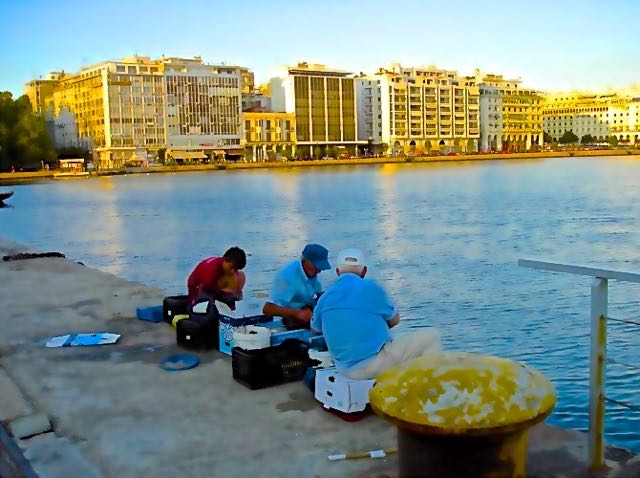 Now Macedonia is the second
largest prefecture in Greece and its capital, Thessaloniki is
the second largest city in Greece. The beautiful
Now Macedonia is the second
largest prefecture in Greece and its capital, Thessaloniki is
the second largest city in Greece. The beautiful
|
|
|
|
|
Help Support Matt's Greece Guides Join Matt Barrett's Greece Travel Guides Group on Facebook for comments, photos and other fun stuff. If you enjoy this website please share it with your friends on Facebook and other social media. |